
Reading time: 4 min
Key Takeaways
- Drainage is everything: Use a gritty, sandy mix with at least 30% perlite or pumice—standing water is the number one killer.
- Hardy varieties win: Choose USDA zone-hardy species like Sempervivum and Sedum; avoid tender Echeveria if your winters freeze.
- Less fuss, more success: Water only when soil is bone dry; most succulents need zero fertilizer outdoors.
Why My Mediterranean Soil Trick Makes Succulents Unkillable
What most people get wrong is that succulents don’t just need sunlight—they need soil that mimics a rocky hillside. In my experience, the standard potting compost holds too much water. For outdoor beds, I blend sharp sand, crushed grit, and a small scoop of loam. Here’s what actually works: dig a hole twice as wide as the root ball, mix your grit into the removed soil, and plant high so the crown sits above the surface.
My 10 Go-To Succulents for Hot, Dry Borders
1. Sempervivum tectorum (Hen and Chicks)
Don’t overthink it—this is the sturdiest succulent I’ve grown. It shrugs off frost, scorch, and neglect. I’ve seen it survive -20°C in a Haarlem winter with no protection. Give it full sun and gravel mulch; it self-propagates into a dense mat. The plant will tell you when it’s happy: the rosettes turn a reddish bronze in autumn.
2. Sedum spectabile ‚Autumn Joy‘
My grandmother taught me that this stonecrop is the backbone of any dry border. Flat, fleshy leaves appear in spring, and by August it bursts with large, pink flowerheads that attract pollinators. It tolerates clay better than most succulents, but I still add grit around the base. In Wageningen trials, it outperformed every other herbaceous perennial under drought stress.
3. Delosperma cooperi (Ice Plant)
Here’s what I’d do if you want a carpet of purple flowers all summer. Full-sun, lean soil, and plenty of water until it establishes—then almost nothing. It looks spectacular cascading over a low wall or between paving stones. In our Haarlem city garden, it blooms from June to September on just rain alone.
4. Echeveria elegans (Mexican Snowball)
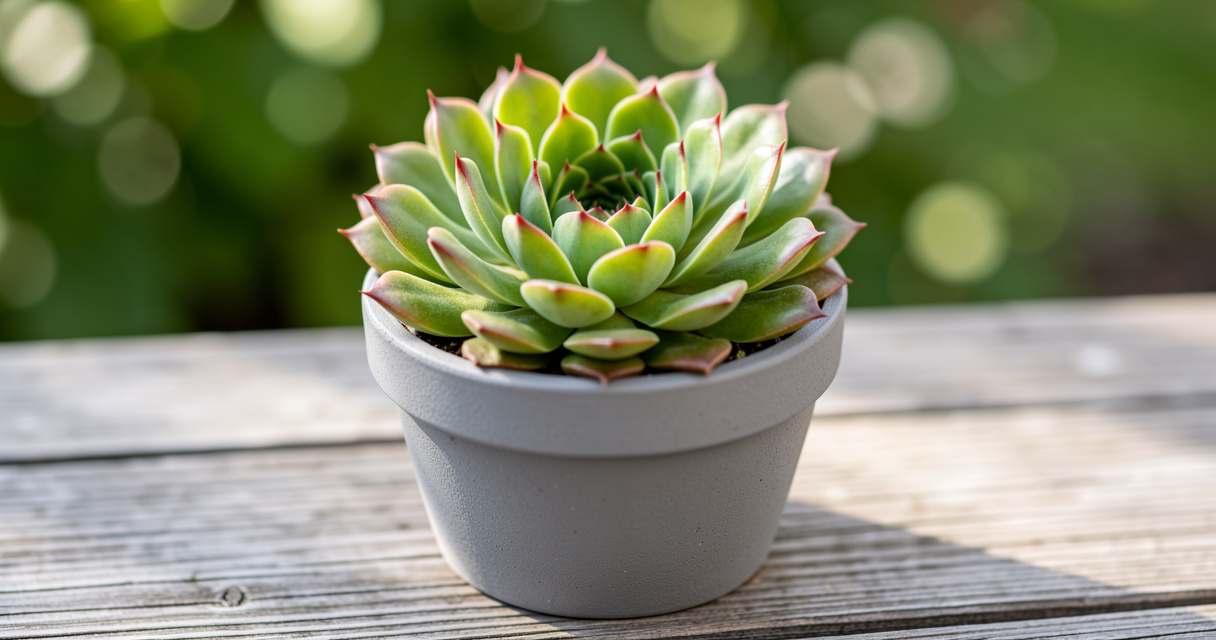
A trickier choice. Not fully hardy below -5°C, so I grow it in terracotta pots that I move under a porch over winter. The rosettes are unbelievably pretty—pale green, powdery, and perfectly symmetrical. Use a gritty cactus mix and water only when leaves start to wrinkle. It thrives with morning sun and afternoon shade.
5. Agave americana ‚Variegata‘
In my experience, agaves are the closest you’ll get to architectural drama without effort. This one has wide leaves with creamy edges and sharp tips. It’s tender to frost, so in zone 8 or colder, plant it in a large container and wrap the pot in fleece in winter. Let me show you what actually works: give it a south-facing wall for reflected heat, and water once a month from April to September—less if it rains.
6. Jovibarba globifera (Rolling Hen and Chicks)
Closely related to Sempervivum, but with a charming habit: it forms small, globular offsets that detach and roll away—hence the name. It’s fully hardy and loves poor, rocky soil. I use it to fill crevices in a dry-stone wall or to stabilise a gravel bank. No watering needed once established.
7. Opuntia humifusa (Eastern Prickly Pear)
Yes—a cactus that survives Dutch winters. I’ve had one in an unheated greenhouse for seven years. It needs exceptional drainage: pure grit and gravel, no organic matter. The yellow flowers in midsummer are a bonus; the real payoff is the architectural silhouette. Wear gloves when handling.
8. Sedum spurium ‚Dragon’s Blood‘
A low-growing groundcover that turns striking deep red under summer sun. It spreads quickly without being invasive—just clip edges if it strays. Ideal for steep banks or between stepping stones. In my 80 sqm city garden, it carpets a hot, south-facing strip that refuses anything else. Water? Once every two weeks, if that.
9. Yucca filamentosa ‚Color Guard‘
What most people get wrong is that yuccas are low-maintenance, not no-maintenance. ‚Color Guard‘ has broad, variegated leaves with yellow stripes and white filaments curling from the edges. It’s hardy to -30°C and copes with damp winters as long as the soil is free-draining. I plant it at the back of a border for a tropical-looking backdrop.
10. Graptopetalum paraguayense (Ghost Plant)
A delicate-looking rosette succulent that adapts surprisingly well outdoors. The leaves are soft peach-pink to lavender, depending on light. It’s not frost-hardy in heavy clay, so I grow it in a shallow bowl planter. In summer, I leave it out; in winter, I bring it under a cold frame. With the right grit, it barely needs my attention.
The Dutch Secret: Overwintering Succulents Without Tears
In my experience, frost is not the problem—wet winters are. Here’s what I do: in November, I lift tender species into plastic pots and store them under a south-facing eave. For hardy ones, I cover the soil with a 5 cm layer of gravel or chippings to keep water away from stems. The plant will tell you if it’s stressed: yellow leaves mean too much water, shrivelled leaves mean too little. Don’t overthink it—just watch and adjust.
Comparison: Which Succulent for Your Garden?
Let me simplify:
- For ground cover in full sun: Sedum spurium or Delosperma cooperi.
- For dramatic structure: Agave americana or Yucca filamentosa.
- For bone-dry, poor soil: Sempervivum or Jovibarba.
- For a container display: Mix Echeveria and Graptopetalum in gritty mix—no need to fertilise.
My Final Advice: Let Go of the Watering Can
In the twelve years I worked with collectors and public gardens, I learned that the best succulent gardeners are the most relaxed. The plants evolved for extremes—they don’t need you to micromanage. Check the soil, feel the leaves, watch the light. If you do that, these ten will thrive from June through to frost and beyond.
Start with Sedum or Sempervivum—they’re the most forgiving. Then slowly add one or two tender specimens once you’ve mastered drainage. Your climate matters, but so does your observation. I promise you’ll soon hear your garden whispering back.