

Reading time: 16 min
Key Takeaways
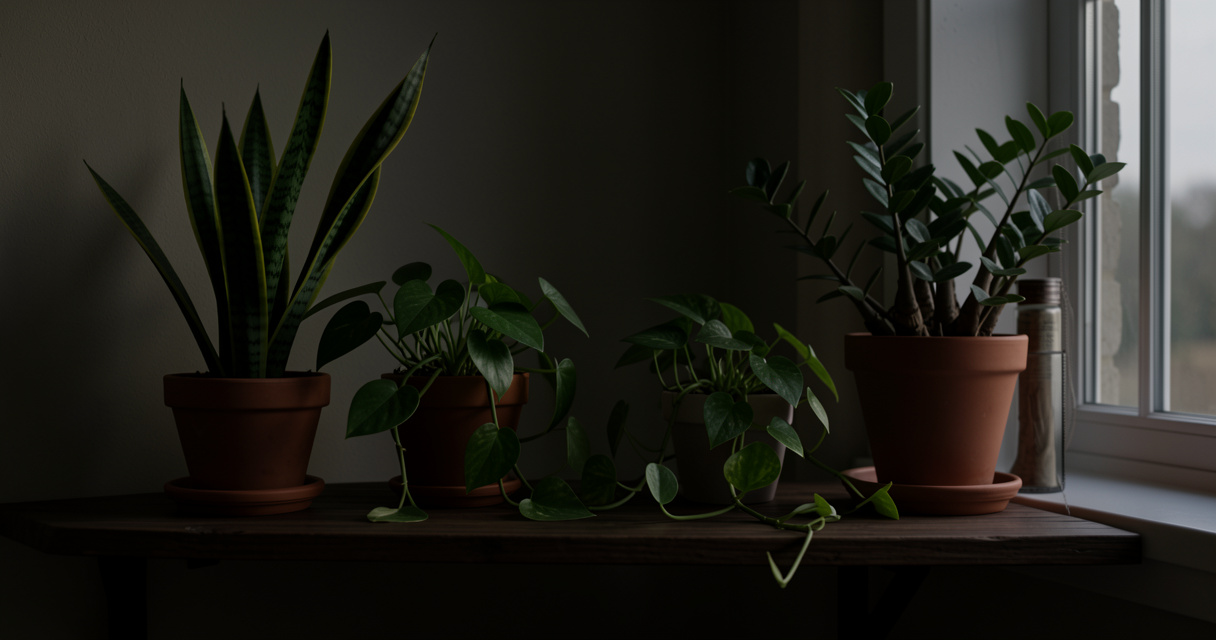
- Low light is not no light – most plants need at least some indirect light; north-facing windows or a spot where you can read a book but not see a shadow is the benchmark.
- Overwatering kills more than low light – in dim rooms soil stays wet longer, so let it dry out between waterings.
- Pet safety matters – many classic low-light plants (snake plant, pothos) are toxic to cats and dogs; choose bird’s nest fern, calathea, or parlor palm for pet-friendly options.
- Flowering is possible – Peace Lily, Anthurium, and Bromeliads can bloom even in low light with the right humidity and moderate fertilization.
What Does ‘Low Light’ Actually Mean for Houseplants?
Did you know that overwatering kills more houseplants than lack of sunlight? Yet most people assume dim rooms are the biggest challenge. I’ve been growing plants in the shade for two decades — first in my grandmother’s chaotic fern garden in Leeuwarden, then as a consultant for botanical gardens, and now in my own 80-square-meter city garden in Haarlem. Let me show you what actually works.
In my experience, the term “low light” is the most misunderstood phrase in houseplant care. It doesn’t mean a black closet or a room without a window. It means indirect, filtered, or reflected light — no direct sun ever touches the leaves. A simple benchmark: a spot where you can read a book during the day but cannot see a shadow cast by your hand. That’s low light. For the measurement-oriented, that’s under 100 foot-candles (about 1000 lux).
Measuring Light in Your Home
Don’t overthink it. You don’t need a light meter. I use a trick my grandmother taught me: hold a piece of white paper in the spot where you want to put the plant. If you can read the fine print on a seed packet, the light is enough for most low-light plants. If the paper looks gray and you struggle to see the text, that spot is too dark — even for a ZZ plant.
Low light = indirect, filtered, or reflected light; no direct sun. North-facing windows, east windows a few feet back, or a corner that receives only ambient light through curtains all qualify.
Signs Your Plant Needs More Light
What most people get wrong is thinking leaves turning pale or stems stretching are always a watering issue. The plant will tell you when it’s hungry for light. Look for: new leaves that are smaller than old ones, long gaps between leaves (etiolation), or a leaning stem that reaches toward the window. If you see these, rotate the plant or move it one step closer to the window. But remember — even true low-light plants benefit from a two-week stint in a brighter spot every few months. I rotate my cast iron plant to my east-facing kitchen window for a month each spring. It rewards me with new growth.
Transition: Now that we know what low light really means, let’s look at the plants that not only survive but actually thrive in these conditions.
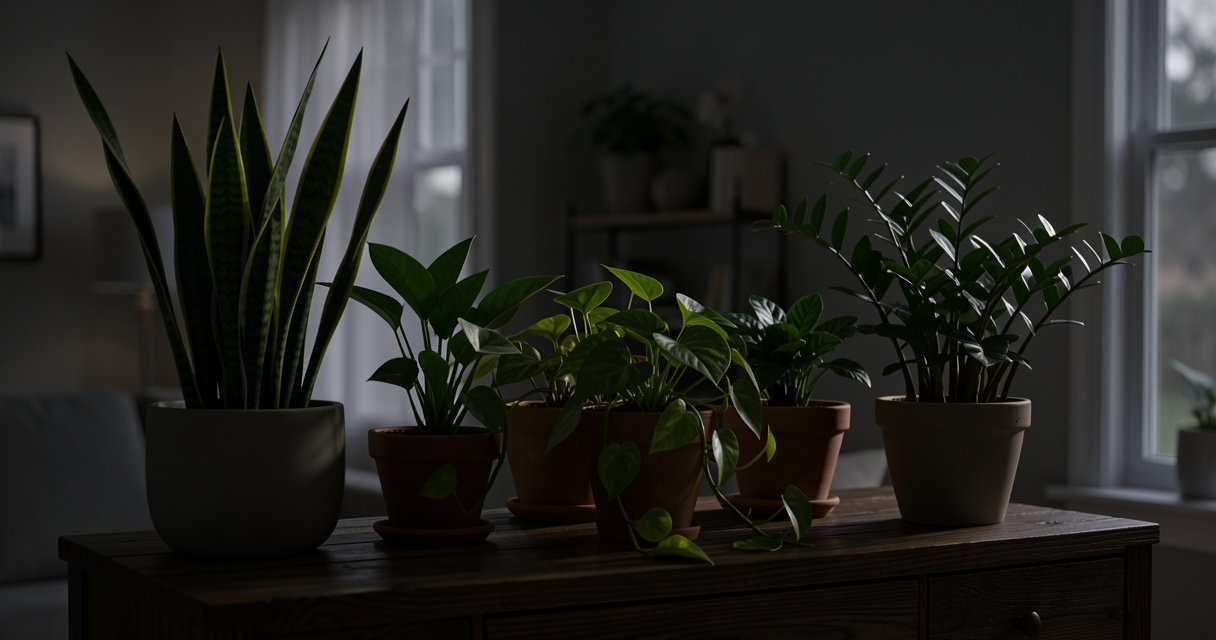
15 Best Low-Light Houseplants That Almost Never Fail
Here’s a curated list from my own collection and years of nursery work. These are the best low-light houseplants I’ve seen handle neglect, poor light, and even the occasional missed watering. I’ve included size, light tolerance, and water needs. For a quick comparison, check the table below, then read the detailed profiles.
For the featured snippet: 1. Snake Plant – Tolerates very low light, water when soil is dry. 2. ZZ Plant – Thrives on neglect, low light to bright indirect. 3. Pothos – Grows in dim corners, cut back if leggy. 4. Cast Iron Plant – Almost unkillable, deep green leaves. 5. Parlor Palm – Classic low-light plant, stays compact. 6. Chinese Evergreen – Colorful foliage, prefers shade.
| Plant Name | Light Needs | Water | Pet Safe | Mature Size |
|---|---|---|---|---|
| Snake Plant (Dracaena trifasciata) | Very low to bright indirect | Let dry completely | Toxic (if ingested) | 2-4 ft tall |
| ZZ Plant (Zamioculcas zamiifolia) | Low to bright indirect | Let dry completely | Toxic | 2-3 ft tall |
| Pothos (Epipremnum aureum) | Low to medium indirect | Dry top 2 inches | Toxic | Trailing, up to 10 ft |
| Cast Iron Plant (Aspidistra elatior) | Very low to low indirect | Let dry between waterings | Non-toxic | 2-3 ft tall |
| Parlor Palm (Chamaedorea elegans) | Low indirect | Keep lightly moist | Non-toxic | 2-4 ft tall |
| Chinese Evergreen (Aglaonema commutatum) | Low to medium indirect | Let dry partially | Toxic | 1-3 ft tall |
Snake Plant (Dracaena trifasciata)
If I could only keep one houseplant for the rest of my life, this would be it. Snake plants are the undisputed champions of shade-tolerant houseplants. They can handle a north-facing bedroom where the sun never enters, and they forgive underwatering for weeks. My grandmother kept one in her bathroom with no window — just the fluorescent light from the vanity. It grew slowly but survived for seven years.
ZZ Plant (Zamioculcas zamiifolia)
Let me show you what actually works for beginners who say they kill everything. The ZZ plant is my default recommendation. Its rhizomes store water like a camel, and its waxy leaves reflect the little light they get. I rescued a ZZ from a basement apartment in Amsterdam — it had been in a windowless hallway for a year. After a few months of proper care, it bounced back with new stems. Don’t overthink it: water only when the soil is bone dry.
Pothos (Epipremnum aureum)
Pothos grows in dim corners, but it will get leggy if the light is too low. Prune it back regularly to keep it bushy. It’s also one of the air-purifying plants often cited in NASA studies — but I’ll be honest, you’d need a jungle to see a real effect. Still, it’s beautiful and forgiving.
Cast Iron Plant (Aspidistra elatior)
My grandmother taught me that the cast iron plant is the backbone of any low-light indoor plant collection. It earned its name for a reason: you can put it in a dark hallway with no windows and it will still produce stiff, deep green leaves. Water when the top inch of soil is dry. That’s it.
Parlor Palm (Chamaedorea elegans)
For those who want a classic, upright silhouette, the parlor palm is perfection. It stays compact, tolerates low light inside, and is non-toxic to pets. Keep the soil lightly moist — not soggy.
Transition: While these green leaf champions dominate, many people want a touch of color. Let’s move to low-light plants that actually flower.
Surprising Low-Light Plants That Actually Flower Indoors
Most people assume flowers need a sun-drenched windowsill, but that’s not entirely true. After years of testing in botanical gardens, I’ve found a handful of flowering low-light plants that bloom in dim corners — as long as you respect their needs. Here’s my top three.
Peace Lily (Spathiphyllum)
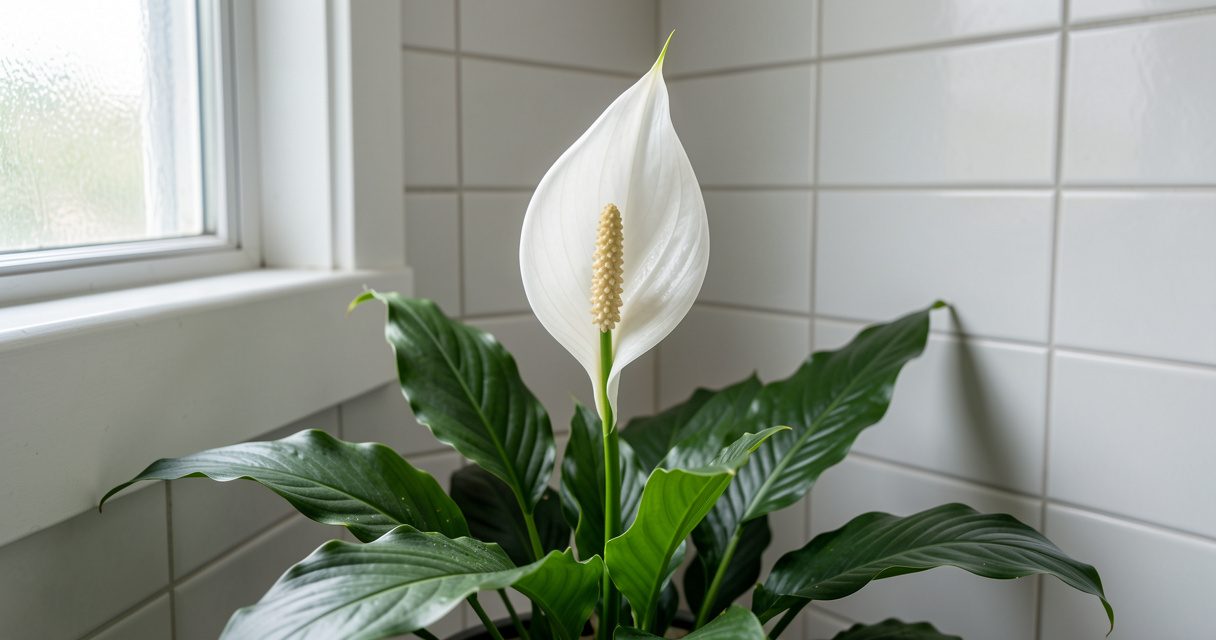
The peace lily is the workhorse of the low-light flowering world. Its white spathes can appear even in rooms with only north-facing light. The trick? Keep it in a bright spot (but no direct sun) and water only when the leaves start to droop slightly. That droop is the plant telling you it’s thirsty — don’t water before that. I’ve had a peace lily bloom in a basement office with fluorescent lights. It was slow, but it did bloom.
Anthurium
Anthuriums are a bit more demanding, but their long-lasting red, pink, or white flowers are worth it. They need high humidity and consistent moisture. In a bathroom with a north-facing window, they thrive. Avoid cold drafts — that’s the number one bloom killer.
Bromeliad
Most bromeliads are epiphytic and can handle very low light. Their colorful bracts (often mistaken for flowers) last for months. Provide good air circulation and let the central cup dry out between waterings to prevent rot.
3 Tips to Encourage Flowering in Low Light
- Avoid cold drafts — place away from doors and windows that get opened in winter.
- Fertilize monthly with a balanced houseplant fertilizer at half strength during the growing season.
- Increase humidity with a pebble tray or small humidifier — dry air stops buds from forming.
Transition: Flowers are lovely, but pet safety is often a higher priority. Let’s look at the best non-toxic options for homes with cats and dogs.
Pet-Safe Low-Light Houseplants: A Complete Guide
I’ve had cats for fifteen years, so I know the struggle of finding plants that won’t send you to the vet. Many classic low-light houseplants — snake plant, pothos, ZZ plant — are toxic if ingested. But there are plenty of pet-friendly low-light plants that are both safe and beautiful. Let me show you what I trust.
Toxic Plants to Avoid
If you have a curious cat or dog, keep these on high shelves or out of reach entirely: snake plant (saponins cause drooling and vomiting), pothos (calcium oxalate crystals), ZZ plant (irritant sap), and peace lily (oral irritation). Even small nibbles can be problematic. My grandfather’s cat was fine after eating a pothos leaf — but I wouldn’t risk it.
Top 5 Pet-Friendly Picks
Here’s a quick list of non-toxic low-light plants that I’ve personally had around cats and dogs:
- Bird’s Nest Fern (Asplenium nidus) — Loves humidity, safe, and the fronds are tough enough to survive a paw swipe.
- Calathea (Goeppertia spp.) — Stunning foliage patterns, non-toxic, but needs high humidity and filtered water. A bit fussy, but worth it.
- Cast Iron Plant (Aspidistra elatior) — Already mentioned, but it’s as safe as it is tough.
- Parlor Palm (Chamaedorea elegans) — Classic and safe, easy to find.
- Spider Plant (Chlorophytum comosum) — Tolerates low to medium light, safe, and produces baby plants that cats love to bat at.
Warning: Snake plant is toxic if ingested — place on high shelves. Even non-toxic plants can cause digestive upset if eaten in large quantities, so always supervise your pets.
Transition: Now that you have the right plants, let’s avoid the mistakes that kill them.
How to Care for Low-Light Houseplants (5 Common Mistakes)
In my experience, more plants are killed by love than by neglect. Here are the five most common mistakes I see with low-light houseplant care, and how to avoid them.
Mistake #1: Watering on a Schedule
What most people get wrong is following a calendar. “I water every Monday.” In low light, the soil stays wet longer because evaporation is slow. Root rot is the number one killer. Instead, stick your finger in the soil — if the top inch is dry, water. If still damp, wait. My grandmother never used a calendar; she used her finger.
Mistake #2: Keeping Plants Too Far from Windows
I often see a beautiful ZZ plant placed on a bookshelf eight feet from the nearest window. That’s too far. Even low-light plants need light. A good rule: place them within 3-4 feet of a north-facing window or within 6 feet of an east-facing window. If you have a very dark room, consider a small LED grow light — they don’t need to be expensive.
Mistake #3: Ignoring Dust and Pests
Dust blocks light. In low-light conditions, every photon counts. Wipe leaves with a damp cloth every month. Also check for spider mites and mealybugs — they thrive in low air movement. I give my plants a gentle shower (in the sink or bath) to wash away dust and pests.
Mistake #4: Never Rotating Your Plants
Plants grow toward light. If they never get rotated, they become lopsided. Give each plant a quarter turn every time you water. This encourages symmetrical growth.
Mistake #5: Fertilizing in Winter
Many low-light plants go into a kind of dormancy in winter when days are short. Fertilizing then can burn the roots. I stop fertilizing from November to March, then resume monthly with a diluted balanced fertilizer.
Watering Frequency Checklist for Top 10 Low-Light Plants
- Snake plant, ZZ plant, cast iron plant — Water every 2-4 weeks, let soil dry completely.
- Pothos, Chinese evergreen — Water when top 2 inches dry, about every 1-2 weeks.
- Parlor palm, peace lily — Keep lightly moist, water when top inch dries.
- Calathea, fern — Water more often, keep soil evenly moist but not soggy.
- Spider plant — Let dry slightly between waterings, about every 1-2 weeks.
Transition: With care down pat, let’s get creative. Where should you actually put these plants in your home?
Design Ideas: Styling Low-Light Plants in Every Room
One of the most common questions I get is, “Where do I put low-light plants?” The answer: almost anywhere that isn’t a pitch-black closet. Here’s how I’ve styled them in my own home and clients’ homes across the Netherlands.
Bathroom & Laundry Room
Bathrooms are perfect for ferns and calatheas because of the humidity. Even a bathroom with a single small window can host a bird’s nest fern or a peace lily. I have a peace lily on my bathroom vanity — it blooms every few months despite the lack of direct light. Just make sure the room doesn’t get too cold in winter.
Dark Corners & Hallways
For that awkward corner in the living room or a dim hallway, use tall plants like the ZZ plant or cast iron plant. Grouping several plants together creates a mini oasis. I once placed a large cast iron plant in a dark hallway with a small mirror behind it — the reflection doubled the available light and the plant thrived.
Office Cubicles
Fluorescent lights are actually decent for low-light plants. Pothos and snake plants are classics for cubicles. I kept a pothos in my Wageningen office for years — it survived weekends without water and only needed trimming twice a year. For a touch of green on your desk, try a small peperomia.
An anecdote from my own collection: I rescued a dying ZZ plant from a basement apartment in Amsterdam. It had been in a windowless hallway for a year, surviving only on the light from a weekly cleaning lamp. I brought it home, placed it in my north-facing bathroom, and watered it once a month. After six months, it pushed out three new stems. That plant taught me that low light doesn’t mean no hope — it just means patience.
Transition: Now let’s tackle the questions I hear most often.
Frequently Asked Questions About Low-Light Houseplants
What plants thrive in low light?
Snake plant, ZZ plant, pothos, cast iron plant, spider plant, and calathea are top choices. Most tolerate indirect light and adapt to dim rooms.
Are there flowering low-light indoor plants?
Yes – Peace Lily, Anthurium, and Bromeliads can bloom in low light with proper care. Provide moderate humidity and avoid direct sun.
How do you keep plants alive in a low-light apartment?
Place plants near north-facing windows, rotate weekly, water only when soil is dry, and wipe dust off leaves. Consider supplemental grow lights if growth stalls.
Where do you put low-light plants?
Anywhere that receives indirect light – north or east windowsills, bathroom counters, bookshelves a few feet from a window, or office cubicles with fluorescent lights.
What are some pet-friendly low-light indoor plants?
Bird’s nest fern, calathea, cast iron plant, Chinese money plant, nerve plant, parlor palm, peperomia, polka dot plant, prayer plant, rubber plant (Ficus elastica is actually non-toxic despite common belief), spider plant, and wax plant are all non-toxic to cats and dogs.
Can succulents grow in low light?
Most succulents need bright direct sun, but snake plant (technically not a succulent but often grouped) and some peperomias tolerate low light. True succulents like echeveria will etiolate (stretch) and become weak.
Why are my low-light plants growing leggy?
Leggy growth usually means the plant is stretching toward more light. Move it to a brighter spot (even indirect) or prune leggy stems to encourage bushier growth.
Transition: To wrap it all up, here’s a summary of what matters most.
To wrap up, remember: low light doesn’t mean no light – choose adaptable plants like snake plant, ZZ plant, and pothos. Avoid overwatering at all costs; let soil dry between waterings. Rotate plants and wipe leaves regularly to maximize available light. And consider pet safety when selecting low-light houseplants.
So, which low-light indoor plant will you invite into your dimmest corner?
Happy growing — from my little garden in Haarlem to yours.

Ik heb meer dan vijftien jaar doorgebracht in botanische tuinen en kwekerijen in Nederland en België. Nu tuinier ik in Haarlem en schrijf ik op wat ik had gewild dat iemand me eerder had verteld. Geen onzin — alleen wat echt werkt.