
Reading time: 18 min
Key Takeaways
- No plant is 100% deer-proof — deer-resistant plants are the realistic goal, and even they can be sampled under extreme deer pressure.
- Use multiple defenses at once — aromatic, fuzzy, and mildly toxic plants work best when combined with barriers, repellents, and smart placement.
- Read the Rutgers deer resistance ratings — categories like Rarely Damaged and Seldom Damaged tell you far more than any generic list.
- Protect young plants for the first season — tender new growth is far more attractive to deer than established foliage.
My grandmother taught me that a garden should only ask of you what you are willing to give. Deer, on the other hand, ask for everything — especially the plants you are most proud of. Tired of waking up to chewed-down hostas and half-eaten hydrangeas? You are not alone. Deer damage is one of the most frustrating battles in gardening.
The hard truth is that a clean, guaranteed list of deer proof plants is fiction. The realistic goal is choosing deer resistant plants that deer naturally avoid, then protecting them with smart design. Let me show you what actually works.
Why ‘Deer Proof’ Is a Myth — and What Deer-Resistant Plants Really Mean
No plant is truly deer-proof. Deer-resistant plants are less appealing because of aromatic foliage, fuzzy or prickly textures, or mildly toxic compounds. When deer pressure is high or food is scarce, hungry deer may sample almost any plant. The best strategy is to combine resistant plants, repellents, and barriers.
What most people get wrong is treating ‘deer-resistant’ as an absolute label. In my experience, the phrase describes a plant that deer avoid when better options are nearby. If it is a cold February in the Netherlands, or a dry August in Virginia, that same plant can suddenly become emergency rations. That is why I prefer to talk about deer pressure before recommending anything.
Deer pressure means how many deer are moving through a landscape and how hungry they are. A suburban yard with one or two passing deer will have a very different experience from a rural edge with a dense herd. You need to know your own pressure level before you choose plants. At Wageningen, we spent as much time watching deer behavior in trial borders as we did reading data sheets. The pattern was always the same: resistant plants are simply the last ones deer want to eat.
What deer pressure does to your landscape
Low pressure means one or two deer pass through occasionally. You can get away with a few vulnerable plants if you protect them lightly. Moderate pressure means deer visit most nights, and your garden is part of their regular route. High pressure means deer treat the entire neighborhood like a pantry. In those conditions, even the most deer-resistant plants need extra protection during the first year, and physical barriers become far more important.
The Rutgers Cooperative Extension rating system is one of the most useful tools for this. They have observed and categorized common landscape plants according to how often deer damage them. The four categories are Rarely Damaged, Seldom Damaged, Occasionally Damaged, and Frequently Damaged. I use these ratings constantly when designing borders for clients.
| Category | Meaning | Example Plants |
|---|---|---|
| Rarely Damaged | Usually left alone, even with deer present | Boxwood, hellebore, lavender, Russian sage |
| Seldom Damaged | Only eaten under moderate to high pressure | Catmint, yarrow, barrenwort, juniper |
| Occasionally Damaged | Sometimes nibbled, especially in spring | Coneflower, black-eyed Susan, salvia |
| Frequently Damaged | Usually eaten; avoid unless protected | Hosta, hydrangea, daylily |
Now that you can read the ratings, let’s look at the perennials that anchor a sunny border without becoming the neighborhood snack bar.
Best Deer-Resistant Perennials for Full Sun: Pollinator-Friendly Picks
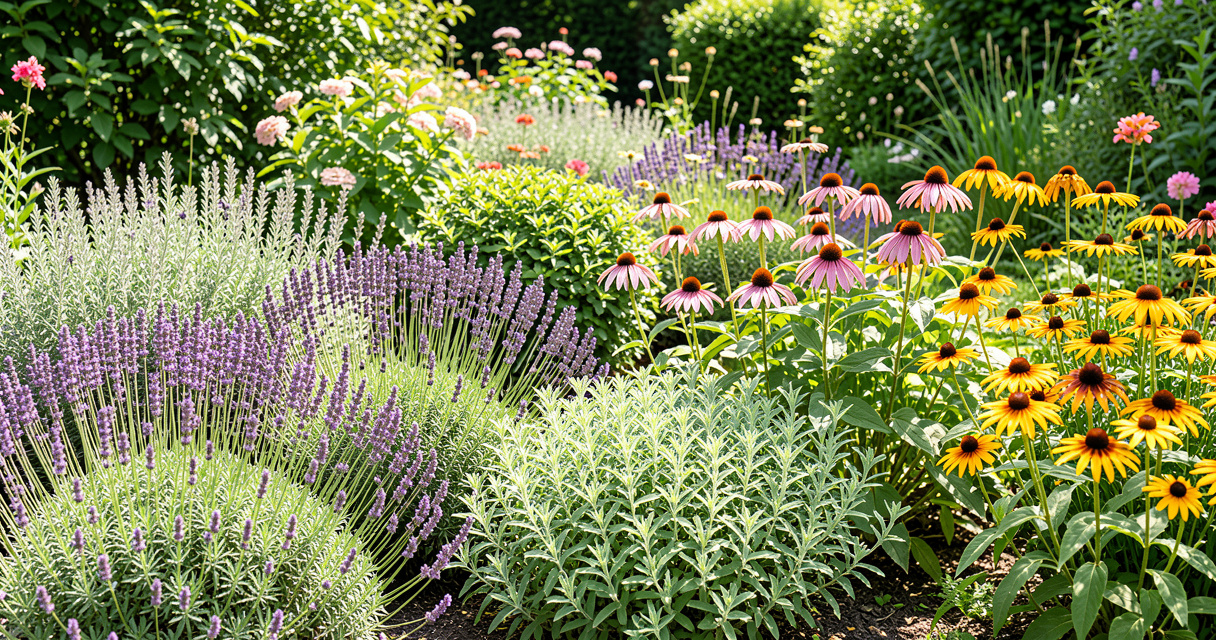
Full-sun borders are where deer resistant perennials really earn their keep. These are the plants deer hate to smell, chew, or push through. The same aromatic oils and fuzzy textures that deter deer also attract bees and beneficial insects.
Scent powerhouses: lavender, catmint, and Russian sage
Lavender (Lavandula angustifolia) is a classic example. Do deer eat lavender? In my experience, almost never. Its strong essential oils and slightly fuzzy leaves tell deer this is not food. It is also a magnet for bees and a beautiful edge plant for a front yard border.
Catmint (Nepeta x faassenii) is another one deer walk past. It has that unmistakable minty smell, and it blooms for months. For a softer, pollinator-friendly alternative to lavender, try the cultivar ‘Walker’s Low’. Russian sage (Salvia yangii, formerly Perovskia atriplicifolia) adds grey-blue texture and a dry, aromatic scent. Deer rarely touch it, even in July when the border is at its most fragrant.
Native bloomers: coneflowers, yarrow, and black-eyed Susans
Native perennials bring another layer of resilience. Purple coneflower (Echinacea purpurea) is a pollinator powerhouse with a bristly center that deer do not enjoy. Yarrow (Achillea millefolium) has feathery, bitter leaves and hard stems. Black-eyed Susan (Rudbeckia hirta) has coarse, hairy stems that make it less appealing. These are not as strongly aromatic as lavender or catmint, but they still hold up well.
Here is the comparison table I use when planning a sunny deer-resistant bed:
| Common Name | Botanical Name | Sun | Height | Zone | Rutgers Category |
|---|---|---|---|---|---|
| English lavender | Lavandula angustifolia | Full sun | 60-90 cm | 5-9 | Rarely Damaged |
| Catmint | Nepeta x faassenii | Full sun | 45-60 cm | 3-8 | Seldom Damaged |
| Russian sage | Salvia yangii | Full sun | 90-120 cm | 4-9 | Rarely Damaged |
| Purple coneflower | Echinacea purpurea | Full sun | 60-90 cm | 4-9 | Seldom Damaged |
| Yarrow | Achillea millefolium | Full sun | 30-90 cm | 3-9 | Seldom Damaged |
| Black-eyed Susan | Rudbeckia hirta | Full sun | 60-90 cm | 3-9 | Occasionally Damaged |
| Showy sedum | Hylotelephium spectabile | Full sun | 45-60 cm | 3-9 | Seldom Damaged |
| Siberian iris | Iris sibirica | Full sun | 60-90 cm | 3-8 | Rarely Damaged |
Checklist for planting a deer-resistant border
- Plant at least three strongly scented perennials — lavender, catmint, or Russian sage — near entry paths.
- Set out healthy transplants in spring and protect them with netting or repellent for the first six weeks.
- Plant densely so the mature canopy covers the soil and makes deer paths feel less inviting.
- Switch repellents monthly because deer quickly learn to tolerate one scent.
- Leave a few sacrificial plants at the far edge of your property if pressure is extreme.
Once the sunny spots are covered, let’s move to the trickier corners — the shade beds where deer love to hide.
Deer-Resistant Shade Plants and Groundcovers That Keep Your Lowest Layers Safe
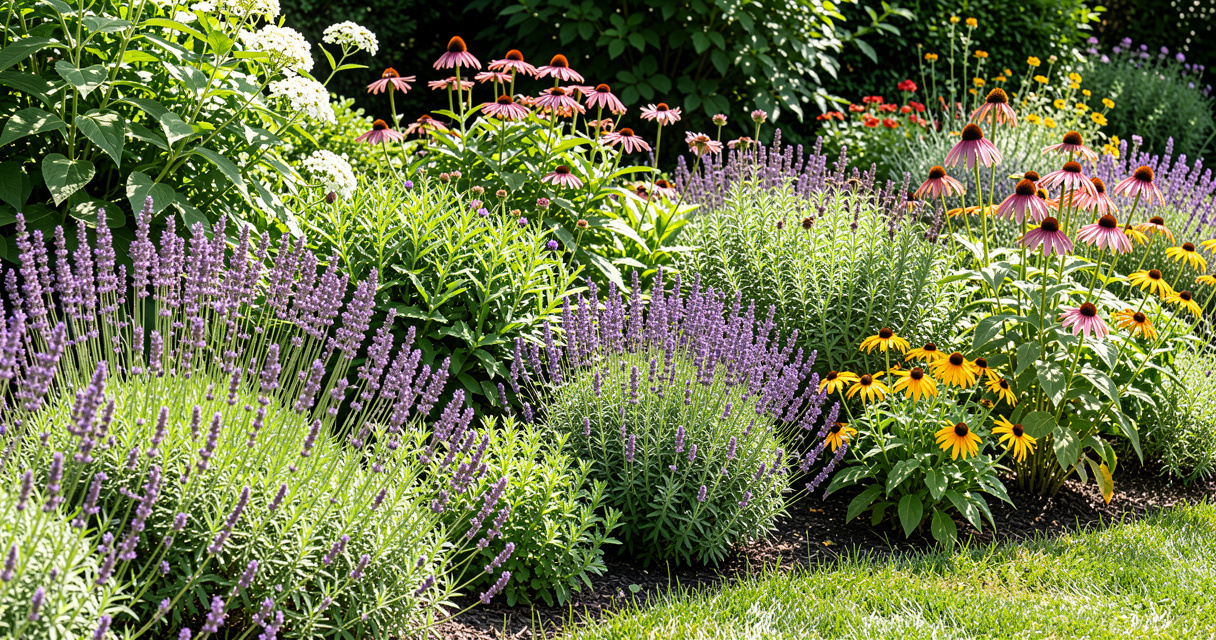
Shade gardens are tricky because deer shelter along wooded edges and feel safe in dappled light. If hostas are deer candy, hellebores are the locked cabinet. Deer resistant shade plants do exist, but the new spring growth is always more vulnerable, so first-year protection is critical.
Hellebores, ferns, and barrenwort for deep shade
Hellebore (Helleborus orientalis) is one of the most dependable deer-resistant shade plants I know. Its leathery, evergreen leaves contain bitter compounds that deer avoid. It also flowers in late winter, which feels almost magical under a bare tree. Male fern (Dryopteris filix-mas) and lady fern (Athyrium filix-femina) add texture without scent, and deer almost always pass them by.
Barrenwort (Epimedium x rubrum) is a ground-covering perennial that thrives in dry shade, spreads slowly into a dense mat, and has tough wiry stems. Deer dislike the texture. Bergenia (Bergenia cordifolia) has thick, leathery leaves that deer rarely touch. For a shade garden, this is a wonderful combination of foliage shapes that never feels boring.
Groundcovers deer skip: pachysandra, creeping thyme, and wild ginger
Bare soil invites deer to walk through a bed, so use deer resistant groundcovers to create a living barrier. Pachysandra (Pachysandra terminalis) is glossy, evergreen, and rarely eaten. Creeping thyme (Thymus serpyllum) forms a low aromatic carpet in sunnier shade edges. Wild ginger (Asarum canadense) is a native option that spreads gently in woodland soil and has a spicy root smell deer avoid.
| Plant | Shade Level | Texture | Rutgers Category |
|---|---|---|---|
| Hellebore | Part to deep shade | Leathery, evergreen | Rarely Damaged |
| Male fern | Part to deep shade | Fine, airy | Seldom Damaged |
| Barrenwort | Part to deep shade | Tough, wiry | Seldom Damaged |
| Bergenia | Part shade | Thick, shiny | Seldom Damaged |
| Pachysandra | Deep to part shade | Glossy, dense | Rarely Damaged |
| Creeping thyme | Part shade to sun | Aromatic, fine | Seldom Damaged |
| Wild ginger | Deep to part shade | Heart-shaped, native | Seldom Damaged |
A gardener in Haarlem once told me she replaced her deer-torn hosta bed with ferns, barrenwort, and a sweep of wild ginger. The deer still walked through the garden, but the damage stopped almost overnight. Within two years, the barrenwort had formed a woven mat that the deer simply did not want to cross. The plant will tell you when a design is working.
With the lower layers protected, it is time to add the structural anchors that give a garden shape all year round.
Deer-Resistant Shrubs and Evergreens for Structure and Privacy
Shrubs give a garden its bones. If you are looking for deer-resistant evergreen shrubs for privacy, boxwood and juniper are the workhorses. They tolerate pruning, hold their color through winter, and consistently rate well in deer trials.
Boxwood and juniper: dependable evergreen structure
Common boxwood (Buxus sempervirens) has aromatic, dense foliage and a long history in Dutch and English gardens. Deer rarely damage it. Creeping juniper (Juniperus horizontalis) is a low evergreen with prickly, resinous needles that deer avoid. For a privacy screen, an upright juniper cultivar can fill that role without becoming a deer buffet.
What shrubs do deer avoid? In my experience, the safest choices combine fragrant leaves, tough texture, or berries that are not worth the effort. Oregon grapeholly (Mahonia aquifolium) has spiny, holly-like leaves and yellow flowers. Beautyberry (Callicarpa americana) produces vivid purple berries that deer ignore. Summersweet (Clethra alnifolia) has fragrant summer flowers and strong native credentials.
Flowering shrubs that usually escape deer: beautyberry, Clethra, and bayberry
Bayberry (Morella pensylvanica) is a tough coastal shrub with waxy, aromatic leaves. It thrives in poor soil and needs almost no attention. Summersweet and beautyberry both flower in summer and attract pollinators. Add spicebush (Lindera benzoin) if you want a native shrub that feeds butterflies, though it is better placed in part shade.
| Plant | Sun/Shade | Height | Evergreen/Deciduous | Rutgers Category |
|---|---|---|---|---|
| Common boxwood | Sun to part shade | 1-3 m | Evergreen | Rarely Damaged |
| Creeping juniper | Full sun | 30-60 cm | Evergreen | Rarely Damaged |
| Oregon grapeholly | Part shade | 1-2 m | Evergreen | Seldom Damaged |
| Beautyberry | Sun to part shade | 1-2 m | Deciduous | Seldom Damaged |
| Bayberry | Full sun | 1-3 m | Deciduous | Seldom Damaged |
| Summersweet | Sun to part shade | 1-2 m | Deciduous | Seldom Damaged |
| Spicebush | Part shade | 1-2 m | Deciduous | Seldom Damaged |
Caution
No shrub is safe under extreme deer pressure. In a harsh winter, deer will strip yew, arborvitae, and even boxwood. Add fencing or burlap screens around new plantings during the first two winters.
Once the evergreen structure is in place, it is time to add color, seasonal interest, and wildlife support with annuals and native plants.
Deer-Resistant Annuals and Native Plants for Color and Wildlife
Annuals are a brilliant bridge in deer-resistant design. They give you vivid color anywhere, and many have aromatic or fuzzy leaves that deer avoid. For longer-term planting, native plants often handle local deer pressure better because they evolved alongside local wildlife.
Annuals deer avoid: ageratum, salvia, and dusty miller
Ageratum (Ageratum houstonianum) has fuzzy foliage and a scent deer dislike. Salvia (Salvia splendens or Salvia farinacea) is another reliable deer resistant annual, especially if you choose the blue or purple-flowered forms. Dusty miller (Jacobaea maritima) is all about texture: its silvery, woolly leaves are so unappealing that deer rarely take more than a single taste.
These three also make excellent deer resistant container plants for patios. A pot with one salvia, one ageratum, and a trailing dusty miller gives you months of color without turning the deck into a salad bar.
Native perennials that double as pollinator habitat
If you want deer resistant native plants for pollinators, start with butterfly weed (Asclepias tuberosa) and swamp milkweed (Asclepias incarnata). The milky sap makes them taste terrible to deer, while monarch butterflies depend on them. Sweetshrub (Calycanthus floridus) has spicy-scented bark and maroon flowers that bees love. Spicebush (Lindera benzoin) is the host plant for the spicebush swallowtail butterfly.
One important note: regional deer-resistant lists can contradict each other. The University of Maryland Extension and the New York Botanical Garden both publish excellent lists, but they do not always agree. That is normal. Deer in Maryland face different food competition than deer in New York. Use regional lists as a starting point, not a promise.
| Plant Type | Plant | Light | Deer Resistance | Pollinator Benefit |
|---|---|---|---|---|
| Annual | Ageratum | Sun/part shade | Seldom Damaged | Bees |
| Annual | Salvia | Full sun | Seldom Damaged | Hummingbirds, bees |
| Annual | Dusty miller | Full sun | Seldom Damaged | Minimal |
| Native perennial | Butterfly weed | Full sun | Seldom Damaged | Monarchs, bees |
| Native shrub | Sweetshrub | Part shade | Seldom Damaged | Bees |
| Native shrub | Spicebush | Part shade | Seldom Damaged | Butterflies |
A gardener in Maryland told me she replaced a deer-torn foundation hedge with native Clethra and sweetbay magnolia (Magnolia virginiana). The bees moved in immediately, and the deer stopped treating her front yard as a drive-through. It was a perfect example of choosing plants that serve both you and the wildlife you want to support.
Now let’s put all of those choices together into a design that actually looks intentional.
How to Design a Deer-Proof Garden: Texture, Scent, and Smart Placement
Design is not just choosing plants. It is combining them into layers that confuse and deter deer. The best deer proofing tips are the ones that make your whole garden feel less like a path and more like a barrier.
Layer by scent, texture, and taste
Don’t overthink it. If a bed smells like a herb garden, deer are less likely to walk through it. Interplant aromatic herbs — mint, thyme, French tarragon, lavender, chives, sage, and rosemary — throughout the borders. Use fuzzy or prickly textural plants as edges: dusty miller, barrenwort, and lamb’s ear all create an uninviting first bite. Then place plants with mildly toxic compounds like hellebore or milkweed in the middle layers, where they protect the more vulnerable selections.
Placement strategies: barriers, edges, and sacrificial plants
Placement matters as much as plant choice. Put vulnerable plants closer to the house, near the patio, or behind a low fence where human activity is high. Use sacrificial plants far from your prized border — a few easy hostas or daylilies at the edge of your property can draw deer away from the garden you care about. It sounds counterintuitive, but it works.
At-a-glance: 20 deer-resistant plants for every layer
This quick-reference table brings together the best deer-resistant plants across every design layer. Use it when you shop at a nursery or plan a new bed.
| Common Name | Botanical Name | Sun/Shade | Zone | Texture/Scent | Rutgers Category |
|---|---|---|---|---|---|
| Common boxwood | Buxus sempervirens | Sun/part shade | 5-9 | Aromatic, evergreen | Rarely Damaged |
| Creeping juniper | Juniperus horizontalis | Full sun | 3-9 | Prickly, resinous | Rarely Damaged |
| English lavender | Lavandula angustifolia | Full sun | 5-9 | Aromatic, fuzzy | Rarely Damaged |
| Catmint | Nepeta x faassenii | Full sun | 3-8 | Aromatic, soft | Seldom Damaged |
| Russian sage | Salvia yangii | Full sun | 4-9 | Aromatic, dusty | Rarely Damaged |
| Purple coneflower | Echinacea purpurea | Full sun | 4-9 | Bristly cone | Seldom Damaged |
| Yarrow | Achillea millefolium | Full sun | 3-9 | Bitter, feathery | Seldom Damaged |
| Black-eyed Susan | Rudbeckia hirta | Sun/part shade | 3-9 | Hairy stems | Occasionally Damaged |
| Hellebore | Helleborus orientalis | Part/deep shade | 4-9 | Leathery, toxic | Rarely Damaged |
| Barrenwort | Epimedium x rubrum | Part/deep shade | 4-8 | Tough, wiry | Seldom Damaged |
| Male fern | Dryopteris filix-mas | Part/deep shade | 4-8 | Fine textured | Seldom Damaged |
| Pachysandra | Pachysandra terminalis | Part/deep shade | 4-9 | Glossy, dense | Rarely Damaged |
| Creeping thyme | Thymus serpyllum | Part shade/sun | 4-9 | Aromatic, tiny | Seldom Damaged |
| Bigroot geranium | Geranium macrorrhizum | Part shade/sun | 4-8 | Aromatic, thick | Seldom Damaged |
| Beautyberry | Callicarpa americana | Sun/part shade | 5-10 | Berries, coarse leaves | Seldom Damaged |
| Summersweet | Clethra alnifolia | Sun/part shade | 4-9 | Fragrant flowers | Seldom Damaged |
| Butterfly weed | Asclepias tuberosa | Full sun | 4-9 | Milky, toxic sap | Seldom Damaged |
| Dusty miller | Jacobaea maritima | Full sun | 7-10 | Woolly, silvery | Seldom Damaged |
Sample full-sun planting plan
Here is what I’d do in a 2-metre-wide full-sun border. In the back row, plant three Russian sage and two beautyberry shrubs for height and a soft screen. In the middle, place three catmint, three purple coneflower, and two yarrow for color from June to September. Along the front edge, use five creeping thyme or a low patch of lamb’s ear (Stachys byzantina). By late June, the bed reads as a single mass of silver, purple, and gold. Deer typically walk around it rather than through it.
This plan scales down beautifully for containers. One Russian sage, one catmint, and a trailing creeping thyme over the edge make a portable deer-resistant container plant arrangement for a patio or front step.
Sample shade planting plan
For a shaded front yard under mature trees, try this deer resistant shade garden under trees. In the back, place three hellebores and two male ferns. In the middle, use five barrenwort and three bergenia. Then cover the front with seven pachysandra or, if you prefer a native option, seven wild ginger plants.
Within two years, the barrenwort forms a soft carpet, the hellebores flower in late winter, and the ferns give the whole bed a woodland feel. Deer may walk through, but they won’t linger to browse.
Five-step deer-proofing design checklist
- Map where deer enter your garden and place strongly scented plants there.
- Choose resistant anchors for every layer: canopy, understory, and groundcover.
- Interplant aromatic herbs throughout the beds, not just at the edges.
- Protect young plants for the first season with netting, cages, or repellent.
- Rotate repellents and add a motion-activated sprinkler in high-traffic spots.
A great plant list is only half the battle. Let’s talk about the physical tactics that make deer stop treating your garden as part of their route.
Beyond Deer-Proof Plants: Fencing, Repellents, and Seasonal Tactics
The only real deer-proof strategy is a barrier. Plants can be resistant, but under extreme pressure they will still be tested. Deer repellents and physical barriers are what turn a resistant garden into a safe one.
Fencing and physical barriers: the only guaranteed solution
If deer pressure is high, a fence is the only 100% guaranteed solution. For whitetail deer, that usually means 8 feet tall. In smaller gardens, a double row of shorter fencing — one at 4 feet and one at 6 feet — can confuse their depth perception and stop most jumps. Use temporary netting over individual plants until they establish.
Repellents, motion-activated sprinklers, and sound tactics
Repellents work, but only if you rotate them. Deer can learn to tolerate a single scent, so switch between putrescent egg, garlic, and capsaicin formulas every two to three weeks. Motion-activated sprinklers are excellent for patios and garden entrances: they startle, but they do not harm the deer. Wind chimes and flashing lights can help for a while, though deer eventually get used to them. The plant will tell you when they stop working.
Practical Advice
Rotate repellents with different active ingredients to stop deer from acclimating. Apply after rain, and focus on new growth — that is the part deer taste first.
Now let’s answer the questions that show up again and again in garden forums, nursery counters, and my inbox.
Frequently Asked Questions
Are any plants truly deer proof?
No. No plant is 100% deer proof. Deer-resistant plants are rarely damaged because of scent, texture, or toxicity, but hungry deer may still sample them when deer pressure is high.
What is the difference between deer resistant and deer proof?
Deer-resistant means a plant is less appealing and usually avoided unless food is scarce. Deer-proof would mean deer never eat it, and that almost never exists in real landscapes.
Do deer eat lavender?
Deer usually avoid lavender because of its strong scent and slightly fuzzy leaves. It is considered a deer-resistant plant, but young lavender plants may need protection during their first season.
What plants do deer avoid the most?
Plants with strong aromatic foliage like lavender, Russian sage, and catmint; prickly textures like barrenwort and holly; and toxic compounds like hellebores and daffodils are among the top choices deer avoid.
What perennials are deer resistant?
Deer-resistant perennials include yarrow, coneflowers, black-eyed Susans, sedums, bee balm, lamb’s ear, Siberian iris, and peonies. Many of them are also pollinator-friendly.
Do deer resistant plants need protection?
Yes, especially in the first growing season. New tender plants are more attractive to deer, so use cages, netting, or repellents until they establish.
What are the best deer-resistant plants for zone 7?
For zone 7, boxwood, creeping juniper, lavender, catmint, Russian sage, creeping thyme, barrenwort, pachysandra, lilyturf, and bigroot geranium are strong deer-resistant choices.
Start with a Deer-Resistant Foundation and Build From There
No plant is 100% deer-proof, and that is not a failure of your gardening skills. The realistic goal is to build a landscape with enough layered defenses that deer choose to eat somewhere else. In my experience, the gardens that survive best are the ones with a few strongly scented anchors, plenty of textural contrast, and a simple protection plan for the first year.
Choose deer-proof plant selections that are resistant by nature, use aromatic herbs to confuse the nose, add fuzzy and prickly textures to discourage the first bite, and protect every new plant until it is fully established. Then let the garden do the rest. Start with a handful of proven deer-resistant plants, add a simple protective layer, and watch your garden become the last place deer want to stop for dinner. After all, isn’t a garden that survives deer pressure more satisfying than one you have to defend every morning?

I’ve spent over fifteen years in botanical gardens and nurseries across the Netherlands and Belgium. Now I garden in Haarlem and write what I wish someone had told me sooner. No fluff — just what actually works.