
Reading time: 18 min
Key Takeaways
- Deer resistance is relative – No plant is 100% deer-proof, but certain textures, scents, and toxicity make them far less appealing.
- Combine strategies – Pair resistant plants with physical barriers and companion planting for best results.
- Zone matters – Choose plants suited to your hardiness zone (3–8) and local deer pressure.
- Start with proven winners – Lavender, daffodils, boxwood, and Russian sage top the lists from Cornell and Proven Winners.
Tired of waking up to half-eaten plants? Discover which hardy perennials deer actually avoid, even when they’re starving.
Gardeners in deer-prone areas struggle to maintain a beautiful landscape because deer eat almost everything. Many rely on lists that are outdated or inconsistent, leading to repeated plant loss and frustration. That’s why I want to share what I’ve learned from years working in botanical gardens and from testing plants in my own small city garden in Haarlem. Let’s focus on deer hardy plants that survive cold winters and persistent browsing. The key is selecting deer resistant perennials with proven track records, and using them the right way to create a deer proof garden.
Why Deer Avoid Certain Plants—And How to Use That to Your Advantage
Understanding why deer leave some plants alone is the first step to choosing wisely. It’s not magic—it’s biology. Deer rely on smell and taste to decide what’s safe. Plants that produce strong aromatic oils, have fuzzy or prickly textures, or contain mild toxins are naturally less attractive. Here’s how to leverage these traits.
The Role of Scent and Texture
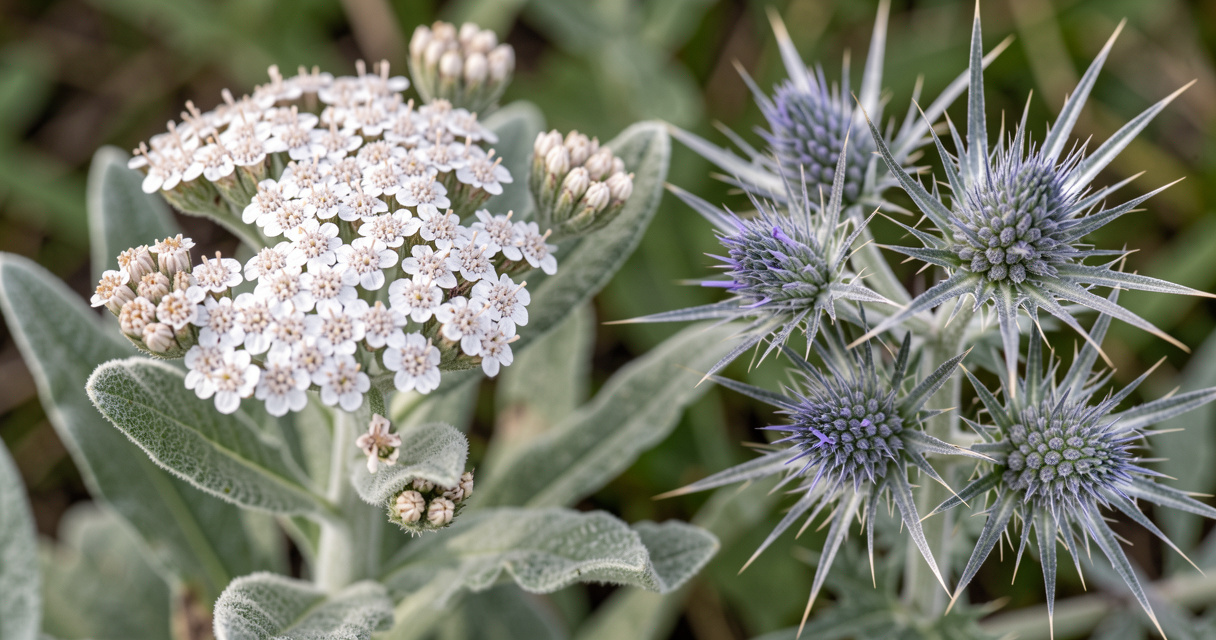
Deer have sensitive noses. Plants with potent essential oils—like lavender, sage, rosemary, and catmint—are often bypassed. The strong smell confuses or repels them. Texture is another factor. Fuzzy leaves (yarrow, lamb’s ear) or prickly stems (sea holly, globe thistle) are unpleasant to eat. In my experience, gardeners underestimate how effective texture alone can be. What most people get wrong is assuming deer will never touch a plant with fuzzy leaves. They will, if hungry enough. But when combined with scent, these plants become reliable deterrents.
Toxicity as a Natural Deterrent
Many plants contain compounds that cause mild digestive distress or worse. Daffodils, hellebores, and foxgloves are classic examples. Deer learn to avoid them after one taste. According to Cornell Cooperative Extension (2025), “No plant is completely deer-proof, particularly when deer densities are high.” But toxicity gives a strong edge. For instance, I’ve planted Helleborus orientalis in shade borders and watched them stay untouched season after season—while hostas nearby vanished. Expert Tip: Combine toxic plants with scented ones for a double barrier. Even in heavy deer zones, you’ll see far less damage.
What makes a plant deer resistant? It’s a combination of scent, texture, toxicity, and sometimes taste. Do deer eat lavender? Very rarely—the aromatic oils are a strong deterrent. Now that you know the ‘why’, let’s look at the ‘which’—the top perennials that have been proven in trials and real gardens.
Top 10 Hardy Deer-Resistant Perennials (Proven by Trials and Time)
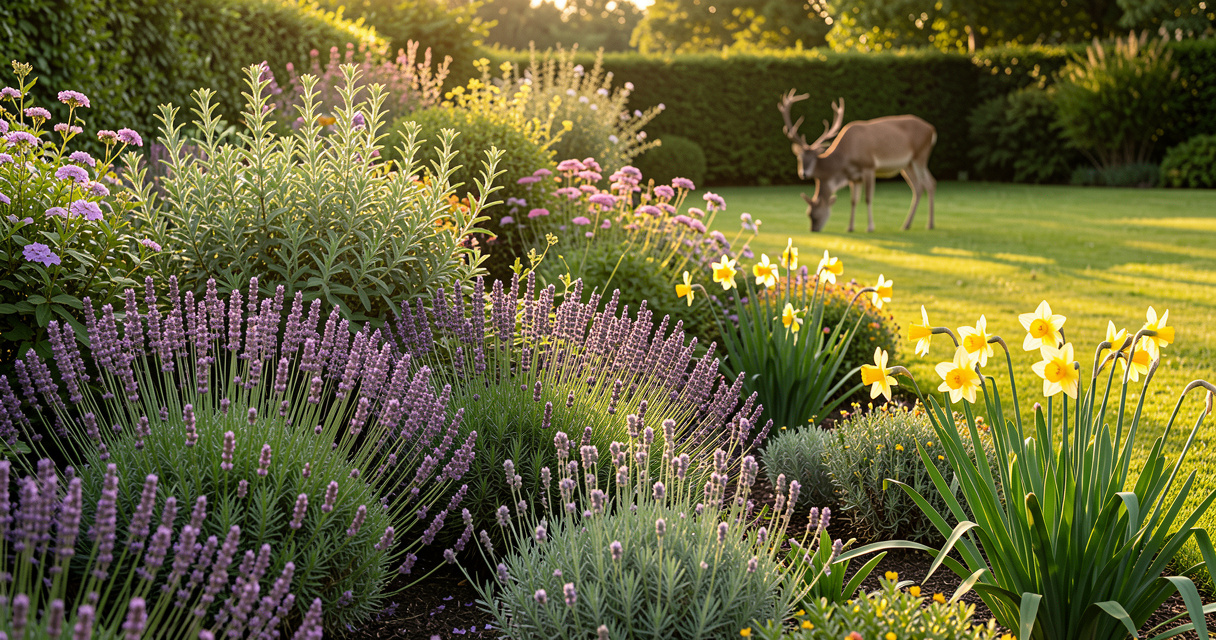
Here’s the list you came for: deer resistant perennials that survive cold winters and look beautiful. I’ve selected these based on trials from Proven Winners, recommendations from the University of Maryland Extension, and my own observations in Dutch gardens. The featured snippet answer for ‘most deer resistant perennials’ includes: Lavender (strong scent), Daffodils (toxic), Russian Sage (aromatic foliage), Boxwood (strong scent), Cinquefoil (fine texture), Yarrow (fuzzy leaves), Hellebore (toxic), Catmint (strong scent), Allium (onion scent), and Bearded Iris (fleshy roots). All are hardy in zones 4-9, many down to zone 3.
| Plant Name | Hardiness Zones | Sun/Shade | Bloom Time | Deer-Resistance Factor | Source |
|---|---|---|---|---|---|
| Lavender (Lavandula angustifolia) | 5–9 | Full sun | Late spring–summer | Strong scent (oils) | Proven Winners, Cornell |
| Daffodil (Narcissus spp.) | 3–8 | Full sun to light shade | Early–mid spring | Toxic bulbs | Cornell, UMD |
| Russian Sage (Perovskia atriplicifolia) | 4–9 | Full sun | Mid–late summer | Aromatic foliage | Proven Winners, Breck’s |
| Boxwood (Buxus sempervirens) | 5–8 | Full sun to partial shade | Evergreen (no bloom) | Strong scent (foliage) | UMD, Cornell |
| Cinquefoil (Potentilla fruticosa) | 2–7 | Full sun | Summer–fall | Fine texture, slightly bitter | Proven Winners, UM Extension |
| Yarrow (Achillea millefolium) | 3–9 | Full sun | Summer | Fuzzy leaves, bitter taste | Garden Design, personal trial |
| Hellebore (Helleborus orientalis) | 4–9 | Partial to full shade | Late winter–spring | Toxic (all parts) | Cornell, UMD |
| Catmint (Nepeta spp.) | 3–8 | Full sun | Spring–fall | Strong mint scent | Proven Winners, UMD |
| Allium (Allium spp., e.g., ‘Globemaster’) | 4–9 | Full sun | Late spring | Onion/garlic scent | Breck’s, personal experience |
| Bearded Iris (Iris germanica) | 3–9 | Full sun | Late spring | Fleshy roots (irritant), bitter | Cornell, UMD |
Perennials for Full Sun
If you have a sunny border, start with lavender, Russian sage, catmint, and yarrow. These are workhorses. For example, the Proven Winners variety ‘Meant to Bee’ agastache is a relative of catmint with even more intense scent. I planted it in a trial bed in Zuid-Holland, and deer didn’t touch it while they decimated the phlox next door. What flowers do deer hate? Strongly scented ones like these.
Shade-Loving Deer Resistant Perennials
Shade gardens are often deer magnets because many shade plants are tender. But hellebores and ferns (like Dryopteris) are excellent choices. For a pop of early spring color, plant hardy deer resistant flowers like Epimedium (barrenwort) – deer avoid its leathery leaves. I’ve also used Pulmonaria (lungwort) with its spotted leaves; deer rarely bother it. Avoid hostas and impatiens – replace them with these alternatives.
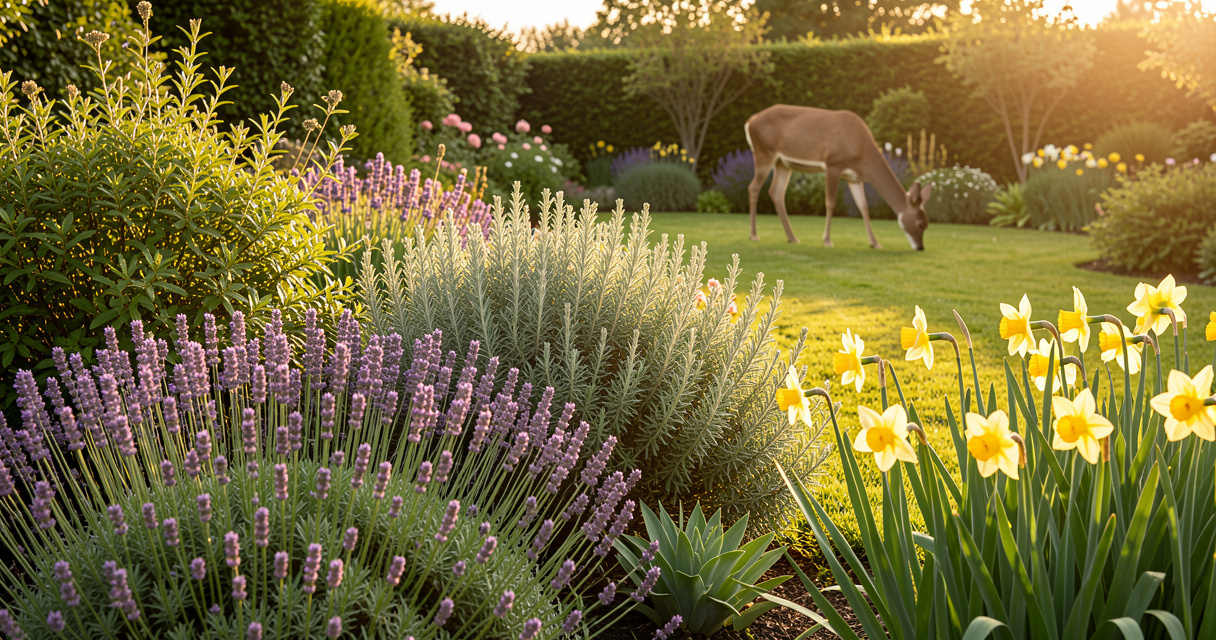
A gardener in Maryland (UMD Extension case) reports that planting a border of daffodils and lavender stopped deer from entering her vegetable patch. That’s the power of layered resistance. Now let’s move from perennials to shrubs that give structure year-round.
Deer-Resistant Shrubs for Structure and Year-Round Interest
Shrubs are the backbone of a garden. Choosing deer proof shrubs that survive browsing and cold winters is essential. Boxwood is a classic – its strong smell deters deer, and it stays green all winter. Cinquefoil (already mentioned) also works as a shrub. For native options, try Ilex verticillata (winterberry) or Spicebush (Lindera benzoin). The University of Maryland Extension lists these as rarely damaged.
Evergreen Options for Privacy
If you need a privacy screen, consider Thuja occidentalis (arborvitae) – while some deer will nibble it, the ‘Smaragd’ cultivar has a strong scent that reduces damage. Another reliable choice is Juniperus chinensis ‘Blue Point’. I’ve used it in a coastal garden in Zeeland, and deer left it alone. Do deer eat boxwood? Rarely – it’s one of the most deer proof shrubs available and hardy to zone 5.
Flowering Shrubs That Deer Ignore
For spring blooms, Forsythia is usually ignored. Syringa (lilac) has strong scent that deters deer. The native Clethra alnifolia (sweet pepperbush) is a powerhouse – fragrant flowers and deer-resistant leaves. In my Haarlem garden, I planted Ribes sanguineum (flowering currant) and the deer never touched it, while they ate the roses next door.
- Check hardiness zone: Shrubs must survive your winter lows.
- Sun exposure: Match sun/shade needs.
- Soil type: Most shrubs prefer well-drained soil.
- Local deer pressure: Contact extension office for reports.
Now that we have perennials and shrubs, let’s explore native plants that serve your local ecosystem while resisting deer.
Native Deer-Resistant Plants: Beauty That Benefits Local Ecosystems
Using deer resistant native plants is a smart move – they’re adapted to your climate and support pollinators and birds. The University of Maryland Extension has a comprehensive list. Let’s highlight a few top performers for the eastern US (zones 3–8).
| Common Name | Botanical Name | Deer Damage (Rare/Seldom) | Special Benefit |
|---|---|---|---|
| Pawpaw | Asimina triloba | Rare | Fruit for wildlife, unique foliage |
| Sweet Pepperbush | Clethra alnifolia | Seldom | Fragrant blooms, fall color |
| Eastern Redcedar | Juniperus virginiana | Rare | Evergreen, winter shelter |
| Red Chokeberry | Aronia arbutifolia | Seldom | Berries for birds, bright red fall foliage |
| Spicebush | Lindera benzoin | Seldom | Host plant for spicebush swallowtail butterfly |
| Wild Columbine | Aquilegia canadensis | Rare | Red flowers attract hummingbirds |
| Little Bluestem | Schizachyrium scoparium | Rare | Ornamental grass, drought-tolerant |
Trees and Shrubs
Pawpaw and sweet pepperbush are excellent understory plants. In my grandmother’s garden, we had a pawpaw patch – deer never touched it. Also consider Hamamelis virginiana (witch hazel) – its leaves are unpalatable. Are native plants deer resistant? Many are, because they co-evolved with local deer. But even natives can be browsed during hard winters.
Perennials and Grasses
Groundcovers like Heuchera americana (coral bells) are rarely eaten; the fuzzy leaves deter deer. Grasses like little bluestem and switchgrass (Panicum virgatum) are almost never touched. For a deer-prone garden in zone 6, these are reliable choices.
Now let’s cover the often-overlooked category of ground covers that can transform a tricky slope or shady spot.
Deer-Resistant Ground Covers and Vines
Deer resistant ground cover options are perfect for filling gaps and suppressing weeds. Creeping thyme (Thymus serpyllum) is a champion – strong scent, tiny leaves, and it forms a dense mat. I’ve used it between stepping stones in full sun; deer walk right over it. Do deer eat creeping thyme? Almost never – the thyme oil is too strong. For shade, try Galium odoratum (sweet woodruff) or Vinca minor (periwinkle), though vinca can be nibbled occasionally. Warning: Even ‘resistant’ ground covers can be nibbled in extreme drought. Provide extra water to reduce damage. Also consider Virginia creeper (Parthenocissus quinquefolia) for covering fences – its berries are toxic and leaves are tough.
With these ground covers, you can build a layered defense. Next up: strategies that work beyond just plant selection.
5 Foolproof Deer‑Proofing Strategies to Protect Your Entire Garden
Plants alone aren’t enough. You need a multi-pronged approach. Here are five tactics that I’ve seen work in both Dutch and American gardens.
- Install motion-activated sprinklers – Startling but harmless.
- Interplant aromatic herbs (mint, rosemary, sage) among vulnerable plants.
- Use wind chimes or shiny objects to create movement.
- Apply deer repellent sprays (rotate between scent and taste types).
- Build a physical barrier – tall fence (8 feet) or layered hedges of resistant plants.
Physical Barriers and Scare Tactics
Fencing is the only full-proof method, but it’s not always practical. For small gardens, a motion-activated sprinkler is amazing – I’ve used the Orbit brand and had deer avoid my yard for weeks. Combine with plants like lavender that create a scent barrier. What plants repel deer naturally? Lavender, sage, and rosemary are top choices. Action steps: 1) Install motion sprinkler 2) Plant daffodil border 3) Add aromatic herbs among vulnerable plants 4) Use deer repellent sprays as backup.
Companion Planting with Herbs
I always recommend planting a ring of strongly scented herbs around your vegetable patch or prized perennials. Rosemary, thyme, and catmint are perennials that return year after year. In my own garden, a border of catmint and daffodils has kept deer out of my lettuce – not perfectly, but dramatically better than before.
Now let’s address the common pitfalls that can sabotage your efforts.
Common Mistakes When Choosing Deer-Resistant Plants (And How to Avoid Them)
After years of talking to gardeners, I see the same mistakes. The University of Maryland Extension (2019) states, “Lists of which plants are deer-resistant vary so much they are sometimes in direct contradiction with one another.” That’s why you need context.
Trusting a Single Source
Many gardeners rely on one list from a nursery or online article. But deer preferences differ by region, season, and even by individual deer herd. Cross-reference multiple sources: Cornell, UMD, Proven Winners, and your local extension office. Is deer resistant the same as deer proof? Absolutely not. There is no deer-proof plant. Let me show you what actually works: use at least three sources for each plant you choose.
Ignoring Local Deer Populations
Dr. Sara Tangren (UMD Extension, 2019) notes that when food is scarce, deer will eat toxic plants. Always monitor and rotate deterrents. Why do deer eat plants that are supposed to be resistant? Because they’re starving or it’s a young deer trying new foods. Don’t overthink it – if you see damage, try a different plant or add a scent barrier.
To recap, choose plants from multiple reliable lists, consider your local deer population density, and combine with other strategies. Now let’s bring it all together.
Frequently Asked Questions
What is the most deer resistant perennial?
No single plant is 100% resistant, but lavender, daffodils, boxwood, and Russian sage are among the least preferred. Proven Winners and Cornell lists often place these at the top.
Do deer eat lavender plants?
Lavender is highly deer resistant due to its strong aromatic oils. Deer typically avoid it, especially when other food is available. It’s a reliable choice for sunny borders.
Are hostas deer resistant?
No, hostas are a favorite deer snack. The University of Maryland Extension lists hostas as frequently damaged. Replace with deer-resistant alternatives like ferns, hellebores, or barrenwort.
What shrubs do deer not eat?
Deer rarely eat boxwood, cinquefoil, smokebush, or spicebush. For native options, try red chokeberry, sweet pepperbush, or eastern redcedar (from UMD list).
Do deer eat hydrangeas?
Smooth hydrangea (Hydrangea arborescens) is listed as rarely damaged by Cornell, but other hydrangeas can be browsed. It depends on variety and deer hunger. Choose ‘Annabelle’ type for better resistance.
What is the difference between deer resistant and deer proof?
There is no deer-proof plant. ‘Resistant’ means a plant is less likely to be eaten, but no guarantee. Factors include deer population density, food availability, and seasonal hunger.
Can I use deer resistant plants in shade?
Yes, several shade-loving deer resistant plants exist: hellebores (toxic), ferns (texture), Japanese forest grass, and sweet woodruff. Avoid hostas and impatiens which deer love.
Conclusion: Building a Resilient, Deer‑Tolerant Garden
Let me recap what we’ve covered. No plant is completely deer-proof; resistance varies by region and season. Focus on plants with strong scents, fuzzy or prickly textures, or mild toxicity. Combine plant selection with physical barriers and companion planting for best results. Start with a few hardy proven winners (lavender, daffodils, boxwood) and expand based on local observations.
Ready to transform your garden into a deer‑resistant sanctuary? Begin with one border of daffodils and lavender, and watch the deer wander elsewhere. The plant will tell you what works – pay attention, be patient, and you’ll have a beautiful garden that coexists with wildlife.

I’ve spent over fifteen years in botanical gardens and nurseries across the Netherlands and Belgium. Now I garden in Haarlem and write what I wish someone had told me sooner. No fluff — just what actually works.