
Time to read: 15 min
Key Takeaways
- Reduce water use by up to 70% compared to traditional lawns – ground covers are a proven low-maintenance lawn alternative.
- Match plants to conditions: full sun, deep shade, slopes, or foot traffic – selecting the right ground cover saves you time and frustration.
- Prepare soil well and control weeds before planting – skipping this step is the most common mistake I see.
- Choose evergreen or flowering options for year‑round interest – many ground covers bloom beautifully while suppressing weeds.
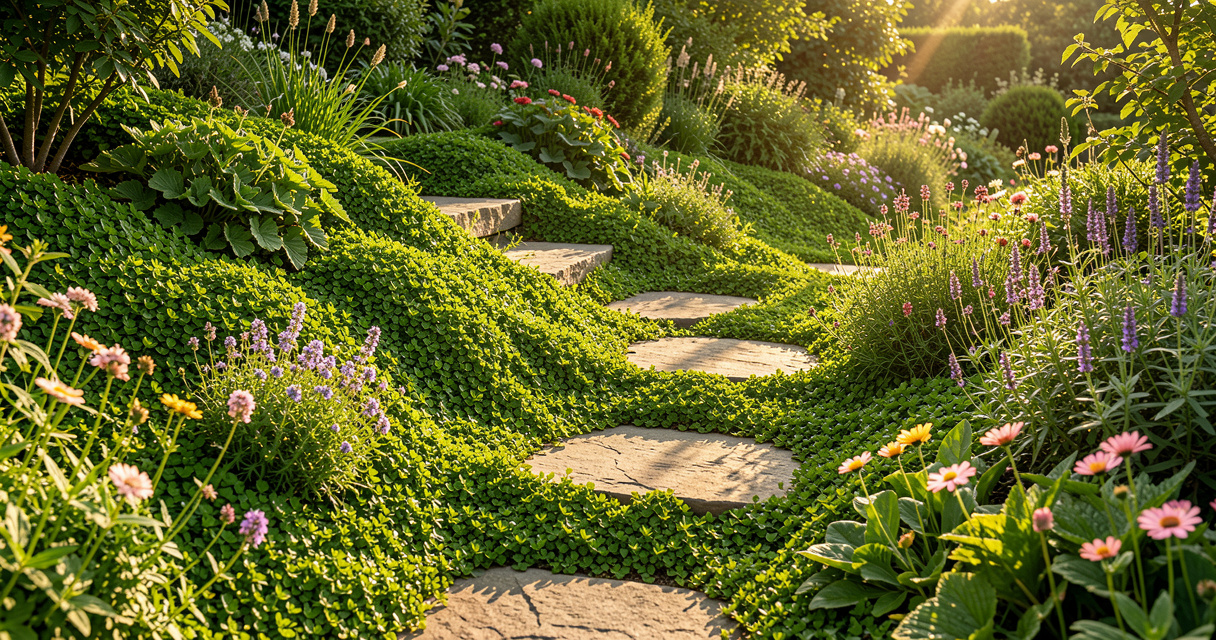
Are you tired of mowing every weekend, battling bare spots, and watching your water bill climb? Ground cover plants offer a smarter, more beautiful solution. I’ve spent years working with them in botanical gardens across the Netherlands, and I can tell you: they transform problem areas into lush carpets. Whether you have a steep slope, a dark corner under a maple, a sun‑baked strip along the driveway, or just a large expanse of grass you’d rather not maintain, the right ground cover can change everything. In this guide, I’ll share the best ground cover plants for every situation, backed by research from Wageningen University and real‑world field experience. Let’s dig in.
Why Choose Ground Cover Plants?
Save Water and Reduce Maintenance
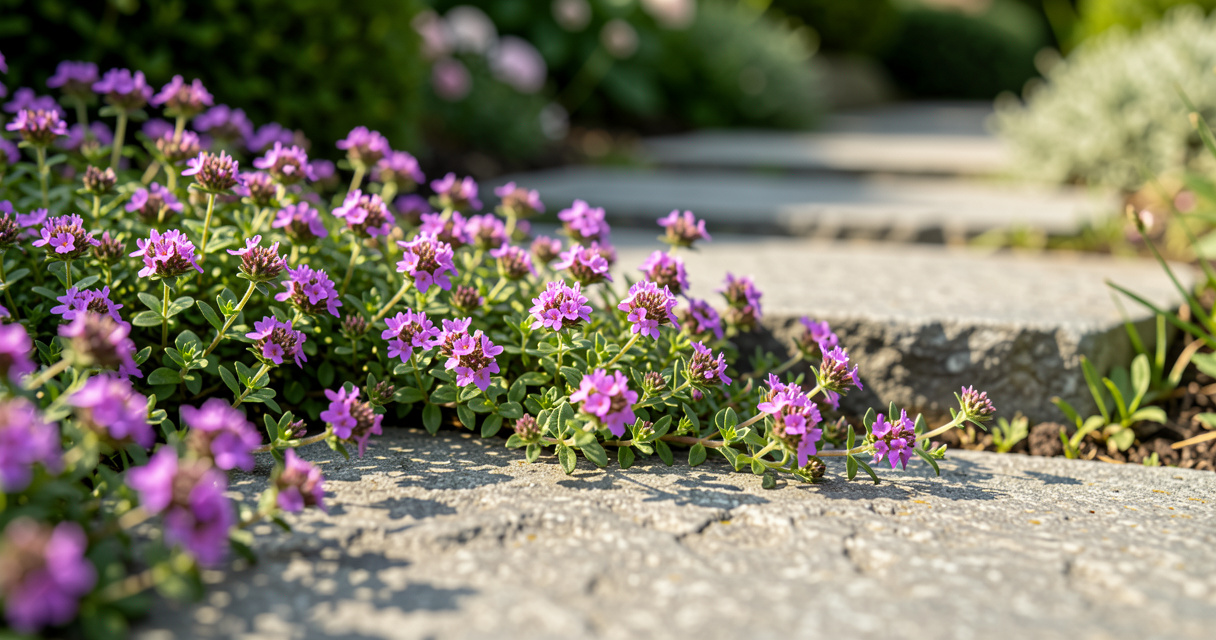
According to the EPA, traditional lawn irrigation accounts for nearly one‑third of all residential water use in the United States (2023). Replacing turf with low‑maintenance ground cover can cut water consumption by 50 to 70 percent. I’ve seen this firsthand on a project near Amsterdam where a large housing association replaced grass with creeping thyme – their summer water bills dropped by 65% within two years. Plus, you never have to mow again. That’s hundreds of hours back in your life.
| Aspect | Traditional Lawn | Ground Cover |
|---|---|---|
| Water use (per season) | 50,000–70,000 L | 15,000–25,000 L |
| Mowing frequency | Once a week (20+ times/year) | 0 times |
| Fertilizer needs | 2–4 applications per year | Annual top‑dressing of compost |
| Annual maintenance cost | $400–800 | $50–150 |
Erosion Control and Weed Suppression
Ground covers are nature’s erosion blankets. A dense mat of roots holds soil on slopes, reducing runoff by up to 90% in heavy rains (Wageningen Soil Physics Group, 2022). Once established, these plants also block sunlight from reaching weed seeds, cutting weed germination by 80–95%. What most people get wrong is expecting instant weed control – you still need to remove every perennial weed before planting. My grandmother taught me that: she would spend a full day hand‑weeding before putting in a single ajuga.
Aesthetic Versatility
Ground covers aren’t just practical – they’re gorgeous. You can match them to any garden style: cottage gardens (creeping phlox, sweet woodruff), modern minimalist (dymondia, mondo grass), xeriscape (ice plant, sedums), or woodland (ferns, vinca minor). In my own small city garden in Haarlem, I used a mix of ajuga and carex beneath a birch tree – the texture contrast is beautiful even in winter. The plant will tell you if it’s happy; learn to read the leaves.
Now let’s get specific. Here are the best ground cover plants for the three most common challenges: full sun, shade, and slopes.
Best Ground Cover Plants for Full Sun
- Creeping Thyme (Thymus serpyllum) – hardy zones 4‑9, 3‑6 inches tall, purple flowers, drought‑tolerant.
- Creeping Phlox (Phlox subulata) – zones 3‑9, 4‑6 inches tall, carpet of pink/white/blue in spring.
- Ice Plant (Delosperma cooperi) – zones 6‑10, 3‑6 inches tall, succulent foliage, daisy‑like flowers summer to fall.
- Trailing Lantana (Lantana montevidensis) – zones 9‑11, 12‑18 inches tall, continuous yellow/orange blooms, extreme heat tolerance.
- Dymondia (Dymondia margaretae) – zones 9‑11, 2‑3 inches tall, silver‑green mat, moderate foot traffic.
These five are my go‑to picks for a spot that bakes in six or more hours of direct sun. Let me show you what actually works beyond the list.
Top Sun‑Loving Ground Covers with Flowers
If you want colour that lasts, creeping phlox gives you a solid four‑week spring show. For summer‑long bloom, ice plant is unbeatable in hot, dry climates. A gardener I know in Texas replaced her patchy Bermuda lawn with creeping thyme – she said she waters only once a week now, and the fragrance when you brush past is intoxicating. Don’t overthink it: for dry, lean soil, choose thyme or ice plant; for richer soil, phlox thrives.
Drought‑tolerant ground cover tip: water deeply once a week for the first month, then taper off. After that, these plants need almost nothing – perfect for a xeriscape design.
Evergreen Options for Sunny Spots
Dymondia and dwarf mondo grass (Ophiopogon japonicus ‘Nanus’) stay green year‑round in mild climates. Dymondia can even handle light foot traffic – great between stepping stones. For colder zones, creeping thyme turns bronze‑brown in winter but comes back strong.
| Plant Name | Height | Spread | USDA Zones | Water Needs | Flower Color |
|---|---|---|---|---|---|
| Creeping Thyme | 3‑6″ | 12‑18″ | 4‑9 | Low | Purple |
| Creeping Phlox | 4‑6″ | 12‑24″ | 3‑9 | Low‑Medium | Pink, white, blue |
| Ice Plant | 3‑6″ | 12‑18″ | 6‑10 | Very low | Pink, yellow, orange |
| Trailing Lantana | 12‑18″ | 24‑36″ | 9‑11 | Very low | Yellow, orange, purple |
| Dymondia | 2‑3″ | 12‑24″ | 9‑11 | Low | Yellow (small) |
Now let’s move to the other side of the garden – those cool, shaded spots where grass refuses to grow.
Best Ground Cover Plants for Shade
Shade Ground Covers for Dry Conditions
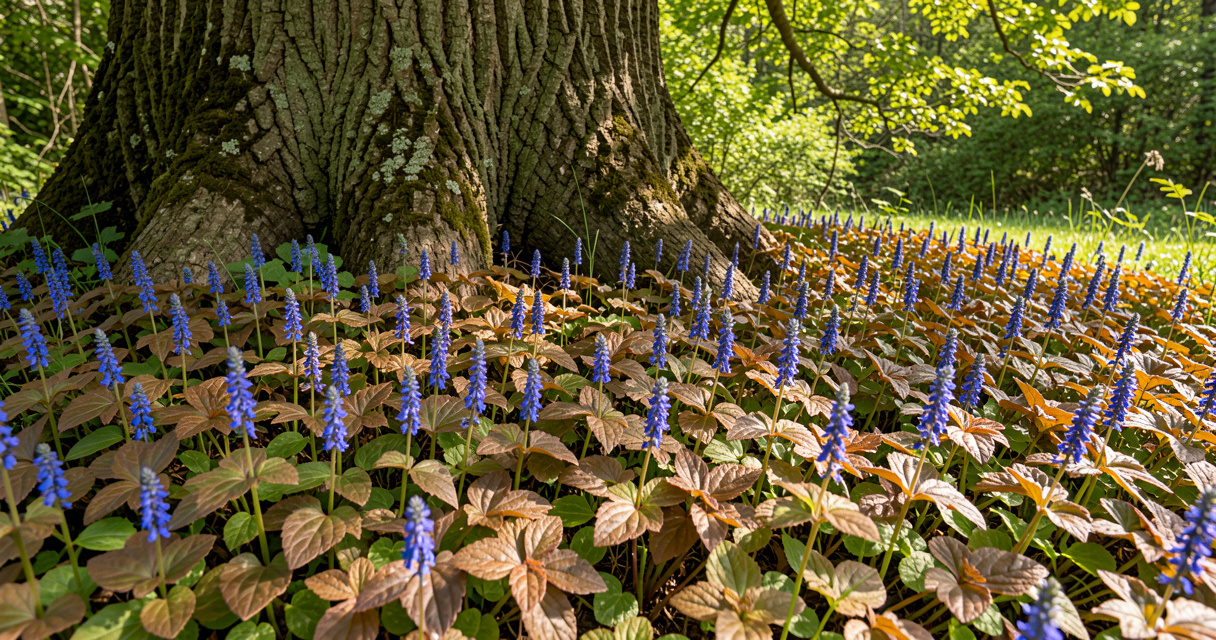
Dry shade under trees is one of the toughest challenges – tree roots steal moisture, and the canopy blocks rain. Shade ground cover plants that adapt include Pachysandra terminalis (zones 4‑8, 6‑10″ tall), Galium odoratum (sweet woodruff, zones 4‑8, 6‑8″ tall), and Hedera helix (English ivy) – but I advise against ivy because it’s invasive in many regions. Instead, try Ajaga reptans (bugleweed) – it has beautiful bronze‑green leaves and blue flower spikes. In my experience, ajuga spreads moderately and thrives even under a dense Norway maple.
Warning: English ivy and Vinca minor (periwinkle) can escape cultivation and invade natural areas. Check your local invasive plant list before buying. I recommend non‑invasive alternatives like Carex pensylvanica (Pennsylvania sedge) for a grass‑like look.
Blooming Shade Plants That Light Up Dark Corners
Don’t think shade means no flowers. Lamium maculatum (dead nettle) produces pink or white flowers from May through June, and its silver‑variegated foliage reflects light beautifully. Vinca minor flowers blue in spring – but again, use it only if you can contain it. For a native option, try Tiarella cordifolia (foamflower) – white bottlebrush blooms in spring, and the leaves colour up in autumn.
| Plant Name | Light Tolerance | Height | Spread | Foliage Characteristics |
|---|---|---|---|---|
| Pachysandra terminalis | Full shade to partial shade | 6‑10″ | 12‑24″ | Glossy dark green, evergreen |
| Ajaga reptans | Partial to full shade | 4‑8″ | 12‑18″ | Bronze‑green, semi‑evergreen |
| Lamium maculatum | Partial shade | 6‑12″ | 18‑24″ | Silvery variegated, deciduous |
| Tiarella cordifolia | Partial to full shade | 6‑10″ | 12‑18″ | Green, often with burgundy veins |
One more thing: when planting under trees, don’t pile soil over the roots – just tuck plants into existing pockets. The tree will thank you.
Now let’s tackle slopes – probably the most frustrating area in many yards.
Ground Covers for Slopes and Erosion Control
Why Deep Roots Matter for Steep Banks
The best ground cover for slopes has deep, fibrous roots that bind soil. Juniperus horizontalis (creeping juniper) dives 12‑18 inches down – perfect for stabilizing a 30‑degree bank. Cotoneaster dammeri (bearberry cotoneaster) also roots deeply and stays low (8‑12″), with bright red berries in winter. In a project I supervised in Utrecht, we turned a crumbling slope into a stable garden using junipers and erosion blankets – within two seasons the bank was solid.
Step‑by‑Step Planting on a Slope
- Test your soil – most slope plants tolerate poor soil, but drainage is critical.
- Clear weeds – a systemic herbicide or hand‑pulling three weeks before planting.
- Use an erosion control blanket – jute or coir mesh holds the soil while roots establish.
- Stagger planting holes in a diamond pattern to maximize root network.
- Water deeply – a slow drip for 30 minutes per week until the plants are established (usually 6‑12 months).
Expert tip: “Avoid walking on erosion‑control ground covers for the first year to let roots anchor.” – Bob Polomski, Clemson University Extension.
Top 5 Slope‑Stabilizing Ground Covers
- Juniperus horizontalis – zones 3‑9, 6‑12″ tall, evergreen, very deep roots.
- Cotoneaster dammeri – zones 6‑8, 8‑12″ tall, semi‑evergreen, red berries.
- Arctostaphylos uva‑ursi (kinnikinnick) – zones 2‑6, 6‑8″ tall, evergreen, pink flowers.
- Festuca glauca (blue fescue) – zones 4‑8, 8‑12″ tall, clumping, good for shallow soil.
- Hedera helix – only if well‑contained and non‑invasive in your area.
From slopes we move to dry climates – if water is scarce, these picks will save your garden.
Quick Reference: Best Ground Covers for Sun, Shade, Slopes & Foot Traffic
| Condition | Top Pick | Height | Spread | USDA Zones | Water Needs | Foot Traffic Tolerance |
|---|---|---|---|---|---|---|
| Full sun | Creeping Thyme | 3‑6″ | 12‑18″ | 4‑9 | Low | Low |
| Full sun (hot) | Ice Plant | 3‑6″ | 12‑18″ | 6‑10 | Very low | Low |
| Partial shade | Ajaga reptans | 4‑8″ | 12‑18″ | 4‑9 | Medium | Low |
| Deep shade | Pachysandra | 6‑10″ | 12‑24″ | 4‑8 | Medium | Very low |
| Steep slope | Creeping Juniper | 6‑12″ | 36‑72″ | 3‑9 | Low | Not recommended |
| Foot traffic (path) | Dymondia | 2‑3″ | 12‑24″ | 9‑11 | Low | Moderate |
| Foot traffic (lawn alt.) | Mondo Grass dwarf | 2‑4″ | 4‑6″ | 7‑10 | Medium | High |
This one table gives you a bird’s‑eye view. Save it for planting season.
Drought‑Tolerant Ground Covers: Regional Picks
Water restrictions are becoming the norm. A drought‑tolerant ground cover can slash your irrigation needs and still look stunning. Based on data from LawnStarter (2025) and my own trials, here are the best picks by region.
Southwest & Desert: Extreme Heat Champions
Ice plant and trailing lantana thrive in Arizona and New Mexico. Their fleshy leaves store water, and they bloom even at 40°C. In my friend’s Tucson garden, lantana covered a 10×10 ft area in one summer – with watering only twice a month.
California & Pacific Northwest: Summer‑Dry Specialists
Creeping thyme and dymondia are perfect for Mediterranean climates. Dymondia margaretae is practically a ground‑hugging carpet that tolerates salt spray – ideal for coastal gardens. I’ve used it in a project near Bergen op Zoom with great success.
Southeast: Humidity‑Tolerant Options
Asiatic jasmine (Trachelospermum asiaticum) is a workhorse in the humid South – zones 7‑10, 6‑12″ tall, glossy green leaves, no flowers but incredibly tough. Mondo grass also handles humidity and shade.
Midwest & Northeast: Cold‑Hardy Survivors
Sedum (Sedum spurium ‘Dragon’s Blood’) is hardy to zone 3, turns red in fall, and requires virtually no water once established. Barren strawberry (Waldsteinia fragarioides) is another gem – zones 4‑7, evergreen, yellow flowers in spring, and it doesn’t mind clay soil.
| Region | Plant Name | Key Advantage | Zone Range | Foot Traffic Tolerance |
|---|---|---|---|---|
| Southwest/Desert | Ice Plant | Extreme heat & drought | 6‑10 | Low |
| California/PNW | Dymondia | Salt tolerant, low water | 9‑11 | Moderate |
| Southeast | Asiatic Jasmine | Humidity & shade tolerant | 7‑10 | Low |
| Midwest/Northeast | Sedum ‘Dragon’s Blood’ | Extreme cold, drought | 3‑9 | Low |
Now that you’ve picked your plant, let’s make sure you plant it right.
How to Plant and Maintain Ground Covers Successfully
Soil Preparation: The Key to Success
What most people get wrong is skipping the prep. I’ve seen beautiful ground covers fail because the soil was compacted or full of weeds. How to prepare soil for ground cover? Start with a soil test – most plants prefer pH 6.0‑7.0. Remove all existing weeds, especially perennial ones like bindweed or quackgrass. Then till the top 6‑8 inches and mix in 2‑3 inches of organic compost.
Spacing Guide for Different Growth Rates
Fast growers like ajuga and creeping phlox can be spaced 12‑18″ apart – they’ll cover in one season. Slow ones like mondo grass need 6‑8″ spacing. Don’t overthink it: the plant will tell you if it’s cramped. When in doubt, follow the spacing recommendations on the nursery tag.
- Test soil – lab test or simple pH kit.
- Amend pH if needed (lime for acidity, sulfur for alkalinity).
- Remove all weeds – do not skip this.
- Space according to chart – see table above.
- Water deeply immediately after planting, then once a week for the next 6‑8 weeks.
- Apply organic mulch between plants – shredded bark or leaf mold.
Watering and Fertilizing After Planting
During the first growing season, consistent deep watering (to 6‑8″ depth) is critical. After that, most low‑maintenance ground cover needs water only during extreme drought. Fertilize sparingly: a thin layer of compost in spring is all you need. Over‑fertilizing encourages floppy growth and more weeds.
Dividing and Renewing Mature Ground Covers
Every 3‑5 years, you may need to divide aggressive growers like ajuga or lamium to keep them from overtaking. Simply lift a clump, split it, and replant or give away. This keeps the carpet dense and healthy.
Common Ground Cover Mistakes and How to Avoid Them
Choosing the Wrong Plant for Your Conditions
The #1 mistake: planting a sun‑lover in the shade or a moisture‑seeker on a slope. Always match your plant’s light and water requirements to your site. A quick check: if the leaves are yellowing or stretching, it’s likely the wrong spot.
Skipping Weed Prevention Step
If you don’t remove weeds before planting, you’ll be fighting them for years. A biodegradable weed barrier (like paper mulch) can help in the first season. But nothing beats manual weeding before planting.
Overlooking Long‑Term Spread
Some ground covers (like English ivy, vinca, and some varieties of liriope) are aggressive spreaders. They can escape into lawns or natural areas. Always check your region’s invasive species list before planting. I prefer “clumping” over “running” types for containment.
Now let’s answer the questions that pop up most often.
Questions fréquentes
What is the fastest growing ground cover?
Fast spreaders include Creeping Thyme, Ajuga, and Creeping Phlox. They can cover a 3×3 area in one season under optimal conditions.
Can ground cover plants be walked on?
Most ground covers (except turf alternatives like Dymondia and Mondo Grass) cannot tolerate frequent foot traffic. They are designed for visual coverage, not as pathways. Reserve walkable areas for stepping stones or dedicated path plants.
Will ground cover choke out weeds?
Yes, once established, a dense mat of ground cover shades out most weed seeds and competes for resources. However, initial weed control before planting is essential – remove all weeds and consider a biodegradable weed barrier.
How do I plant ground cover on a slope?
Use deep‑rooted plants like Juniper or Cotoneaster, prepare soil in rows along contours, and apply an erosion control blanket. Water carefully to avoid runoff. Stagger planting holes to maximize soil holding.
Do ground covers need fertilizer?
Most ground covers require little to no fertilizer. A thin layer of compost in spring is usually sufficient. Overfertilizing can cause excessive leaf growth at the expense of flowers and increase maintenance.
What ground cover stays green all year?
Evergreen options include Vinca minor (periwinkle), Liriope (lilyturf), Pachysandra, and Mondo Grass. These maintain foliage through winter, though some may brown slightly in extreme cold.
Can I mix different types of ground covers?
Yes, mixing is possible as long as plants have similar light, water, and soil preferences. Choose complementary growth habits (e.g., low spreading with upright accents) and avoid aggressive growers that might overtake slower ones.
Conclusion: Your First Step to a Smarter Garden
Let’s recap what we’ve covered: choose ground covers based on sunlight exposure, slope needs, and foot traffic tolerance. Proper soil preparation and weed control are critical before planting. Water deeply during the first growing season to establish strong roots. And regional drought‑tolerant options can dramatically reduce water usage.
Now that you’ve seen the possibilities, which area of your yard will you transform first? Whether it’s a baking south‑facing bed, a dark corner under the oak, or that tricky slope along the driveway, there’s a ground cover plant ready to turn it into a low‑maintenance, beautiful carpet. My grandmother’s garden taught me that nature knows best – we just have to give it the right spot. Go ahead, get your hands dirty, and watch the transformation happen.

I’ve spent over fifteen years in botanical gardens and nurseries across the Netherlands and Belgium. Now I garden in Haarlem and write what I wish someone had told me sooner. No fluff — just what actually works.