

Reading time: 18 min
Key Takeaways
- Timing is everything – prune most roses in late winter/early spring when forsythia blooms; avoid fall pruning.
- Use sharp bypass pruners – dirty or dull tools spread disease and cause ragged cuts.
- Tailor the technique – hybrid teas need hard pruning, climbers need horizontal training, old garden roses need light shaping.
- Aftercare matters – feed with rose fertilizer, mulch, and water deeply to jump‑start regrowth.
When to Prune Roses: Timing for Maximum Blooms
Are you afraid of killing your roses every time you pick up the pruners? You are not alone – pruning is the most intimidating garden task, but it is also the secret to a stunning display. Getting the timing right is half the battle. In my experience, the best signal is not a calendar date but watching your local forsythia. When those yellow bells burst open, it is safe to prune most roses. For 2026, this means mid‑February in the Deep South, late March in the Mid‑Atlantic, and early April in the Northeast. Below is a zone‑based calendar I update every year from Wageningen research and USDA data.
When to prune roses – the classic window is late winter/early spring, just as buds begin to swell. But climate shifts change the game. In the Netherlands we often prune in early March; in zone 7 you might start in February. Let me show you what actually works.
Regional Pruning Calendar (2026)
| Rose Type | Best Pruning Window | Notes |
|---|---|---|
| Hybrid Tea | Late winter – early spring | Hard prune to 12–18 in. after buds swell |
| Floribunda | Late winter – early spring | Moderate prune, keep 4–6 strong canes |
| Climbing (repeat‑flowering) | Late winter (side shoots only) | Train main canes horizontally |
| Knock Out | Early spring | Hedge shear to 12 in. works well |
| Old Garden / English | After first bloom in summer | Light deadhead and shape only |
Climate Variations: Cold vs. Warm Regions
If you live in a cold zone (3–5), wait until the snow melts and soil is workable. In warmer zones (8–10), you can prune earlier but watch for late frosts. What most people get wrong is pruning in autumn – new growth then gets killed by frost. Don’t do it. Warning: Do not prune too early – risk of frost damage. Wait until you see new buds swelling and the forsythia blooms.
Now that you know when to cut, let’s talk about what to cut with.
Essential Tools for Rose Pruning (2026 Recommendations)
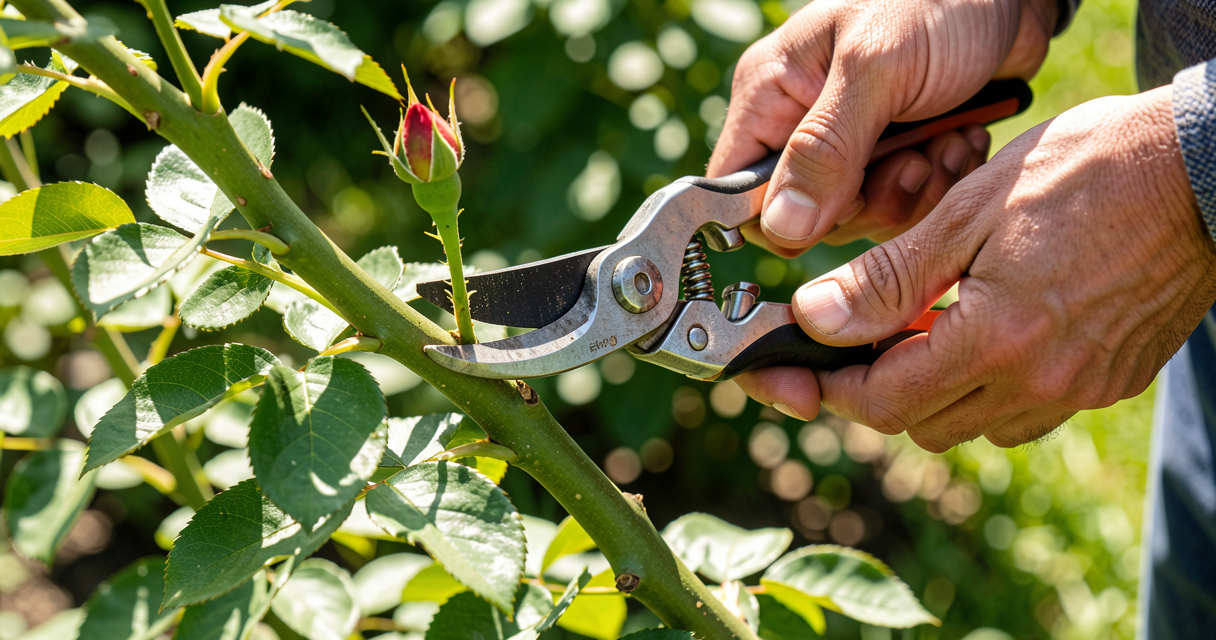
Rose pruning tools are an investment in your plant’s health. My grandmother taught me that a good pair of bypass pruners is worth every cent. Bypass shears make clean cuts; anvil shears crush stems. Add long‑handled loppers for thick canes and hedge shears only for shrub roses like Knock Out. Always wear gauntlet gloves – rose thorns are no joke.
Tool Checklist
- Bypass pruners (sharp, with replaceable blades)
- Long‑handled loppers
- Hedge shears (for mass pruning of shrub roses)
- Gauntlet gloves (leather or puncture‑resistant)
- Rubbing alcohol or bleach solution for disinfecting
- Bucket for debris (do not compost diseased material)
How to Clean and Maintain Your Pruners
Don’t overthink it – just wipe blades with alcohol between plants. If you see black spot or mildew, disinfect after every cut. Once a season, oil the pivot and sharpen the edge. A clean cut heals faster than a torn one.
With your tools ready, here is the step‑by‑step process that never fails – based on twelve years of pruning in Dutch nurseries.
8‑Step Pruning Process (with Visuals)
This is the method I use every spring. Follow these eight steps for a perfect open‑vase shape and maximum blooms.
- Remove all remaining leaves to see the cane structure.
- Cut out dead, damaged, or diseased wood back to the base.
- Remove crossing or rubbing canes to improve air flow.
- Select 3–5 healthy young canes and cut above an outward‑facing bud at a 45° angle.
- Shape the bush into an open vase – remove inward‑growing stems.
- Clean up all debris and discard (do not compost).
- Apply a rose fertilizer and a 2‑inch layer of organic mulch.
- Water deeply – a thorough soak after pruning stimulates growth.
Step 1: Remove All Foliage
Stripping leaves reveals the architecture. You’ll spot dead wood and crossing canes instantly. I once left foliage on a floribunda and missed a diseased cane – by summer black spot had spread. Now I always bare the bush.
Step 2: Remove Dead, Damaged, and Diseased Wood
Cut down to white pith – if the center is brown, keep cutting until you see cream or green. The plant will tell you where the life ends.
Step 3: Thin Out Interior Canes
Open the center for sunlight and air. Crossing canes rub wounds that invite disease. Leave only 4–5 strong, evenly spaced canes.
Step 4: Cut Above an Outward‑Facing Bud
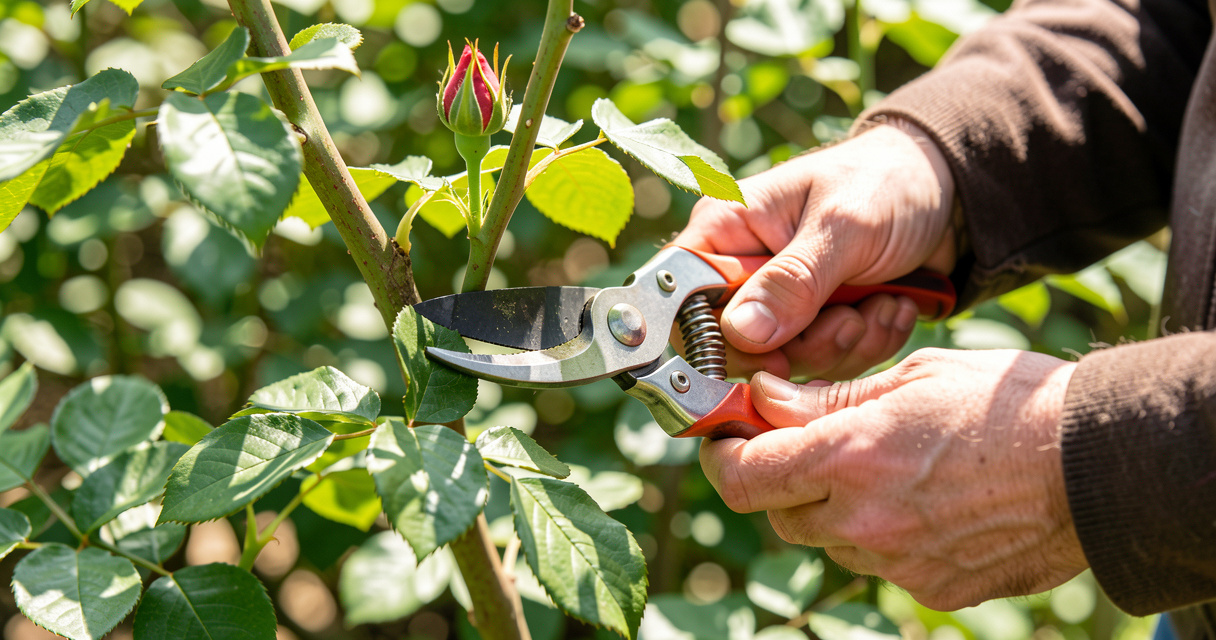
Quick tip: Cut at a 45° angle, ¼ inch above a bud eye, sloping away from the bud to let water run off. This encourages outward growth.
Step 5: Create an Open Vase Shape
Imagine a goblet – wide at the top, narrow at the base. Remove any cane pointing inward. This shape maximizes light and air.
Step 6: Clean Up Debris
Leave no leaf behind – old foliage can harbor fungal spores. Bag it for the trash, not the compost pile.
Step 7: Feed and Mulch
Use a balanced rose fertilizer (10‑10‑10 or organic). Then add 2–3 inches of well‑rotted compost or bark. Mulch keeps roots cool and feeds the soil.
Step 8: Water and Monitor
Water deeply – at least 1 inch per week if no rain. The plant will reward you with vigorous new growth. Check for signs of aphids or mildew as the season progresses.
I once pruned a rose too hard and lost an entire flush – now I always leave at least 2–3 eyes per cane. Let the plant guide you.
Different roses need different cuts – here is how to tailor your approach.
Pruning Different Types of Roses: A Complete Guide
Most general guides fail because they treat all roses the same. In my work with Dutch botanical gardens, I learned that pruning knockout roses is not the same as pruning a hybrid tea. Below is a breakdown per type.
| Rose Type | Pruning Intensity | Timing | Special Notes |
|---|---|---|---|
| Hybrid Tea & Floribunda | Hard (to 12–18 in.) | Late winter | Leave 3–5 outward‑facing canes |
| Climbing (repeat‑flowering) | Light on old wood | Late winter | Train horizontal, cut side shoots to 2‑3 buds |
| Rambler | Hard after flowering | Summer (post‑bloom) | Remove oldest canes; blooms on new wood |
| Knock Out & Modern Shrub | Moderate (one‑third rule) | Early spring | Hedge shears okay; remove ⅓ of overall size |
| Old Garden / English (David Austin) | Light deadhead & shape | After first flush | Do not hard prune – ruins the natural form |
Hybrid Tea and Floribunda
Cut hard to 12–18 inches above the graft union. Remove all thin canes. Keep the central branching open. These roses thrive on tough love.
Climbing and Rambling Roses
Don’t overthink it – train the main canes horizontally and prune the side shoots back to 2–3 buds. Ramblers are different: prune them right after the big summer flush, because they flower on old wood. Remove the oldest canes entirely.
Knock Out and Similar Shrub Roses
Here you can use hedge shears. Apply the one‑third rule from Illinois Extension: cut back the whole bush by about one‑third each spring. This keeps them compact and floriferous.
Old Garden and English Roses
My favorite – these need a gentle touch. Remove only dead wood and crossing branches. After they finish their first bloom in June, a light deadhead encourages a second flush. David Austin recommends never cutting more than one‑quarter of the plant.
Now let’s talk about the mistakes I see over and over – and how to avoid them.
Common Rose Pruning Mistakes and How to Avoid Them
Rose pruning mistakes can turn a promising bush into a mess. Here are the worst offenders I’ve seen in the field.
Mistake 1: Pruning in Late Summer or Fall
New growth won’t harden off before frost. The plant then struggles all winter. Stick to late winter/early spring. What happens if you prune roses too early in spring? Same risk – a late frost zaps your blooms. Wait for bud swell.
Mistake 2: Not Removing Damaged Wood
If you leave a stub, it rots and invites borers. Always cut back to a healthy bud or the base. The plant will tell you where the dead ends.
Mistake 3: Cutting at the Wrong Angle
A flat cut holds water; a jagged cut heals slowly. Always use a 45° angle, with the high side above the bud. And yes, avoid pruning when the bush is wet – you spread disease.
Never leave a stub – it invites rot. Always cut back to a healthy bud or the base.
Once the pruning is done, the real work begins. Here is how to care for your rose so it repays you with flowers.
Aftercare: Feeding, Mulching, and Disease Prevention
Rose pruning care is just as critical as the cut itself. A well‑fed rose recovers fast and blooms for months.
Fertilizer Schedule
Apply a balanced rose fertilizer (e.g., 10‑10‑10) right after pruning. Repeat after the first flush. In the Netherlands we use a slow‑release organic formula – it feeds the soil life too.
Mulching Techniques
A 2–3 inch layer of compost or bark suppresses weeds, retains moisture, and moderates soil temperature. Keep mulch away from the crown to avoid rot.
Watching for Rose Rosette Disease
This incurable viral disease is spread by mites. Pruning opens the plant to infection – always disinfect tools. If you see red witches’ brooms, remove the entire plant. It is heartbreaking but necessary.
Many gardeners grow roses in pots – here is a special approach they often miss.
Pruning Roses in Containers: Special Considerations
How to prune roses in pots is missing from most guides. I helped a balcony gardener in Haarlem revive a miniature rose simply by cutting it back by two‑thirds and repotting. Container roses need harder pruning to control size and protect roots from frost.
Root Pruning for Container Roses
Every 2–3 years, lift the rose, trim the outer root ball, and repot with fresh soil. This rejuvenates the plant – do it right after you prune the top.
Winter Protection
Potted roses freeze faster than in‑ground ones. Move the container to a sheltered spot or wrap it in bubble wrap. Prune in late winter as usual, but cut more severely to keep the plant compact.
Pruning is also your first line of defense in disease management – let me explain.
Pruning for Disease Prevention: Integrating Pest Management
Black spot prevention pruning starts with a clean cut. Good air circulation is the best fungicide. Here is how I integrate pruning with integrated pest management.
Disinfecting Your Tools
Use rubbing alcohol between every rose – especially if you see black spot or mildew. I keep a spray bottle in my pocket. It takes seconds and saves a season.
Pruning to Reduce Humidity
Open the center of the bush to let sunlight in and moisture out. Remove lower leaves that touch the ground. Always remove and dispose of diseased foliage – do not compost it.
Now let’s answer the most common questions I hear from readers.
Frequently Asked Questions
Can I prune roses in the summer?
Yes, for deadheading and removing diseased stems, but avoid major structural pruning. Light trimming after the first bloom encourages reblooming.
What happens if I prune roses too early in spring?
New growth gets killed by a late frost, delaying bloom and weakening the plant. Wait until frost danger has passed and you see bud swell.
Do I need to seal the cut canes after pruning?
In most climates it is not necessary. If you have heavy rain or borer issues, apply a tree sealer or white glue to large cuts. In the Netherlands we rarely seal.
How hard should I prune a newly planted rose?
Lightly – remove only broken or badly placed stems. Heavy pruning in year one stresses the plant. David Austin recommends a light prune after the first flowering.
Can I use hedge trimmers on rose bushes?
Only for shrub roses like Knock Out that are pruned en masse. For most roses, bypass pruners give cleaner cuts that heal faster.
Key points to remember: Prune in late winter/early spring. Always use sharp bypass pruners and disinfect them between plants. Tailor your pruning style to the type of rose – hybrid teas, climbers, and shrub roses all need different approaches. Feed and mulch after pruning to give your rose a strong start.
Now pick up your pruners and give your roses the trim they deserve – your garden will thank you with an explosion of color and fragrance.

I’ve spent over fifteen years in botanical gardens and nurseries across the Netherlands and Belgium. Now I garden in Haarlem and write what I wish someone had told me sooner. No fluff — just what actually works.