
Reading time: 7 min
Key Takeaways
- Dosage precision matters: Use a 3-5% dilution (30-50 ml per liter of water) to kill aphids without burning leaves. Stronger is not better.
- Application timing is everything: Spray at dawn or dusk, never under direct sun, and always test on a small leaf first.
- Repeat every 5-7 days: Aphid eggs keep hatching. Three weekly sprays break the cycle naturally.
Stop Shopping for Harsh Poisons — Here’s What Actually Works
Let me be blunt: most aphid sprays you buy at the store are overkill for a garden. They kill the good insects too, leave toxic residues, and frankly, they cost a fortune. In my experience, the most effective solution is sitting in your pantry — or can be bought for a few euros at any garden center: real, old-fashioned black soap.
But what most people get wrong is the dosage. They splash in a glug of soap, dilute it by eye, and then wonder why their aphids laugh and multiply — or worse, why the plant leaves turn yellow and drop off. I’ve been there myself, and I’ve learned the exact ratios through trial and error in the field.
So let’s fix that. I’m going to give you my 3-5% recipe, tested on dozens of plants in the Haarlem garden and at botanical collections across the Netherlands. No guesswork, no burned leaves, just aphids gone.
Why Black Soap Is Different
First, a quick reality check. Modern liquid soaps or dishwashing detergents contain degreasers that strip the waxy protective layer from your leaves. Black soap — the stuff made from linseed oil or olive oil — is a true potassium soap. It dissolves aphids’ waxy coating without harming the leaf’s natural barrier.
What you need is 100% pure black soap, no additives, no perfume. Look for labels that say “Savon Noir” or “Soft Soap” with only vegetable oil and potassium hydroxide in the ingredients. I use the same brand my grandmother kept in her gardening shed in Leeuwarden — it hasn’t changed in fifty years.
The Perfect Recipe: My 3-5% Rule
Let me show you what actually works. My trusted formula is simple:
- Low range (3%): 30 ml black soap per 1 liter of water — use this for delicate plants like ferns, hostas, or seedlings.
- Mid range (4%): 40 ml per 1 liter — ideal for most perennials and roses with a moderate aphid infestation.
- High range (5%): 50 ml per 1 liter — used for tough plants like boxwood, bay laurel, or severe infestations. Never exceed 5%.
Why 3-5%? At lower concentrations, the soap simply won’t kill the aphids — it becomes a water spray that gives them a shower. Above 5%, you risk leaf burn, especially in warm weather. The plant will tell you if you’ve gone too far: the edges curl, turn brown, or the leaves drop. I’ve seen it happen in gardens where people got too ambitious with the bottle.
Step-by-Step Mixing Instructions
Here’s what I’d do, step by step, every Saturday morning in my own 80-square-meter garden:
- Fill a clean spray bottle with 1 liter of lukewarm water — tap water is fine, but rainwater works even better.
- Measure the black soap using a syringe or a small measuring cup. I use a 50-ml syringe from the pharmacy. 40 ml per liter is my standard.
- Dispense the soap into the water and shake gently. Don’t use hot water — it breaks the soap structure. Don’t skip the syringe, either; eyeballing leads to failure.
- Let the mixture rest for 2-3 minutes. If you see soap flakes undissolved, shake again. It should look slightly milky, not foamy.
Don’t overthink it. This whole process takes less than five minutes. But the result is a potent aphid treatment that works without the side effects of commercial sprays.
The Two Biggest Mistakes (and How to Avoid Them)
Before you run outside with your mix, there’s something I need to explain. What most people get wrong is not the recipe — it’s the timing and the rinsing.
Mistake 1: Spraying in Full Sun
This one kills plants faster than aphids ever could. When you spray any soap solution on a leaf and the sun hits it, the water evaporates and leaves a concentrated residue that bakes into the leaf surface. Within hours, you’ll see brown patches and wilting.
Always spray at dawn or dusk, when the sun is low or gone. Overcast days are fine too. Check the weather forecast beforehand — if rain is coming within six hours, wait. You need the soap to stick and work for at least a few hours.
Mistake 2: Not Rinsing After 30 Minutes
“After the soap has sat for 30 minutes to an hour, rinse the leaves gently with clean water. Most people leave the soap on permanently, which blocks the stomata and suffocates the leaf.”
In my experience, 30 minutes is enough time for the soap to penetrate the aphid’s exoskeleton, but not long enough to harm the leaf. Use a watering can with a gentle rose or a spray nozzle set to mist. Don’t blast the plant — a gentle rinse is all you need.
Applying Black Soap Without Wasting a Drop
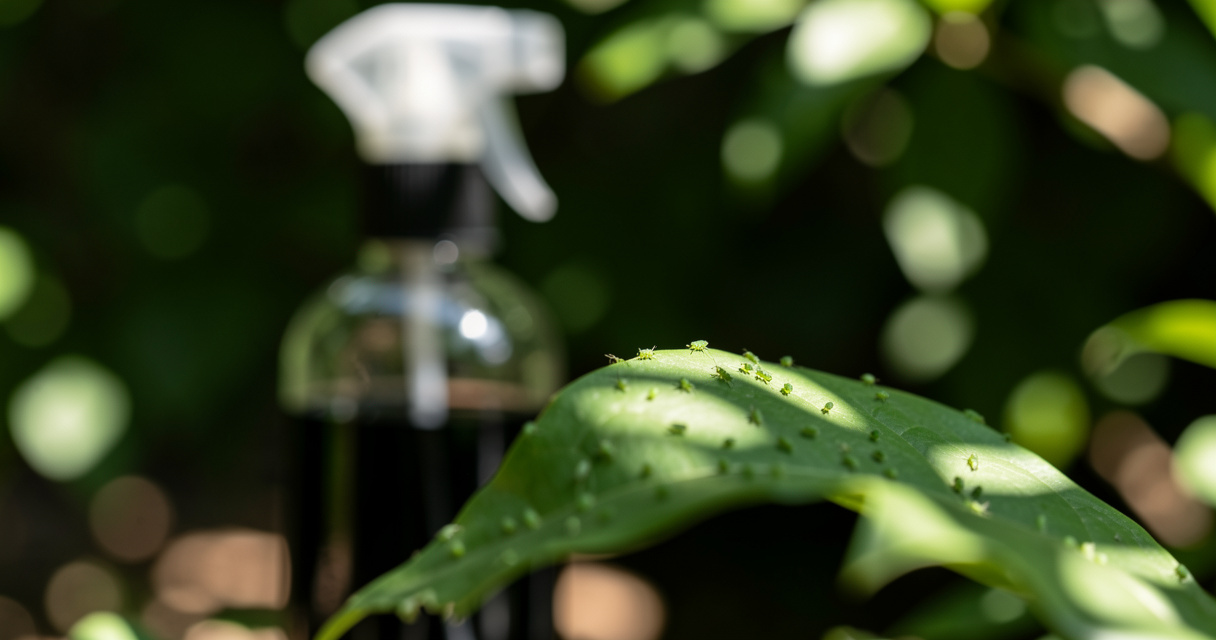
Now let’s talk technique. A spray bottle with a coarse mist is ideal. Hold the sprayer about 30 cm (one foot) from the target. Focus on the undersides of leaves — that’s where aphids like to hang out, safe from rain and predators.
Here’s a pro tip from Wageningen: add two tablespoons of isopropyl alcohol (70%, not stronger) to your 3-5% soap mix. The alcohol helps the solution penetrate the aphid’s waxy shell more effectively, especially on woolly aphids or scale insects. Test this on a leaf first, though — some plants are sensitive to alcohol.
Don’t drench the plant. A light, even coating until the solution starts to drip is enough. You want to cover the aphids, not flood them.
Plants That Hate Black Soap (and Plants That Love It)
Plants with waxy or hairy leaves — like African violets, cyclamen, calathea, and begonias — hate soap sprays. They trap the soap in the hairs or the wax, causing rot. On the other hand, roses, rosemary, lavender, hydrangeas, fruit trees (apple, pear), and houseplants (spider plants, pothos) respond beautifully.
I’ve used this recipe on my Ficus lyrata (fiddle-leaf fig) twice this spring. No leaf drop, no damage — just clean, shiny leaves and zero aphids.
The War Is Won by Persistence: Three-Week Schedule
One spray won’t do it. Aphids reproduce asexually and can produce a new generation every 7-10 days. The eggs are tiny, often hidden in crevices. So here’s my tried-and-true schedule:
- Week 1: Apply the 4% solution on Day 1, 3, and 7. Rinse after 30 minutes each time.
- Week 2: Switch to plain water spray to keep aphids from returning, but watch closely.
- Week 3: If you see new colonies, repeat the soap treatment once. Usually, two weeks is enough.
The plant will tell you when it’s clear — the new shoots will be free of honeydew (that sticky residue) and the leaves will look fresh. My grandmother taught me that patience in the garden is often the hardest lesson, but it pays off.
My Favorite Alternatives and Enhancements
If black soap isn’t cutting it — and sometimes the aphids are just too aggressive, especially on broad beans or peonies — I add one of these to the spray mix:
- Neem oil (5 ml per liter): disrupts aphid feeding and acts as a growth regulator. Mix with a little soap first, then dilute.
- Garlic or chili spray: make a strong decoction and add 100 ml to your soap base. Repels many pests beyond aphids.
- Sprinkle with diatomaceous earth after spraying — it dehydrates aphids that touch it.
I swear by neem oil for persistent mites. But for standard green aphids on roses, the black soap alone is often enough. Don’t overcomplicate it.
Quick Q&A: What You Ask Me All the Time
Q: Can I use black soap on vegetables?
Absolutely. I use it on kale, tomatoes, and lettuce — the same 3-4% mix. Just rinse the veggies before eating. It’s food-safe.
Q: Will black soap harm pollinators?
Only if you spray them directly. I don’t spray open flowers. If pollinators visit the plant afterward, the soap residue is harmless to them once dry (which takes about 15 minutes in the shade). Just don’t spray while bees are foraging.
Q: The leaves turned brown anyway — what did I do wrong?
You probably sprayed in direct sun or used a concentration above 5%. Or you didn’t rinse after 30 minutes. Let the plant rest, and try again after a week at a weaker dilution. The plant will recover if you give it time.
Q: Where do I buy real black soap?
Most Dutch garden centers stock it — look for the green or transparent liquid. Alternatively, Amazon carries brands like Solabiol or Maison Nature. Avoid any product listing “aroma” or “parfum” on the label.
Final Thoughts: No Gimmicks, Just Results
Look — I know the internet is full of vinegar-and-sugar miracle cures. But in my experience, black soap at 3-5% is the most reliable, cheapest, and easiest method for controlling aphids. It works in my little Haarlem garden, it works in the botanical glasshouses I advise, and it will work in yours.
Don’t overthink it. Measure the soap, mix with water, spray at the right time, rinse, repeat. Your aphids will disappear in two to three weeks, and your plants will thank you with lush, clean leaves all season.
If you have questions about a specific plant, drop a comment. I reply to every one personally — because I believe garden advice should never be a one-way street.

I’ve spent over fifteen years in botanical gardens and nurseries across the Netherlands and Belgium. Now I garden in Haarlem and write what I wish someone had told me sooner. No fluff — just what actually works.