
Reading time: 17 min
Key Takeaways
- Full sun means at least 6 hours of direct sunlight, with afternoon sun as the harshest test for leaves.
- Heat-tolerant perennials like coneflower, daylily, and stonecrop give you color from June to frost with surprising ease.
- Container and indoor plants need bigger pots, sharp drainage, and a slow acclimation to direct sunshine.
- Drought-smart design with mulch, grouped watering, and pet-safe picks keeps sunny borders lush through heat waves.
Does your sunniest garden spot turn plants into crispy yellow casualties by August? It’s not you — you’ve been planting the wrong plants. My grandmother taught me that plants don’t have borders — and neither should good gardening advice. Finding plants for lots of sun can feel confusing because full sun does not always mean heat-tolerant. This guide filters out the picky ones and gives you proven, heat-tolerant winners that will thrive — not just survive — in hot exposed spots. Let me show you what actually works.
What Does Full Sun Mean? Understanding Sun Exposure for Gardens
Full sun means a spot receives at least 6 hours of direct sunlight per day, ideally including most of the afternoon. Many heat-tolerant plants appreciate 8 or more hours, while some benefit from light shade during intense late-day sun in hot climates.
According to Garden Design, full sun is defined as at least 6 hours of direct sunlight per day (n.d.). What most people get wrong is thinking ‘full sun’ means ‘unlimited frying heat.’ In my experience, the plant tells you when it’s too much: leaves wilt, edges crisp, colors fade. Afternoon sun is the real test, because it arrives at the hottest part of the day and often meets reflected heat from walls, patios, or pavement.
Full Sun vs. Partial Sun vs. Full Shade
The difference is not about how bright a place looks. It is about how many hours of direct sun hit the spot. Full sun means 6+ hours, part sun means 3-6 hours, part shade means 3-6 hours with most early in the morning, and full shade means under 3 hours. That one distinction changes everything you plant.
| Sun Exposure Level | Direct Sun Hours | Typical Spots | Best For |
|---|---|---|---|
| Full Sun | 6+ hours | South- or west-facing beds | Heat-tolerant perennials, annuals, shrubs |
| Part Sun | 3-6 hours | East or west with afternoon shade | Moderate bloomers, leafy greens |
| Part Shade | 3-6 hours, mostly morning | Under trees or north/east corners | Ferns, hostas, woodland perennials |
| Full Shade | Under 3 hours | North side of buildings, dense cover | Shade lovers only |
How to Measure Sunlight in Your Yard
Here’s what I’d do: walk outside on a clear day and check the same spot at 8 a.m., noon, and 4 p.m. If it is fully lit at all three checks, you have full sun. If it only gets direct rays in the morning, treat it as part shade even if it feels bright.
Is afternoon sun considered full sun? Yes, and it is the harder test. South- and west-facing spots get the most intense afternoon light, especially when reflected heat bounces off pavement or a wall. Pair full sun with heat-tolerant plants and generous mulch, and you can grow almost anything on this list.
Definition: Full sun = at least 6 hours of direct sunlight per day, ideally including some afternoon sun.
Now that you know your site’s true exposure, let’s meet the plants that can take it.
20 Best Plants for Lots of Sun: Heat-Tolerant Perennials, Annuals, and Shrubs
This is the shortlist I give to friends who say their backyard bakes. It comes from years of working in botanical gardens and nurseries across the Netherlands and Belgium, where we learned to test plants in real sun before recommending them. Mix at least one from each group and your hottest bed will look alive in August.
| Plant | Type | Height | Sun Needs | Why It Works |
|---|---|---|---|---|
| Coneflower | Perennial | 2-4 ft | Full sun | Heat and drought tough; pollinator magnet |
| Daylily | Perennial | 1.5-3 ft | Full sun to part shade | Reliable repeat bloomer |
| Coreopsis | Perennial | 1-2 ft | Full sun | Nonstop yellow daisies |
| Bee Balm | Perennial | 2-4 ft | Full sun | Hummingbird favorite; needs moisture |
| Stonecrop | Perennial | 1-2 ft | Full sun | Succulent leaves shrug off heat |
| Caladium | Annual in most zones | 1-2 ft | Full sun to part shade | Vibrant leaves; loves humidity |
| Euphorbia Diamond Snow | Annual | 1-2 ft | Full sun | Clouds of white flowers all season |
| Sweet Potato Vine | Annual | 3-6 ft stems | Full sun | Fast trailing or climbing color |
| Miniature Rose | Shrub | 1-3 ft | Full sun | Repeat bloom with regular water |
| Sago Palm | Tender shrub | 3-5 ft | Full sun to part shade | Sculptural, ancient look (toxic) |
Perennials That Come Back Stronger Every Year
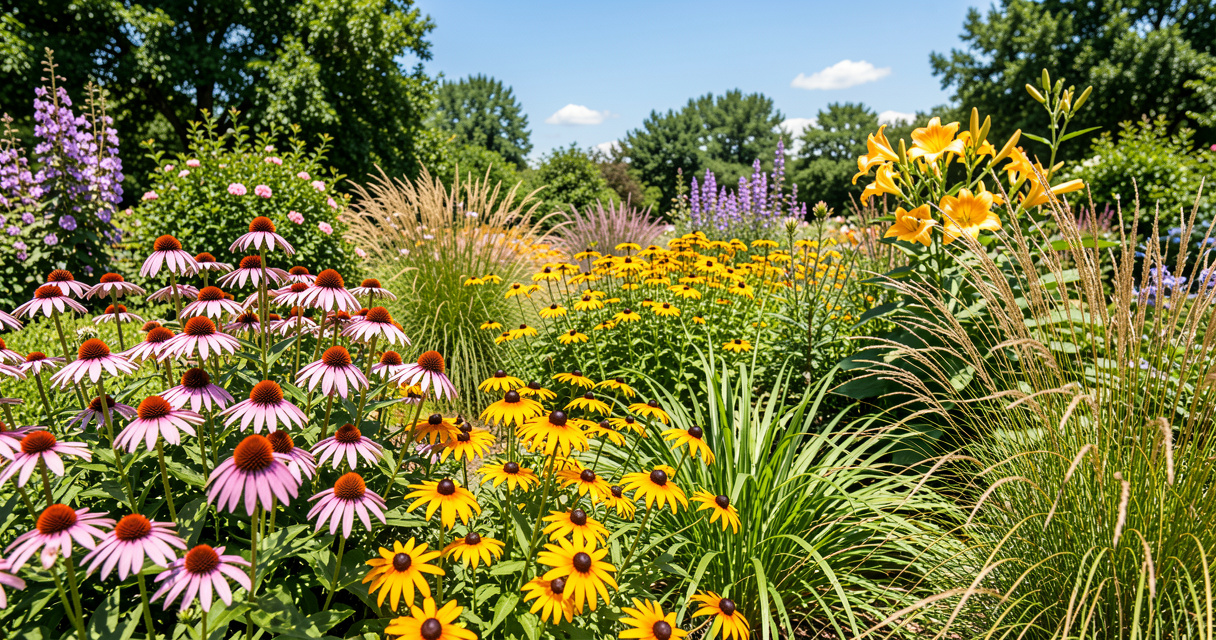
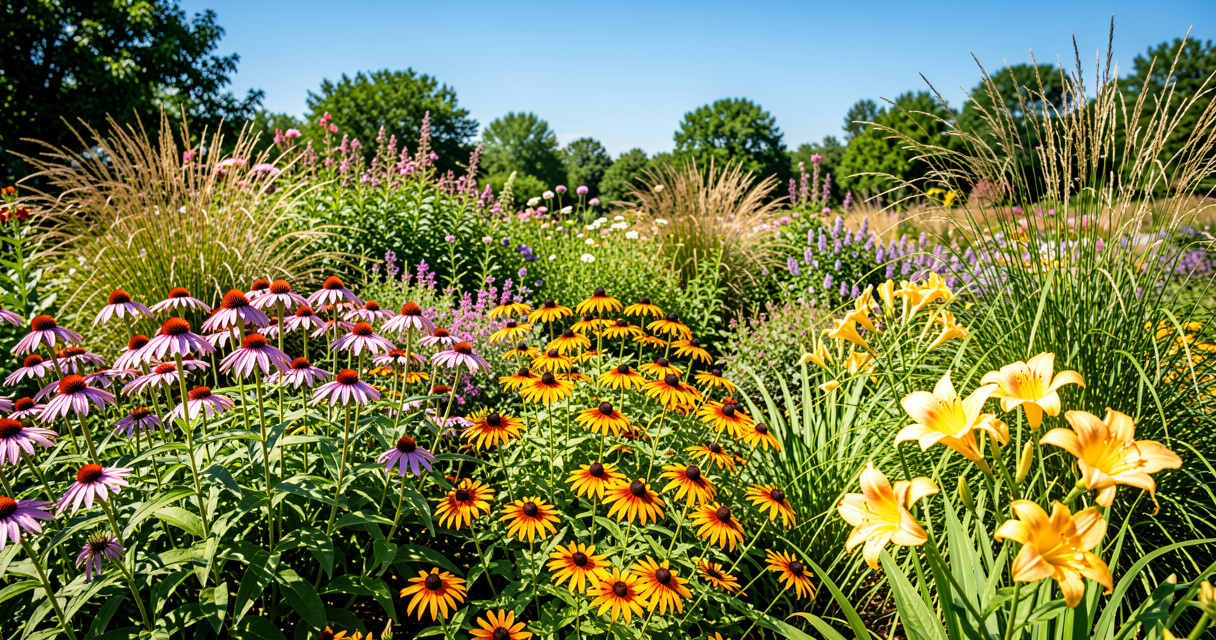
Don’t overthink it. Coneflower (Echinacea purpurea), daylily (Hemerocallis), coreopsis, bee balm, stonecrop, black-eyed Susan, yarrow, Russian sage, and tall phlox are the backbone of a full-sun border. They root deep, settle quickly, and once established they handle hot afternoon sun better than most annuals. In my experience, coneflowers are the most forgiving: even a young plant that looks flat at 4 p.m. bounces back overnight.
A neighbor in Haarlem asked me to rescue a side yard that baked all afternoon. We layered coneflowers, daylilies, and switchgrass, then mulched heavily. By midsummer, it was the most photographed corner of the street.
Annuals for Nonstop Summer Color
Annual plants for full sun fill the gaps while perennials settle. Heart to Heart caladiums adore heat and humidity. Diamond Snow euphorbia stays covered in white blooms until frost. Sweet Caroline sweet potato vine trails or climbs with serious vigor. Use upright annuals like angelonia or lantana for height, and trailing ones for edges.
Sun-Loving Shrubs for Structure
Miniature roses give constant color, lavender and rosemary (Salvia rosmarinus) bring Mediterranean fragrance, and butterfly bush feeds pollinators while anchoring the border. Shrubs matter more than people expect: they hold the structure together when perennials die back in late fall.
Indoor Plants That Love Direct Sunlight
Direct sun doesn’t stop at the door. Sago palms, bird of paradise, olive trees, ponytail palms, and crotons all handle south-facing windows. We’ll dive into container care in a moment, but remember: even sun-loving indoor plants need a gradual transition before you move them outside.
Hardiness zone note: Always verify the plant’s USDA zone and the microclimate of your sunny spot before buying in bulk. A zone number tells you cold survival, not heat happiness.
These winners give you the skeleton. Up next, let’s zero in on the perennials that keep blooming all summer.
Full Sun Perennials That Bloom All Summer
Perennials are the backbone of a sunny border. They return bigger every year, attract pollinators, and need less fuss once established. These full sun perennials deliver color from June to frost without turning into crispy casualties.
| Plant | Bloom Time | Height | Pollinator Value |
|---|---|---|---|
| Coneflower | June-September | 2-4 ft | High |
| Daylily | June-July, repeat | 1.5-3 ft | Moderate |
| Coreopsis | June-September | 1-2 ft | Moderate |
| Bee Balm | July-August | 2-4 ft | High |
| Stonecrop | August-September | 1-2 ft | High |
Native Perennial Favorites for Pollinators
In North American gardens, coneflower, bee balm, and black-eyed Susan are native standouts. They are adapted to local summers, support native bees and butterflies, and handle hot afternoon sun once the roots are in the ground. Make sure the soil drains well; many full sun perennials dislike wet feet. Pair them with ornamental grasses for a naturalistic look.
Long-Blooming Picks for Color from June to Frost
What perennials can survive hot afternoon sun? Coreopsis, daylily, and stonecrop are at the top of my list. Daylilies open a new flower every morning; coreopsis and stonecrop keep going for weeks. Deadhead spent flowers regularly to trigger another flush and keep the plant looking fresh.
Growing tip: Deadhead spent flowers regularly to trigger another flush and keep the plant looking fresh.
With the perennials covered, let’s talk about the annuals that keep the color coming without stopping.
Annual Plants for Full Sun: Color That Lasts Until Frost
The quickest way to test a sunny spot is with annual plants for full sun. They give instant color, fill gaps, and are easy to replace when you want a fresh combination next year.
Upright Annuals for Flower Beds
Heart to Heart caladiums thrive in heat and humidity, Diamond Snow euphorbia stays floriferous in both beds and pots, and upright angelonia or lantana adds spikes of color. These are the plants I recommend when someone says their sunny border looks empty by noon.
Trailing Annuals for Containers and Edges
Sweet Caroline sweet potato vine grows 3-6 feet tall and 1.5-3 feet wide, and it acts as an annual outside zone 11 (Proven Winners, n.d.). It spills over pot edges or climbs a trellis with equal enthusiasm, making it the most useful trailing annual I know.
Planting annuals checklist:
- Choose heat-tolerant varieties labeled for full sun.
- Prepare soil with compost before planting.
- Water deeply right after planting.
- Add 2-3 inches of mulch to keep roots cool.
- Feed with a balanced fertilizer every 3-4 weeks.
Now let’s move to the readers who garden on a balcony, a patio, or a sunny windowsill.
Full Sun Plants for Containers and Small Spaces
Not all full sun gardens are ground beds. South-facing balconies, patios, and even a bright living room window count as full-sun real estate. The good news: many sun-loving container plants take direct sunlight with ease.
Designing a Sun-Loving Container Garden
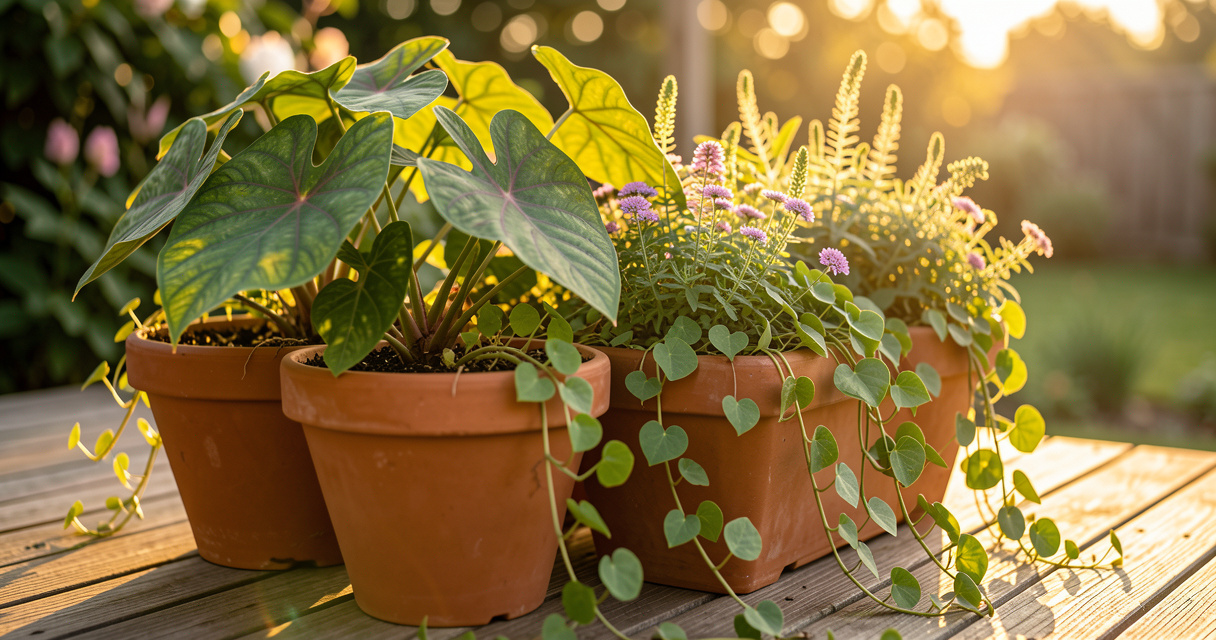
Here’s what I’d do: start with a centerpiece like an olive tree (Olea europaea) or bird of paradise (Strelitzia reginae) in a large pot, add miniature roses and crotons for color, then let sweet potato vine spill over the edge. Group pots by water needs so you don’t have to baby a thirsty plant next to a succulent.
| Plant | Best Spot | Container Size | Water Notes |
|---|---|---|---|
| Miniature Rose | South-facing patio | 12-16 in pot | Water daily in heat |
| Olive Tree | South window or sheltered patio | 18-24 in pot | Let soil dry between waterings |
| Ponytail Palm | Bright south window | 10-14 in pot | Water every 2-3 weeks |
| Bird of Paradise | Sunniest room or balcony | 20+ in pot | Water when top 2 in are dry |
| Croton | Direct-sun window | 10-12 in pot | Keep evenly moist |
Indoor Full Sun Plants for Bright Rooms
Inside, a south-facing window is your full-sun zone. Sago palms, ponytail palms, olive trees, and crotons tolerate direct indoor light, but they need a gradual transition from greenhouse to home. Start with an hour of morning sun and increase exposure day by day to avoid shock.
Container tip: Pots and raised beds heat up faster than garden soil. Use larger pots, light-colored containers, and a layer of mulch to keep roots cool.
Once you can keep containers happy, the next step is learning which plants survive extreme heat and drought.
How to Choose Plants for Extreme Heat and Drought
As summer heat waves get longer, resilient plants win. Drought-tolerant full sun plants are not always the showiest, but they are the ones still standing at the end of August. In the nurseries I consulted across Belgium and the Netherlands, we always looked for thick leaves, deep roots, and a slow growth habit.
Signs Your Plant Is Stressed by Too Much Sun
The plant will tell you. Watch for wilting that does not recover by evening, scorched leaf edges, faded color, and leaves cupping inward. Water stress usually shows up between 2 and 5 p.m. If the whole plant looks crispy by morning, the roots are baking, not just the leaves.
Water-Saving Strategies for Sunny Beds
Group plants by water needs, water deeply and less often to encourage deep roots, and mulch with 2-3 inches of wood chips or compost. In containers, move pots to a spot with afternoon shade during heat waves, or set them inside a larger decorative pot to insulate the roots.
| Plant | Water Needs | Heat Tolerance Notes |
|---|---|---|
| Rosemary | Low | Excellent once established; easy in pots |
| Sago Palm | Low | Handles reflected heat; slow grower |
| Coneflower | Low to moderate | Deep roots; tough native |
| Daylily | Moderate | Repeat blooms with weekly water |
| Sweet Potato Vine | Moderate to high | Fast grower; needs regular water |
Warning: Oleander is bulletproof in full sun, but every part is highly toxic to pets and children. If that matters in your garden, choose pet-safe alternatives like rosemary, lavender, or ornamental grasses.
Choosing tough plants is only half the battle. Next, let’s arrange them into a garden that looks as good as it performs.
Full Sun Landscaping Ideas: Design a Garden That Loves the Heat
Choosing the right full sun plants is half the work; arranging them is the other half. Good full sun landscaping uses height, texture, and hardscape to create a garden that looks planned, not fried.
Layering Plants for Year-Round Interest
In my field work at Wageningen, we grouped plants by water needs before arranging them by color. Put the tallest plants at the back, fill the middle with mounding perennials and shrubs, and let trailing annuals soften the front edge. Add ornamental grasses for movement and winter structure.
Here’s a south-facing patio example from my own garden: an olive tree in a large pot against the warm wall, bird of paradise and miniature roses beside it, and caladiums with sweet potato vine spilling over the front. That one grouping gives height, bloom, foliage, and a pollinator pitstop.
Creating a Pollinator-Friendly Sunny Border
A pollinator-friendly sunny border can be just as colorful as a conventional one. Use native coneflower and bee balm, add herbs like lavender and rosemary that bloom late, and leave some seed heads standing in autumn. Your future bees will thank you.
On r/Sacramento, a gardener reported that star jasmine grew into a full-sun spot but showed some burnt leaves by late summer, while rosemary in a pot stayed easy and glossy. Oleander was the toughest, but they warned it is toxic. The lesson: tough plants still need the right microclimate, and sometimes a pot.
You now have the plants and the design. Let’s answer the most common questions gardeners ask about full sun.
Full Sun Plants: Your Top Questions Answered
Quick answers: Full sun = 6+ hours of direct sun; most full sun plants need regular water until established; a few, like rosemary and sago palm, tolerate drought once mature.
What plants can take full sun all day?
Heat-tolerant choices include coneflowers, daylilies, caladiums, euphorbias, rosemary, and miniature roses. Introduce any new plant gradually to direct sun to prevent leaf scorch.
What is the difference between full sun and bright indirect light?
Full sun means 6+ hours of direct sunlight, while bright indirect light is strong, diffuse light near a window without direct rays. Plants like olive trees and sago palms handle direct sun; many houseplants prefer indirect.
Do full sun plants need water every day?
Most need consistent moisture during the first season; once established, many drought-tolerant ones need less. Containers dry faster and may need daily water in summer.
What perennials bloom all summer in full sun?
Coneflowers, daylilies, coreopsis, bee balm, and stonecrop are reliable summer bloomers. Deadheading encourages repeat blooms.
Which full sun plants are safe for pets?
Avoid oleander, caladiums, and sago palms, which are toxic. Check the ASPCA toxicity lists, and choose rosemary or ornamental grasses if you need pet-safe options.
Can full sun plants grow indoors?
Yes, in south-facing windows or under grow lights. Sago palms, ponytail palms, miniature roses, and croton tolerate direct indoor light. Acclimate them gradually to avoid shock.
What does full sun mean for plants?
It means at least 6 hours of direct sunlight per day, often including afternoon sun. Different plants have different heat tolerances, so match your site to the plant.
Turn Your Sunniest Spot Into a Showpiece
Here’s where we land. Full sun means at least 6 hours of direct sunlight, and afternoon sun is the toughest test. Choose a mix of heat-tolerant perennials, annuals, and shrubs for season-long color. In containers and indoor spaces, water more often and acclimate plants gradually. And prioritize drought-tolerant, pollinator-friendly picks with a layer of mulch to keep roots cool.
- Full sun means at least 6 hours of direct sunlight.
- Heat-tolerant mixes combine perennials, annuals, and shrubs for continuous color.
- Containers need more water and gradual acclimation.
- Drought-smart design keeps sunny borders alive in heat waves.
Don’t overthink it. Before you buy, walk around your yard at 2 p.m. and note which spots are baking — then choose from this list to turn them into your garden’s best feature. These sun-loving plants for bright, exposed gardens will reward you all season.
What will you plant in yours?

I’ve spent over fifteen years in botanical gardens and nurseries across the Netherlands and Belgium. Now I garden in Haarlem and write what I wish someone had told me sooner. No fluff — just what actually works.