

Reading time: 17 minutes
Key takeaways
- Test first, buy second. A pH reading between 5.5 and 7.0 plus an organic matter percentage tells you more than any bag label ever will. Without those two numbers you are guessing with a wallet.
- Rate beats product. Two inches of organic matter worked into the top six inches, or roughly 25 percent by volume, is the working default from Clemson. Never go past 50 percent organic matter in the soil.
- Timing protects the harvest. Fresh manure needs composting first, then 90 to 120 days before harvest depending on whether the edible part touches soil.
- The cheapest amendments do the longest work. Leaves, cover crops, chop-and-drop and homemade compost outperform most of what comes in a plastic bag.
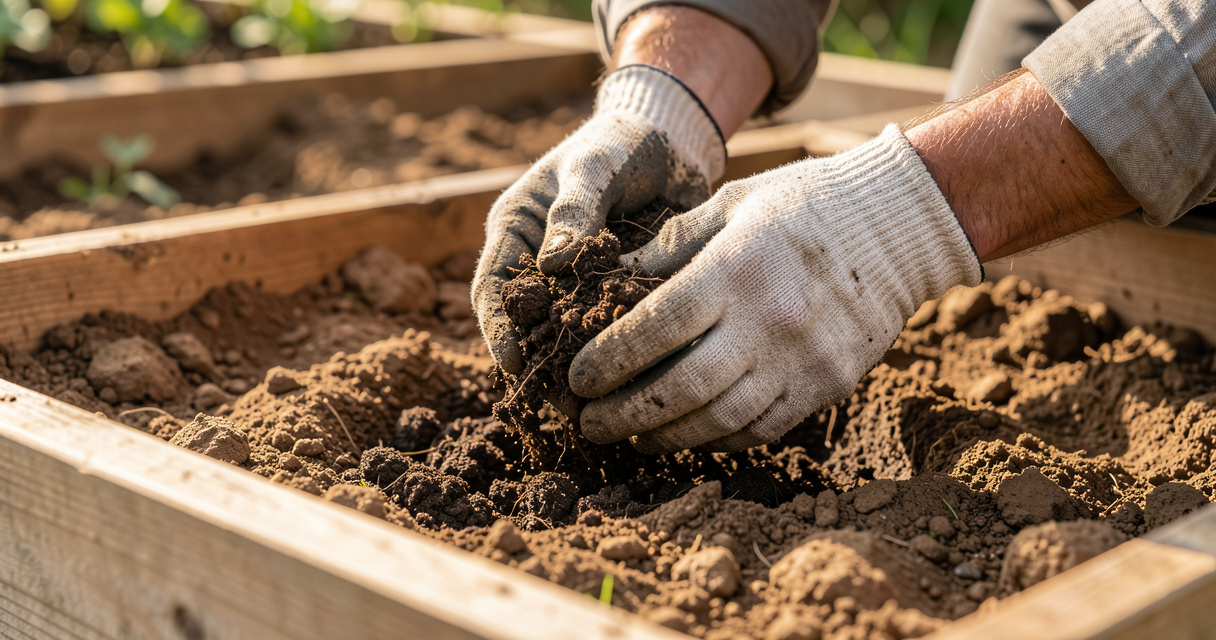
You have picked the sunniest spot in the yard, ordered the seeds, and then someone tells you your soil is dead. So what actually goes in the ground before anything gets planted?
Here is the honest answer: usually far less than the garden centre shelf suggests. Most people arrive at soil amendments for gardens backwards. They buy four bags, dig them in, and only later wonder why the bed still crusts after rain. Nobody told them to take a soil test, measure the bed in square feet, or check a pH range before spending a single euro.
What follows is a decision sequence rather than a shopping list. Test the soil. Choose the amendment based on what the test and your eyes tell you. Calculate the volume. Time it to the season. Then stop adding. That last step is the one almost nobody writes about, and in my experience it is the one that saves the most money and the most plants.
What Are Soil Amendments for Gardens? A Plain-English Definition
A soil amendment is any material you mix into the root zone to change the physical or biological condition of the soil — its structure, its water-holding capacity, its drainage, its biology. That is a deliberately narrow definition, and it immediately rules out half of what is stacked on the shelves.
Clemson University’s Home and Garden Information Center frames it the same way: amendments are most commonly used in vegetable gardens and landscape beds, and they are usually combined so that organic matter, nutrients and better texture arrive at once. The University of California ANR Garden Notes is blunter — an amendment should not simply be laid on top of the soil. It has to sit where the roots can reach it.
That single sentence is the whole difference between amendment and mulch, and it is where beginners lose their footing. The plant will tell you, eventually, but by then you have lost a season.
Amendment, Fertilizer, Mulch, and Soil Conditioner: Four Terms Retailers Mix Up
Anchor definitions, so the rest of this article makes sense:
- Soil amendment — material incorporated into the root zone to change structure, water movement or biology. Compost, aged manure, leaf mold, perlite, lime.
- Fertilizer — a product with a guaranteed nutrient analysis, the N-P-K numbers on the label. It feeds the plant; it does not rebuild the soil.
- Mulch — material laid on the surface to slow evaporation, suppress weeds and protect the soil surface. It is not incorporated.
- Soil conditioner — a retail category, usually organic, frequently with no ingredient percentages at all. Read the back of the bag or walk away.
This is the answer to the soil amendment vs fertilizer question that so many readers arrive with. An amendment changes the conditions roots live in. A fertilizer delivers a measured dose of nutrients. Organic amendments such as composted manure do both at once, which is exactly why the labels blur together. But if your clay soil drowns a rosemary in November, no fertilizer on earth will fix that. You need structure, not nitrogen.
When an Amendment Is the Wrong Tool
What most people get wrong is assuming every struggling bed needs something added. Sometimes it needs something removed, or redirected.
- If the downpipe empties into the bed and it floods every storm, compost will not solve it. That is a drainage problem.
- If the bed is in deep shade and the soil stays cold and wet until May, the problem is light and air, not fertility.
- If the soil is compacted from years of walking on it, a broadfork and a defined path will do more than a yard of manure.
- If the pH is 4.9, adding more compost is a slow, expensive way of avoiding the actual corrective amendment.
Do soil amendments actually work? Yes, reliably, when they are matched to a diagnosed problem. And almost never when they are applied as a general gesture of goodwill. Which brings us to the step everyone skips: the test.
Test Before You Buy: Reading Your Soil Like a Grower
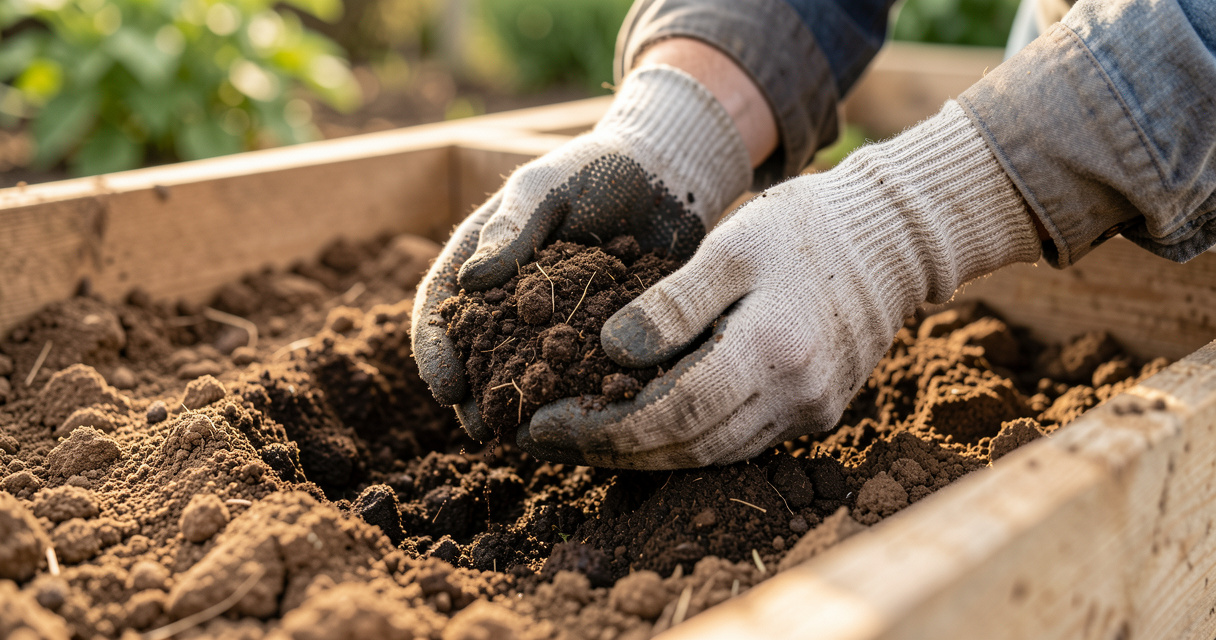
Colorado State University Extension is clear that amendments should be prescribed by site conditions, landscape goals and soil test results — not applied universally. That is exactly how a nursery treats a batch of plants: diagnose, then dose. A soil test is the cheapest piece of gardening equipment you will ever buy, and it costs less than two bags of compost.
The single most useful number is pH. According to the University of California ANR Garden Notes, the ideal range for garden soil is 5.5 to 7.0. Soils at 5.5 or lower are too acidic and can be raised with lime. Soils at 7.0 or higher are too alkaline and can be modified with elemental sulfur. Outside that window, nutrients may be physically present in the soil but chemically unavailable to the roots — a distinction that confuses a great many gardeners.
The Three Numbers That Matter: pH, Organic Matter, and Texture
pH drives nutrient availability. Organic matter percentage tells you how much life and water-holding capacity the soil has. Texture — the proportion of sand, silt and clay — is the thing you cannot change quickly, and it is why amending clay soil and amending sandy soil are two entirely different jobs.
Texture and structure are not synonyms, and the confusion costs people money. Texture is the mineral makeup, fixed for a human lifetime. Structure is how those particles clump together into aggregates, and structure is exactly what compost, leaf mold and cover crops improve. You are not turning clay into sand. You are turning solid clay into crumbly clay.
| Test result | What it means | Amendment to consider | What to skip |
|---|---|---|---|
| pH 5.4 | Too acidic; phosphorus and molybdenum lock up | Agricultural lime, plus compost | Elemental sulfur, wood ash |
| pH 5.6 to 6.9 | The working window for most vegetables and perennials | Compost, leaf mold, cover crops | Lime and sulfur — you do not need either |
| pH 7.4 | Too alkaline; iron and manganese tie up, leaves yellow between veins | Elemental sulfur, compost, a season of chelated iron | More lime, wood ash |
| Organic matter 1.5% | Thin, tired soil that crusts and dries fast | Two inches of compost into the top six inches | Bagged conditioner with no listed ingredients |
| Organic matter above 6% | Already rich; more is not better | Topdressing only, plus cover crops to keep biology active | Bulk manure loads, extra yards of compost |
Reading Plant Symptoms While You Wait for the Lab
Lab results take a week or two. Plants do not wait. Yellowing lower leaves, flower drop and general poor performance are what Bootstrap Farmer calls lagging indicators of nutrient deficiency — they appear long after the underlying condition set in. Use them as questions to ask the lab, not as a diagnosis in themselves.
One warning that rarely makes it onto a buying guide: Colorado State University Extension notes that amendments are not regulated the same way fertilizers are, and can be high in salts. A cheap bulk load of unknown provenance can set a bed back by a full season. Ask what is in it, ask where it came from, and if the answer is vague, buy elsewhere.
Before you spend anything, call your local extension office or a reputable specialist nursery and describe what you see. In my experience that five-minute conversation saves more money than any comparison chart. Once you have the numbers in hand, the shortlist gets dramatically shorter.
The 7 Soil Amendments Worth Buying (and 2 to Think Twice About)
The short answer, if you only read one block:
- Compost — finished, screened organic matter that improves any soil type.
- Aged or composted manure — adds nitrogen, phosphorus and potassium; apply 90 to 120 days before harvest.
- Worm castings — nitrate-rich vermicompost for seed starting and topdressing.
- Perlite — pops open heavy, waterlogged soil mixes.
- Vermiculite — holds water and nutrients in sandy soil.
- Leaf mold and composted bark — fibrous structure for clay.
- Agricultural lime or elemental sulfur — only when a soil test shows pH outside 5.5 to 7.0.
The Shortlist at a Glance
| Amendment | Best for | Typical application rate | Watch out for |
|---|---|---|---|
| Finished compost | Any soil type; the default choice | 2 in worked into the top 6 in | Immature compost can tie up nitrogen |
| Aged or composted manure | Nitrogen plus organic matter | 2 in, 90 to 120 days before harvest | Herbicide carryover, salt loading |
| Worm castings | Seed starting, topdressing, small beds | 10 to 20% of a seed mix; half an inch as topdressing | Expensive per square foot, not a bulk filler |
| Perlite | Heavy mixes, containers, propagation | 10 to 30% by volume of the mix | Dust, it floats, adds no nutrients |
| Vermiculite | Sandy soil, seed trays, water retention | 10 to 25% by volume of the mix | Compacts when permanently saturated |
| Leaf mold, composted bark | Clay structure, fibrous aggregation | 2 in incorporated, or as a mulch layer | Slow to make; fresh bark can lock up nitrogen |
| Lime or elemental sulfur | Correcting pH only | Per the soil test, never by guess | Slow, and over-application locks micronutrients |
Now the reasons behind the list, because the best soil amendments are only best in context. Compost is the default for a simple reason: it improves clay and sand in opposite directions. In clay it opens aggregates and improves drainage. In sand it holds water and nutrients where roots can reach them. If you buy one thing, buy compost, and buy it by the cubic yard rather than the bag.
Aged or composted manure adds nitrogen, phosphorus and potassium alongside organic matter, which Clemson lists as its main advantage over plain compost. Worm castings — vermicompost — are prized for concentrated nitrate nitrogen and are genuinely excellent in a seed-starting mix, though the price per square foot of bed is hard to justify for bulk use. Perlite and vermiculite are a matched pair: perlite opens a heavy mix and improves drainage, vermiculite holds water and nutrients in a mix that drains too fast. Use perlite in a clay-derived container mix, vermiculite in a sandy one.
Leaf mold and composted bark supply fibrous structure, which is what clay actually lacks. And agricultural lime or elemental sulfur are corrective tools, not routine purchases.
Two Amendments That Disappoint More Often Than They Deliver
Fresh manure. It is high in ammonia and must be composted before application. It also carries food-safety risk and unpredictable salt levels. Spread it in fall and let it mellow, or do not spread it at all.
Generic bagged soil conditioner blends. If the bag lists no ingredient percentages, you are buying a colour and a texture, not a specification. Compare that to a bag that states 40 percent composted bark fines and 30 percent compost — one is a product, the other is packaging.
The money angle nobody prints: ranked by cost per square foot of bed actually improved, the order runs leaves and homemade compost (free), cover crop seed (a few cents), bulk compost by the yard, bagged compost (two to four times the cost per cubic foot), then worm castings and biochar at the top. Perlite and vermiculite look expensive per bag but treat small volumes. What rarely pays back at scale: bagged soil conditioner, liquid soil tonics, and any amendment bought before a test.
Pre-purchase checklist
- What specific problem am I solving — structure, water, nutrients, or pH?
- What rate does that problem need, and how many cubic feet is my bed?
- Is there a salt or herbicide risk attached to this source?
- Are there local regulations or supplier restrictions on manure in my area?
- What is the cost per square foot of bed, not per bag?
Armed with a purpose and a rate, the next question is arithmetic — and it is the question the internet answers worst.
How Much Amendment Does Your Garden Actually Need?
Start with 25 percent by volume, or two inches of organic matter worked into the top six inches of soil. That is Clemson’s benchmark, and it is the closest thing the horticultural world has to a standard starting rate. Clemson also gives a general-purpose blend: one part composted manure, three parts garden compost, one part soil conditioner.
The 25 Percent Rule and the 2-Inch Rule
Both rules describe the same volume from different directions. Two inches of material spread over a bed and then turned into the top six inches gives you roughly one part amendment to three parts soil — hence 25 percent by volume. This is the answer to how much compost to add to garden soil, and it holds whether the bed is clay, loam or silt.
The arithmetic is simple and almost never spelled out. Two inches is one sixth of a foot. Multiply the bed’s square footage by 0.167 and you have cubic feet.
| Bed size | 1 inch deep (cubic feet) | 2 inches deep (cubic feet) | Bags at 1 cubic foot each |
|---|---|---|---|
| 4 x 4 ft (16 sq ft) | 1.3 | 2.7 | 3 bags |
| 4 x 8 ft (32 sq ft) | 2.7 | 5.3 | 6 bags |
| 4 x 12 ft (48 sq ft) | 4.0 | 8.0 | 8 bags |
| 10 x 10 ft (100 sq ft) | 8.3 | 16.7 | 17 bags |
Worked Example: A 4 by 8 Raised Bed
A single 4 by 8 bed is 32 square feet. Two inches deep is 5.3 cubic feet — call it six bags, or about a fifth of a cubic yard. That is a genuinely small number, and it is why the readers who tell me compost did nothing usually turn out to have spread half an inch and called it done. And it is why the readers who buy a pick-up load for one bed are working in the opposite failure mode.
For a raised bed built on clay, Clemson gives a different ratio entirely: three to four parts native soil, half a part compost, half a part manure, and one part sand. Note how little compost that is. Raised beds over heavy ground are a drainage project first and a fertility project second.
The ceiling almost nobody mentions. Clemson warns that incorporating more than 50 percent organic matter into the soil may negatively affect plant growth. Over-amended soil holds too much water, ties up nitrogen as it continues to decompose, and loads the root zone with salts. The symptoms look like drought: wilting in wet soil, poor rooting, yellowing from the bottom up. If a bed has been fed heavily for years, your next amendment may be nothing at all.
Volume is settled. What changes the whole calculation is what your soil is made of in the first place.
SECTION_IMAGE_1
Match the Amendment to Your Soil: Clay, Sand, Silt, and Raised Beds
Colorado State University Extension puts the split cleanly. On clay soils, amendments improve aggregation, increase porosity and permeability, and improve aeration, drainage and rooting depth. On sandy soils, they mainly increase water and nutrient holding capacity. Same bag, completely different job.
Clay Soil: Fix Structure Before You Feed
Amending clay soil is not about nutrients. Clay is nutritionally rich and physically hostile. Well-decomposed compost, composted bark fines, leaf mold and aged manure all push the particles into aggregates, which creates pore space. Fibrous material does the aeration work; compost does the water-holding work. You need both.
Never try to lighten clay with sand alone. Clay plus a little sand makes something closer to concrete than to loam. And never amend a planting hole in heavy clay with a rich, light mix — you have just built a bathtub, and the roots will sit in it all winter.
From the field. A client’s bed in an old Haarlem garden crusted and cracked every August. Water ran off it in sheets. We did not dig in a yard of compost that autumn — we spread two inches, sowed a winter cover crop of oats, and let the roots do the drilling. The following spring, the same fork went in 15 cm instead of five. Structure is a two-season project, and there are no shortcuts I trust.
Sandy and Silty Soil: Hold Water and Nutrients
Sandy soil drains beautifully and feeds nothing. Compost, worm castings, biochar charged with compost tea and vermiculite all improve water and nutrient retention, and cation exchange capacity is the technical reason why — the ability of the soil to hold onto positively charged nutrients instead of letting rain wash them away. Perlite is the wrong tool here; you already have drainage.
Silt sits between the two and behaves deceptively: smooth and powdery when dry, then it crusts and compacts. The fix is organic matter plus never working it wet.
Raised Beds and Containers: Build the Mix from Scratch
In a raised bed you are not amending, you are manufacturing. A reliable general mix is 60 to 70 percent good topsoil or loam, 20 to 30 percent compost, and 10 percent perlite for drainage. Note that this is mostly soil, not mostly compost — filling a bed with pure compost is the single most common raised-bed mistake I see, and it produces lush foliage, weak roots and a bed that collapses by August.
On perlite versus vermiculite for raised beds: perlite for drainage and aeration, vermiculite for water retention. In an open raised bed, perlite. In a container or a seed tray, vermiculite.
| Soil type | How it behaves | Best amendments | Avoid |
|---|---|---|---|
| Clay | Sticky when wet, cracks when dry, water sits | Well-decomposed compost, composted bark, leaf mold, aged manure | Sand alone, fresh manure, a single huge dose |
| Sand | Drains and dries fast, nutrients leach | Compost, worm castings, vermiculite, charged biochar | Perlite, more sand |
| Silt | Smooth, crusts, compacts easily | Compost, cover crops, organic mulch | Working it when wet |
| Raised bed mix | Built from scratch, settles over time | Loam plus compost plus perlite; or the Clemson clay ratio | Filling with pure compost or unweathered topsoil |
SECTION_IMAGE_2
Structure is the long game. Timing is the short game, and in a vegetable bed it is also a food-safety question.
Manure, Compost, and Worm Castings: Timing Rules That Protect Your Harvest
Fresh manure is high in ammonia and needs composting before application. That is not a preference, it is a safety rule. Clemson states that, because of human health risks, fresh manure should only be applied to vegetables at least 90 days before harvest where the edible parts do not contact the soil, and at least 120 days where they do.
The 90 and 120 Day Rule in Practice
Composted manure application timing therefore runs backwards from your harvest date, not forwards from your shopping trip. Tomatoes, courgettes and cucumbers that sit on or near the soil: 120 days. Sweet corn, staked beans, fruit from tall plants: 90 days. Root crops and leafy greens harvested close to the ground deserve the full 120 and a good washing afterwards.
Can I put fresh manure on my garden in fall? Yes, with conditions. Spread it on empty ground, not on a bed with winter crops, and let it compost in place over the winter. Do not plant into it in spring without a further four months of mellowing. Seeds n Such repeats the 90-day window and suggests roughly two weeks before planting as an absolute minimum for well-composted material.
Three products, three rules. Fresh manure: compost first, then 90 to 120 days. Composted manure: safe to incorporate at two inches, still observe the pre-harvest window if you are unsure of the batch. Bagged, heat-treated manure products: follow the label, and note that heat treatment reduces pathogen risk but not necessarily herbicide residue.
Herbicide Carryover: The Risk That Is Not on the Bag
Clemson warns that some manures can carry trace herbicide residues that are potentially lethal to garden plants. The classic culprits are aminopyralid and clopyralid, which survive digestion and pass straight through into bedding and manure. Your supplier will not volunteer this. Ask which animals, what they were fed, and what the bedding material is.
From the field. A neighbour took a free load of delivered manure three springs ago. Her tomato transplants curled, twisted and cupped within ten days, and the bed underperformed for two seasons. The plant told us before the lab did. Three questions would have prevented it: where did the straw bedding come from, was the pasture sprayed, and has this batch been used on broadleaf crops before?
Worm castings are the gentle end of the spectrum. Use them at 10 to 20 percent of a seed-starting mix, or as half an inch of topdressing around established plants — topdressing meaning laid on the surface where worms and watering will work it in, as opposed to incorporation with a fork.
One class of amendment, though, should never be timed by feel. Those are the pH correctives.
Lime, Sulfur, and pH: The Amendments You Should Not Guess At
Agricultural lime for soil pH is the most over-applied product in the garden centre. UC ANR Garden Notes sets the ideal range at 5.5 to 7.0: soils at 5.5 or lower are too acidic and can be raised with lime; soils at 7.0 or higher are too alkaline and can be modified with elemental sulfur. Note the word ‘modified’. Neither product works in days.
Raising pH with Agricultural Lime
Lime is calcium carbonate, sometimes with magnesium. It neutralises acidity slowly, and the rate depends on your soil’s buffer capacity — how hard the soil resists being pushed. A sandy loam may move half a point in a season. A heavy clay with high organic matter may take two years and a second application. Apply in autumn so winter frosts and spring rains can carry it into the profile.
Lowering pH with Elemental Sulfur
Elemental sulfur works indirectly: soil bacteria oxidise it into sulfuric acid. That means it needs warm, moist, biologically active soil to function, and it is close to inert in cold, waterlogged ground. This is why how long it takes for sulfur to lower soil pH is a months question, not a days one.
Why Gypsum Is Not a pH Fix
Gypsum is calcium sulfate. It supplies calcium and improves structure in sodic clay, and it does not change pH. Readers confuse it with lime constantly. Wood ash, meanwhile, raises pH unpredictably and unevenly — it is not a free substitute for lime, and I would not use it on a bed you have not tested.
| Current pH | Target pH | Product | Realistic time to effect |
|---|---|---|---|
| 5.0 | 6.3 | Agricultural lime, calcitic or dolomitic | 6 to 12 months for full effect, apply in autumn |
| 5.5 | 6.3 | Agricultural lime, lighter rate | 3 to 6 months, retest after a year |
| 7.4 | 6.5 | Elemental sulfur | 6 to 12 months or more |
| 8.0 | 6.8 | Elemental sulfur plus organic matter, or rebuild as a raised bed | A year or longer; sulfur is slow in cold soil |
| 6.5 | 6.5 | Nothing | No action needed |
Do not guess here. Over-application locks out micronutrients — iron, manganese, zinc — and creates a deficiency that looks exactly like the one you were trying to fix. A soil analysis costs less than the mistake.
Fortunately, most of the work does not require a purchase at all.
The Low-Cost Amendment Plan: Cover Crops, Leaf Mold, and Chop-and-Drop
October is the cheapest window of the year to improve soil, and it is the one month I would defend against any other. Bootstrap Farmer recommends cover crops such as clover, oats and buckwheat to build fertility naturally, protect soil from runoff and erosion, and suppress weeds. Bare winter soil is a wasted season.
Free and Nearly Free Amendments
- Leaf mold. Bag shredded leaves, wet them, wait two years. You now have a clay amendment that retails at a price I would rather not quote.
- Cover crops and green manure. Oats and clover sown in early October; winter-killed oats leave a mulch you can plant straight into.
- Chop-and-drop. Cut spent annuals and perennials at the base, drop the tops where they grew. Free mulch, free organic matter, no wheelbarrow.
- Homemade compost. Mix high-carbon material with a high-nitrogen source such as alfalfa pellets, which Bootstrap Farmer suggests specifically for this balancing job.
- Charged biochar. Biochar is not fertiliser; it is a habitat. Soak it in compost tea or mix it into the compost heap before it ever reaches the bed.
These are the cheap DIY soil amendments that genuinely pay back, and in my experience they do more long-term work than anything sold in a bag. My grandmother never bought a single bag of compost in forty years of gardening, and her soil was better than most I test today.
October Checklist: What to Do Before the First Frost
Your October to November list, with honest time and cost estimates
- Shred and spread leaves over every bare bed — 45 minutes, free. Do not dig them in; the worms will.
- Sow a cover crop in empty vegetable beds — 30 minutes, seed cost a few euros for 20 square metres.
- Topdress perennials with an inch of compost — 1 hour per ten square metres, free if your heap is ready.
- Take a soil test for any bed you plan to change next spring — 15 minutes, cheap. Do this before buying anything.
- Cut back spent perennials and drop the material in place — 1 hour, free.
- Leave the beds rough, not raked smooth — 10 minutes, free. Frost does structural work that no fork can copy.
Then let the beds mellow over winter. Spring planting into soil that has been working all winter is a completely different experience from spring planting into a bed you amended in April.
Frequently asked questions
What is the difference between a soil amendment and a fertilizer?
An amendment changes the physical and biological condition of the soil — structure, water movement, biology. A fertilizer supplies measurable nutrients with a guaranteed analysis. Many organic amendments do both, which is why the labels overlap, but the test is whether the product changes how roots live, not just what they eat.
How often should I amend my garden soil?
Test annually and top up organic matter each season rather than rebuilding the bed. Established perennial borders usually need one thorough amendment before planting and surface topdressing afterwards. Do not repeat the same amendment every year without a fresh test — that is how beds become over-amended.
Can you add too much compost or manure?
Yes. Clemson notes that incorporating more than 50 percent organic matter into the soil may negatively affect plant growth. Excess organic matter holds too much water, ties up nitrogen as it decomposes, and adds salts. Stay near the 25 percent by volume starting rate.
What is the best amendment for heavy clay soil?
Well-decomposed compost worked into the top six inches, plus fibrous material such as composted bark or leaf mold for aeration. Never try to lighten clay with sand alone, and repeat over several seasons rather than applying one enormous dose.
Do I need to replace the soil in my raised beds?
No. Beds settle and lose organic matter over time, so top up with compost and refresh the top few inches. If drainage has genuinely failed, check for a perched water table or a compacted layer before buying new soil.
Is fall a good time to amend garden soil?
Usually the best window. Amendments have months to integrate before spring planting, and leaves and cover crop seed are cheap or free. Fresh manure still needs composting and the correct pre-harvest interval.
Do coffee grounds and eggshells really amend soil?
They are useful in small amounts as part of a compost pile, not as standalone fixes. Eggshells break down very slowly and do not reliably change pH, and uncomposted coffee grounds can mat and repel water. Put the same effort into finished compost instead.
Building Better Garden Soil Through Amendments: The Short Version
Four ideas carry everything above.
Test first. A pH between 5.5 and 7.0 and an organic matter percentage drive every purchase decision you make. Without those numbers, you are buying hope in a bag.
Rate beats product. Two inches of organic matter into the top six inches, with a hard ceiling at 50 percent organic matter in the soil. Most disappointing results come from the wrong dose, not the wrong brand.
Timing protects the harvest. The 90 and 120 day manure windows exist for a reason, and autumn is when most amendments do their best work.
Free does most of the long-term work. Leaves, cover crops, chop-and-drop and homemade compost built the soils we admire. Bags supplement that work; they do not replace it.
Don’t overthink it. Pick one bed, dig a sample, measure it, and give it the two inches it actually needs. The plant will tell you the rest.
If a single soil test could save you a season of buying the wrong bags, what is stopping you from digging a sample this weekend?

I’ve spent over fifteen years in botanical gardens and nurseries across the Netherlands and Belgium. Now I garden in Haarlem and write what I wish someone had told me sooner. No fluff — just what actually works.