

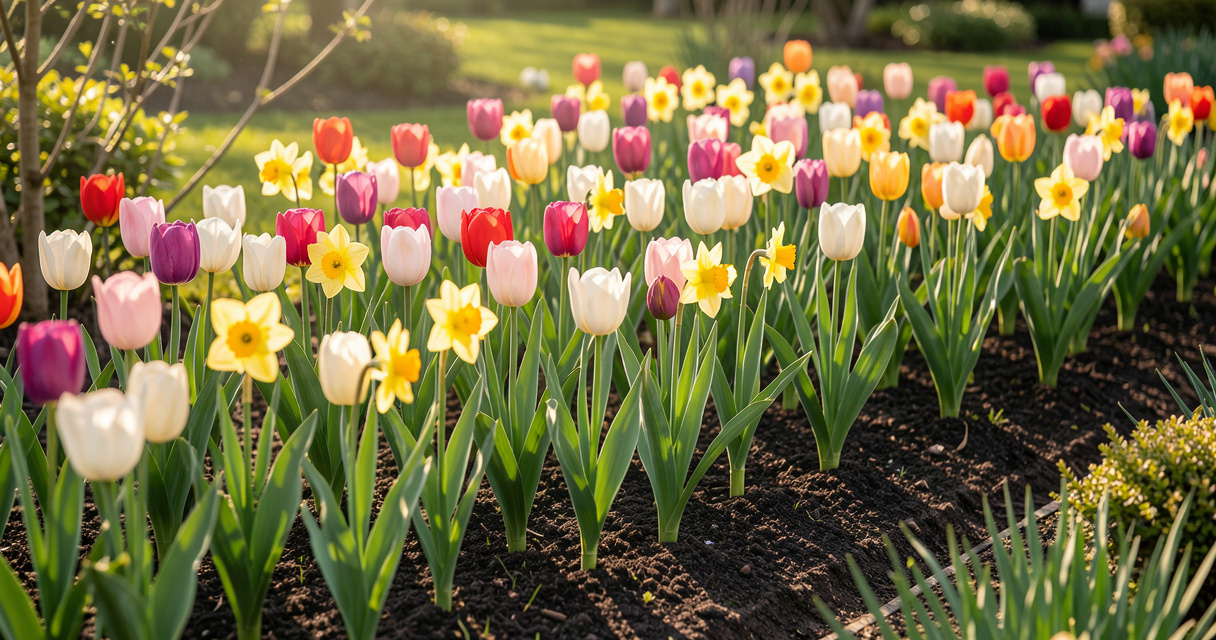
Reading time: 17 min
Key takeaways
- Fall is the real deadline. Hardy spring bulbs need weeks of cool soil to root before winter closes in; a well-timed November planting beats a rushed September one in ground that is still too warm and too dry.
- Depth is the mistake I see most. Set bulbs two to three times their own height deep — roughly 8 inches for tulips and daffodils, 3 to 4 inches for crocus and anemones.
- Grouping decides whether a display looks intentional. Large bulbs in fives and tens, small bulbs in drifts of 25 to 50 or more. One tulip alone always looks like an accident.
- Foliage is next year’s flower. Leave the leaves green until they yellow on their own, and most spring-flowering bulbs will come back without ever being lifted.
What if the most colorful six months in your garden were decided in a single autumn afternoon?
It is not an exaggeration. Spring bulbs — the fall-planted bulbs that carry a garden from January snowdrops to late May alliums — are ordered in summer, planted in autumn, and then left alone. Everything that happens between October and December determines what you see in March.
What most people get wrong is not the planting itself. It is the vocabulary. Retailers sell “spring bulbs” and “spring-planted bulbs” in the same catalogue, and those two phrases describe plants that need opposite treatment. One group is hardy and needs cold. The other is tender and dies in it.
I spent twelve years advising botanical gardens and specialist nurseries across the Netherlands and Belgium before I started turning my own 80 square metre garden in Haarlem into a living test plot. My grandmother’s garden in Leeuwarden had no plan and no straight lines, but it had drifts of spring-flowering bulbs that returned every single year without anyone lifting a finger. That is the standard I aim for here.
This guide covers the whole arc: what these plants actually are, when they bloom, how to choose them for your site, how deep to plant them, and what to do after the flowers fade. Don’t overthink it — but do get the depth right.
What Are Spring Bulbs? True Bulbs, Corms, Tubers, and the Fall-Planting Rule
Spring flowering bulbs are hardy geophytes: plants that store an entire season of energy underground and spend it flowering before most perennials have bothered to wake up. You plant them in autumn. They flower the following spring. That is the whole contract.
But the word “bulb” is used far too loosely. In my years working with specialist nurseries, I watched the same conversation play out every September: a customer buys a bag of corms, plants them at tulip depth, and wonders in April why the crocuses never appeared. The structure tells you how to treat it.
| Structure type | Examples | Storage form | Planting note |
|---|---|---|---|
| True bulb | Tulipa, Narcissus, Hyacinthus, Allium | Fleshy scales in layers around a central bud | Pointy end up, 2–3 times its own height deep |
| Corm | Crocus, Colchicum | Solid swollen stem base, no layers | Shallower, 3–4 inches; dries out quickly |
| Tuber | Anemone coronaria, Eranthis hyemalis | Swollen underground stem | Soak before planting; small tubers sit shallow |
| Rhizome | Convallaria majalis, Iris | Horizontal creeping stem | Just below the surface, never deep |
| Tuberous root | Ranunculus | Cluster of swollen roots | Soak, claws pointing down, well-drained soil |
True Bulbs vs. Bulb-Like Structures
Slice a tulip bulb in half in October and you can already see next spring’s flower formed inside it, wrapped in layers of stored food. That is a true bulb, and it is why tulips tolerate deeper planting and store so well in a dry shed. A corm — crocus is the obvious one — is solid tissue with no layers at all, and it exhausts itself producing one season of growth before being replaced by a new corm on top.
The practical difference is depth and drainage. Corms and small tubers sit shallower, dry out faster, and rot faster. True bulbs can go deeper and can wait longer in the bag. The plant will tell you: if you dig up a tulip in December after a normal Dutch winter, you will find a neat ring of white roots already exploring the soil.
Why Fall Planting Is Non-Negotiable
Hardy bulbs need two things autumn gives them and spring does not: cool soil to root into, and a sustained cold period to break dormancy. Roots develop at soil temperatures around 9–12°C, long before the ground freezes. Skip that window and the bulb goes into winter with no anchor, no reserves uptake, and a much higher chance of heaving out of the ground during frost.
Spring Bulbs vs. Summer Bulbs: Avoid the Costly Mix-Up
Gladiolus, begonias, dahlias, caladiums and elephant ears are tender summer bulbs. They are planted in spring, they bloom or leaf out in summer, and in cold climates they must be lifted before the first frost. Lilium is the honest exception — many lilies are fully hardy and can go in during autumn, but the trade still ships them in spring because that is when people buy them.
So when a search result promises “spring bulbs to plant in spring,” it is almost always talking about summer-flowering tender material. Useful plants, entirely different schedule.
Definition box: Hardy spring bulbs are planted in autumn, survive freezing soil, and flower from late winter to early summer. Tender summer bulbs are planted in spring, cannot survive freezing soil, and flower in summer. Same shops, opposite rules.
Once you know what you are holding, the next question is timing on the calendar — which months each group actually owns.
SECTION_IMAGE_1
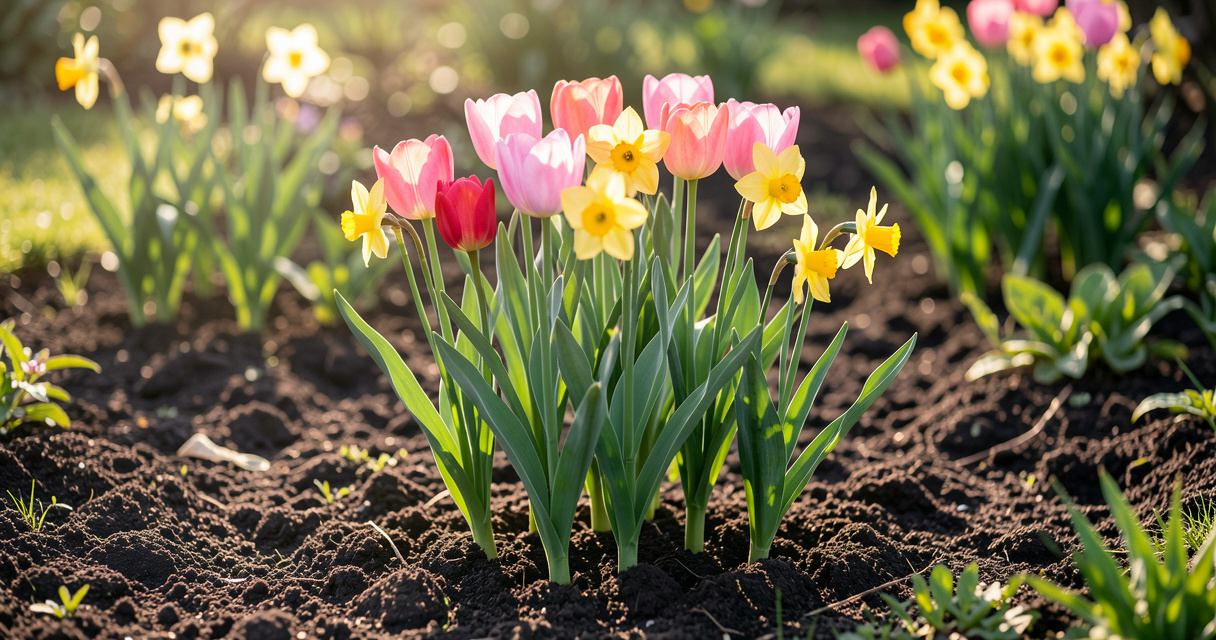
Spring Bulb Bloom Calendar: From January Snowdrops to May Alliums
A reliable spring bulb bloom calendar is the single most useful planning document in a garden. According to Rutgers Cooperative Extension (Fact Sheet FS1220), spring bulbs can begin blooming in late January with snowdrops and winter aconites and extend to late May with ornamental onions. Clemson HGIC 1155, updated November 14, 2023, makes the same point from a different angle: spring-flowering bulbs bloom from late winter to early summer depending on species.
What that means in practice is roughly twenty weeks of flower, if you choose across the whole range rather than buying three bags of tulips in the same colour.
| Bloom window | Representative bulbs | Typical height | Best design use |
|---|---|---|---|
| Late January – February | Galanthus nivalis, Eranthis hyemalis, early Crocus | 10–15 cm | Path edges, front of border, lawn naturalizing |
| March | Crocus, Iris reticulata, Scilla siberica | 10–20 cm | Drifts under deciduous shrubs |
| Early April | Early Narcissus, Hyacinthus, Fritillaria meleagris | 20–40 cm | Mixed borders and containers |
| Mid to late April | Tulipa (Darwin, Triumph), Fritillaria imperialis | 30–60 cm | Structural accents, cutting garden |
| May | Late Tulipa, Allium, Camassia | 40–100 cm | Perennial borders, meadow edges |
| Late May – June | Allium cristophii, A. sphaerocephalon, late Camassia | 50–90 cm | Bridge into summer perennials |
Early-Season Bulbs: January to March
The earliest spring bulbs are the ones worth planting where you will actually walk past them in bad weather. Snowdrops and winter aconites belong beside a door, not at the far end of a lawn. In my Haarlem garden, a clump of Galanthus by the back step has earned its place more than anything showier, simply because I see it on the greyest day of the year.
Mid-Season Bulbs: April
April is the crowded month. Daffodils, hyacinths, snake’s head fritillary and the first tulips all compete for attention, and this is where colour discipline matters. Pick two families and repeat them. A border with fifteen daffodil varieties in April reads as noise; three varieties repeated in blocks reads as design.
Late-Season Bulbs: May to June
Ornamental onions are the great under-used spring bulbs. Allium hollandicum ‘Purple Sensation’ rises to 90 cm on a stem that needs no staking, and by the time it opens, the perennials around it are tall enough to hide its fading foliage. Camassia handles wet soil that would rot a tulip, which makes it the answer for the low corner of a garden that never quite dries out.
How to Layer Bulbs for 12 or More Weeks of Color
Layering — the bulb lasagna — is simply three depths in one pot or one planting hole: tall late tulips deepest, mid-season narcissus in the middle, small crocus or muscari on top. Each layer roots and emerges on its own schedule, so the same square metre performs three times.
The first lasagna I built in Haarlem went into a wide terracotta pot in the second week of October: twenty Tulipa ‘Negrita’ at 20 cm, fifteen Narcissus ‘Tête-à-Tête’ at 12 cm, and a scatter of forty Crocus ‘Ruby Giant’ just under the surface. The crocus opened in the first week of March, the narcissus followed in the last days of March, and the tulips carried the pot into the second half of April. Three months of flower from one pot, one afternoon of work, no re-planting in between.
Knowing the calendar is one thing. Matching it to your own site, patience level and deer pressure is where the real decisions happen.
How to Choose the Best Spring Bulbs for Your Site, Skill Level, and Goal
Generic top-ten lists are useless because they ignore the only question that matters: what is your garden actually like? The best spring bulbs for beginners are not the showiest ones. They are the ones that forgive a missed watering, a wet January and a gardener who forgets where they planted things.
Here is what I would do: audit the site first, then choose from the matrix. Not the other way round.
| Garden goal | Recommended bulbs | Why they work | Caveat |
|---|---|---|---|
| Beginner, low maintenance | Narcissus, Muscari, Crocus, Scilla | Return reliably for years with almost no input | Need foliage left to ripen for six weeks |
| Naturalizing in lawn or meadow | Crocus, Scilla siberica, Camassia, Narcissus poeticus | Multiply and spread without lifting | Mowing must wait until leaves yellow |
| Cut flowers | Tulipa, Narcissus, Hyacinthus | Long, straight stems and strong scent | Condition narcissus separately; their slime wilts tulips |
| Containers and small terraces | Dwarf Tulipa, Hyacinthus, Crocus | Compact, dense, high impact per litre of compost | Wet compost in winter rots bulbs fast |
| Shade under trees | Galanthus, Anemone blanda, Hyacinthoides non-scripta | Flower before the canopy closes overhead | Dry summer shade suits them; wet shade does not |
| Heavy deer pressure | Narcissus, Allium, Fritillaria imperialis | Aromatic and toxic, reliably avoided | Deer still trample what they do not eat |
| Wet, heavy soil | Camassia, Fritillaria meleagris | Tolerate winter moisture that rots tulips | Still need summer drainage |
Beginner-Friendly Bulbs That Forgive Mistakes
Daffodils are the most forgiving spring bulb in existence. They are toxic, so squirrels leave them alone; they perennialise in almost any soil that drains; and they will still flower after a decade of neglect. Muscari and crocus come close. If you are planting your first hundred bulbs this autumn, make eighty of them daffodils and you will not be disappointed.
Naturalizers for Lawns and Meadows
For spring bulbs that naturalize in lawn, forget the hybrid tulips entirely. You want species that set seed and multiply: Crocus tommasinianus, Scilla siberica, Camassia leichtlinii, and Narcissus poeticus var. recurvus. The method that works is the toss-and-plant: scatter a hundred bulbs across the lawn and plant them exactly where they land, then leave the grass uncut until the leaves have yellowed in June.
Cut-Flower and Container Picks
For cutting, Darwin hybrids and Triumph tulips give the longest stems and the best vase life. For pots, dwarf tulips and hyacinths hold themselves up without staking. One practical note from the nursery trade: cut narcissus stems release a sap that shortens the vase life of tulips, so condition them in separate buckets for at least twelve hours before mixing.
Deer, Shade, and Wet-Soil Considerations
If your garden has all three problems at once — shade, deer and heavy clay — the answer is Galanthus and Fritillaria imperialis in the wettest tolerable spots and narcissus everywhere else. What most people get wrong is buying a beautiful tulip collection and then wondering why nothing survives. The bulb was never the problem; the site was.
- Sunlight: count real hours, not “part shade” as a feeling
- Drainage: dig a 30 cm hole, fill it with water, see if it empties within an hour
- Deer and rabbit pressure: observe for a full winter before assuming
- Winter low: note your zone and whether your soil freezes at all
- Space: measure the bed and calculate bulbs per square metre
- Maintenance tolerance: are you willing to leave foliage for six weeks?
Once the site is settled, the next risk is not the garden at all — it is the label on the bag.
Buying Spring Bulbs: Quality Checklist and the Spring-Planted Label Trap
When you buy spring bulbs online, you are buying a promise, not a plant. The photograph shows a perfect clump; the bag contains brown objects. Learning to judge those brown objects is a skill worth twenty minutes of your time.
Order from a specialist rather than a supermarket bin whenever you can. Dutch growers ship firm, correctly sized bulbs; discount bins ship whatever survived the warehouse. You are paying for the difference in calibre, and it shows in the first April.
How to Judge Bulb Quality Before You Buy
- Firm to the touch — no soft spots, no spongy patches
- Heavy for its size — weight means stored water and starch
- Mould-free neck — the pointed top must be dry and intact
- Species-appropriate size — a ‘top size’ tulip is 12 cm+ circumference; small bulbs are small by nature
- Intact basal plate — the flat base must not be torn or hollow
- Label literacy — read the Latin name, the planting depth and the bloom month
- No shrivelled, papery shells with visible blue-green mould inside
Fall-Planted vs. Spring-Planted Bulbs
This is the trap that costs people a whole season. A bag labelled “spring planting bulbs” almost always contains tender summer material — gladiolus, begonias, ranunculus, dahlias. Those are the spring bulbs to plant in spring, and they will not survive a hard freeze. Hardy spring-flowering bulbs go in the ground in autumn, full stop.
Shipping, Storage, and Last-Minute Planting
If your bulbs arrive before you are ready, open the bag. Bulbs suffocate and mould in sealed plastic. Spread them in a shallow tray in a cool, dark, dry room at around 15–18°C and they will hold for two to three weeks. How to store spring bulbs before planting is really just this: air, darkness, no moisture, no fruit nearby (ripening fruit releases ethylene that damages bulbs).
Warning box: “Spring-planted bulbs” means summer bulbs. If the bag says plant in March, it is not a hardy spring-flowering bulb and it will not survive frozen soil.
Good bulbs in hand, the rest comes down to numbers: depth, spacing, soil and timing.
SECTION_IMAGE_2
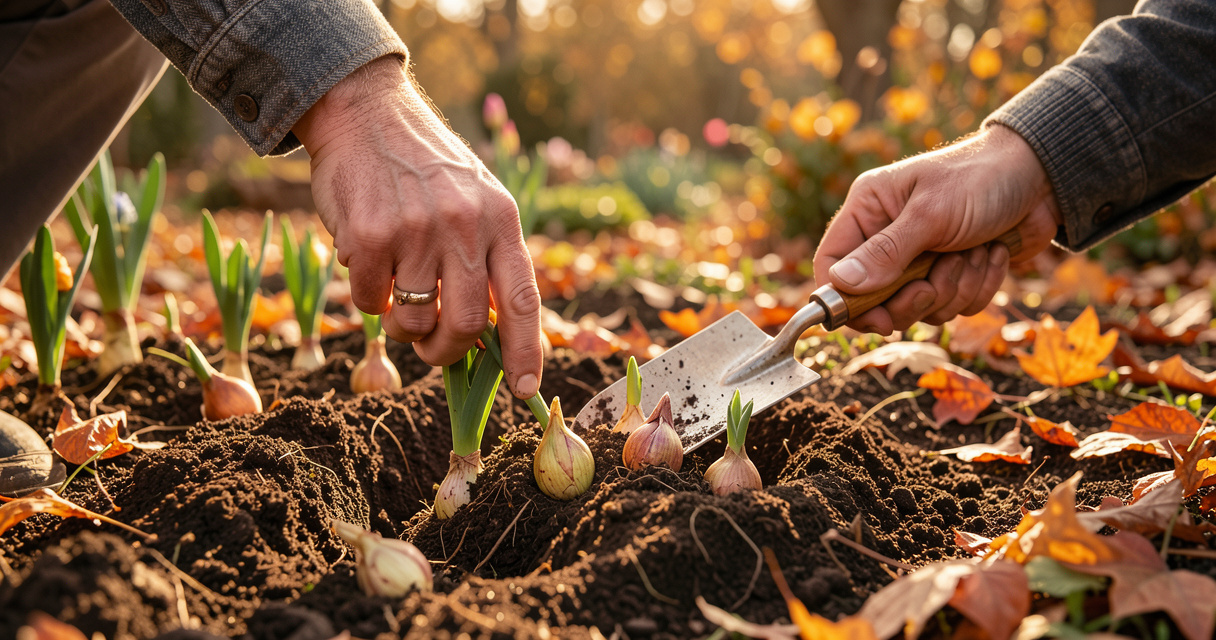
Planting Spring Bulbs: Depth, Spacing, Soil, and Timing by Climate
- Large bulbs such as tulips and daffodils: about 8 inches deep and 8 inches apart.
- Small bulbs such as crocus and anemones: 3 to 4 inches deep and 3 to 4 inches apart.
- General rule: set bulbs at a depth two to three times their height, measured from the bottom of the bulb.
- Soil: aim for pH 6 to 7 and excellent drainage.
- Timing: plant in fall before the ground freezes; mild climates can plant into early winter.
- Grouping: plant large bulbs in groups of 5 to 10 or more, and small bulbs in drifts of 25 to 50 or more.
Those are the numbers I use, and they come straight from extension guidance. According to Rutgers Cooperative Extension (Fact Sheet FS1220), large bulbs such as tulips and daffodils go about 8 inches deep and 8 inches apart, while small bulbs such as crocus and anemones go 3 to 4 inches deep and 3 to 4 inches apart. The same source puts the optimum pH range for spring-flowering bulbs at 6 to 7.
Depth and Spacing Cheat Sheet
How deep to plant tulip bulbs is the question I answer most often, and the honest answer is: deeper than you think. A tulip bulb set at 10 cm will produce leaves and often no flower. At 20 cm it produces a stem that stands through wind.
| Bulb type | Planting depth | Spacing | Special note |
|---|---|---|---|
| Large bulbs (Tulipa, Narcissus, Hyacinthus, Allium) | About 8 inches / 20 cm | About 8 inches / 20 cm | Measure from the base of the bulb, not the tip |
| Small bulbs (Crocus, Muscari, Scilla) | 3–4 inches / 8–10 cm | 3–4 inches / 8–10 cm | Plant in dense drifts, not lines |
| Corms (Crocus, Colchicum) | 3–4 inches / 8–10 cm | 3 inches / 8 cm | Flat base down; they dry out fast |
| Tuberous roots (Anemone, Ranunculus) | 2 inches / 5 cm | 4–6 inches / 10–15 cm | Soak 2–4 hours before planting |
Soil Prep and pH
Bulbs rot in stagnant water faster than they fail from any other cause. If your soil is heavy clay, do not dig a smooth-sided hole and drop the bulb in — that creates a sump. Loosen the soil below planting depth, mix in grit or coarse sand, and set the bulb on a small mound so water drains away from the base.
pH matters less than drainage, but it matters. At pH 6 to 7, nutrients are available and bulb roots function properly. Below 5.5, add lime in autumn and accept that the first season may be modest.
Timing by Zone and Ground Temperature
When to plant spring bulbs is not a calendar date; it is a soil temperature. The signal is simple: plant when the soil has cooled to around 10°C at 10 cm depth and the first frost is two to four weeks away. In the Netherlands that usually lands between mid-October and mid-November.
When to plant spring bulbs in zone 7 is later, not earlier — November into early December is often ideal, because the soil stays warm well into autumn. Planting in September in a warm zone is a common and costly mistake: the bulbs root, then push up shoots that get killed by the first hard freeze.
And 2026 has made this less predictable. Across northwest Europe we have had several consecutive winters with mild spells deep into January and wetter autumns overall. Warm winters disrupt dormancy and can leave tulips with short stems or blind shoots; saturated autumn soil rots bulbs before they root. Choose species-adapted material where you can, plant later rather than earlier in mild zones, and in very mild climates use pre-chilled bulbs or treat tulips as annuals.
Container and Layering Method
In pots, drainage is everything. Use a loam-based compost mixed with 20 percent grit, place crocks over the hole, and raise the pot on feet so winter rain runs through rather than sitting. Layer as described earlier — largest and latest deepest, smallest and earliest on top — and leave 5 cm of clear compost above the top layer so the shoots have room.
Warning box: Soggy soil causes rot. If water stands in the planting hole for more than an hour, improve drainage or plant on a mound of grit rather than in the ground.
- Check pH is between 6 and 7
- Loosen soil to twice the planting depth
- Remove weeds and old roots
- Plant in groups, never in single rows
- Water once after planting, then leave the rain to it
- Mark the site — you will forget by February
Correct planting gets you flowers. Design is what makes those flowers look like they belong there.
Design Strategies That Make Spring Bulbs Look Intentional
There is a moment every spring when you can tell a planted garden from a designed one, and it has nothing to do with money spent. It is grouping. According to Iowa State University Extension and Outreach, plant large bulbs in at least five of the same variety, with groupings of 10 or more looking best; plant small bulbs in drifts of at least 25, and groupings of 50 or more look best.
That single rule explains most of the disappointment people feel about their spring displays. Twelve tulips scattered one by one along a border is not a display. Twelve tulips in one clump is.
Drifts, Sweeps, and the Toss-and-Plant Method
The technique I picked up from a designer at a Dutch nursery is almost embarrassingly simple. Take a bucket of bulbs, stand at the edge of the bed, and toss them. Plant each bulb exactly where it lands, using a trowel and cutting straight down. The result is a drift with natural density variation — tight in the middle, looser at the edges — rather than a grid.
For naturalizing spring bulbs in grass, that scatter effect is essential. Bulbs in rows in a lawn look like an allotment. Bulbs in a drift look like they arrived on their own.
Underplanting Perennials and Shrubs
One head gardener quoted by Level Green Landscaping has personally planted close to 50,000 daffodils and tulips, and the lesson from that scale is timing rather than quantity: bulbs go under perennials that emerge late. Plant them beneath Hosta, Geranium or Anemone and the emerging foliage covers the yellowing bulb leaves exactly when they get ugly.
Container Lasagna for Small Spaces
An 80 square metre garden taught me to think in litres as well as metres. Three pots at 40 cm diameter, each layered with tulips, narcissus and crocus, will outperform a whole border for impact per square metre, and they can be moved to wherever you need colour that month.
Tip box: Underplant perennials so their emerging foliage hides fading bulb leaves. You get twelve weeks of colour and no bare-garden moment in June.
Planting and placing are the easy half. The half that actually decides whether you see these flowers again next year happens after the petals drop.
After-Bloom Care: Deadheading, Foliage, Feeding, and Naturalizing
This is where most gardens lose next year’s display without noticing. Spring bulb care after bloom comes down to a single principle: the leaves are a solar panel charging a battery for next spring. Cut them early and you have unplugged the charger.
Deadheading vs. Seed Heads
Deadhead unless you want seed. Removing spent flowers stops the plant spending energy on seed production and pushes it back into the bulb. The exception is anything you are naturalizing: Allium, Narcissus poeticus and Camassia all earn their place twice, first as flower and then as dried seed head through June.
Let Foliage Ripen, Do Not Braid It
Leave the foliage intact until it yellows on its own, which takes about six weeks. Do not braid it, tie it in knots, or fold it over — all three reduce the leaf area exposed to light and all three were fashionable in the 1980s for no good reason. If you cannot stand the look, plant something in front of it. My grandmother taught me that trick with hostas, and it still works.
Naturalizing and Dividing Over Time
Clumps of daffodils and muscari eventually crowd themselves and bloom less. Lift and divide only when flowering thins, and do it while the foliage is still green so the plants re-establish immediately. Mark the clumps in spring with a small stake — by July you will have no idea where they were.
For bulbs in pots, the routine is different: keep watering and feeding until the leaves die back, then either plant the bulbs out in the garden or store them dry and cool. Compost from a spent pot should not be reused for bulbs.
- Deadhead unless seed heads are wanted
- Leave foliage until fully yellow
- Feed once at flowering with a low-nitrogen bulb fertiliser
- Mark clumps for division while leaves are visible
- Divide only when flowering thins
- Never cut green leaves to tidy a border
Warning box: Do not braid, tie or cut green foliage early. Those leaves are feeding next year’s bulb, and the flower you lose will not come back until the year after.
Even with perfect aftercare, some springs go wrong. The good news is that most failures have a small number of causes, and they are all diagnosable.
Troubleshooting Spring Bulbs: Rot, Pests, Blind Bulbs, and Climate Stress
When people ask me why their daffodils did not bloom, I ask three questions in order: how deep did you plant, how wet does that spot get in January, and did you cut the leaves last June? Those three answers solve most spring bulb problems without ever mentioning a pesticide.
| Symptom | Likely cause | Fix |
|---|---|---|
| Leaves but no flowers (blind bulbs) | Shallow planting, overcrowding, or bulbs too small | Lift, replant deeper at 2–3 times bulb height, divide clumps |
| Yellowing leaves before flowering ends | Waterlogging or drought stress | Improve drainage; water during dry springs |
| Soft, brown, foul-smelling bulbs | Rot in saturated soil | Discard affected bulbs, plant on grit mounds, raise beds |
| Bulbs dug up or vanished | Squirrels, mice, voles | Plant deeper, use wire mesh baskets, choose narcisses and alliums |
| Sparse, short-lived blooms | Foliage removed early the previous year | Leave leaves six weeks; feed at flowering |
| Short stems, no flower in mild winters | Dormancy broken by warm winter | Choose climate-adapted species or use pre-chilled bulbs |
No Blooms: Diagnose Blind Bulbs
A blind bulb is one that produces foliage but no flower. Nine times out of ten it was planted too shallow, which exposes it to temperature swings and prevents proper root development. The tenth time, it is a clump that has not been divided in fifteen years.
Animal Pressure and Protection
Squirrels dig by smell, so the classic fix is to plant deeper than they excavate — 20 cm defeats most of them — and to press the soil down firmly afterwards. A sheet of wire mesh laid just under the surface works too, and disappears by the time the shoots come through. Deer are a different problem: they rarely eat narcissus and alliums, but they will walk straight through a bed and snap the stems anyway.
Wet Winters and Rot
Rot is the quiet killer. It shows up as a gap in the border in March and a soft, brown bulb if you dig. If your garden holds water in winter, stop fighting it: plant Camassia and Fritillaria meleagris in the wet spots and keep tulips for raised beds and pots.
Warning box: Warm winters can break dormancy. In mild zones, choose climate-adapted species or pre-chilled bulbs, and plant later rather than earlier.
The plant will tell you what went wrong, if you look at the right moment and know which question to ask.
Frequently asked questions
When should I plant spring bulbs?
Plant hardy spring bulbs in fall before the ground freezes. In mild climates, planting can extend into early winter. Local soil temperature and frost timing matter more than a fixed calendar date.
How deep do spring bulbs need to be planted?
Use the rule of two to three times the bulb’s height, measured from the bottom of the bulb. Large bulbs such as tulips and daffodils are typically planted about 8 inches deep, while small bulbs such as crocus are planted 3 to 4 inches deep.
What is the difference between spring bulbs and summer bulbs?
Spring bulbs are hardy bulbs planted in fall that bloom in spring. Summer bulbs are tender bulbs planted in spring that bloom or leaf out in summer, such as gladiolus, lilies, caladiums and elephant ears.
Do spring bulbs come back every year?
Many spring bulbs return if drainage is good and foliage is allowed to ripen after bloom. Some tulips perform best as annuals in warm climates, while daffodils and smaller bulbs often naturalize reliably.
What should I do after spring bulbs bloom?
Deadhead spent flowers unless you want seed heads, but leave the foliage in place until it yellows. Do not braid, tie or cut green leaves early because they feed the bulb for next year.
Why didn’t my spring bulbs bloom?
Common causes include shallow planting, soggy soil, early foliage removal, animal damage, overcrowding and warm winters that disrupt dormancy. Check planting depth and drainage first, then inspect for pests or rot.
How many bulbs should I plant together?
Plant large bulbs in groups of at least five of the same variety, with 10 or more looking best. Plant small bulbs in drifts of at least 25, and groupings of 50 or more create the strongest visual impact.
Your Autumn Shortlist
Everything in this guide comes down to four things, and none of them are complicated.
Spring bulbs are hardy bulbs planted in fall — not tender summer bulbs planted in spring. Keep those two categories apart in your head and you avoid the most expensive mistake in the autumn catalogue.
Depth, spacing, soil pH and timing decide whether they bloom at all. Set large bulbs at 8 inches deep and 8 inches apart, small bulbs at 3 to 4 inches, aim for pH 6 to 7, and plant when the soil has cooled rather than when the calendar says October.
Design decides whether it looks like a garden or an accident. Fives and tens for large bulbs, drifts of 25 or more for small ones, and repeat the same variety rather than collecting one of everything.
Foliage care is the hidden key to next year. Six weeks of green leaves is the entire price of a repeat performance, and it is the step almost everyone skips.
If I were starting from nothing this autumn, I would plant one drift of fifty Narcissus ‘Tête-à-Tête’ in the lawn, one clump of twenty Tulipa ‘Purple Prince’ in the sunniest bed, and a single layered pot by the door. That is a morning’s work and roughly six months of colour.
So before the ground freezes, will you plant a few reliable drifts — or a full layered spring-flowering bulbs display?

I’ve spent over fifteen years in botanical gardens and nurseries across the Netherlands and Belgium. Now I garden in Haarlem and write what I wish someone had told me sooner. No fluff — just what actually works.