
Reading time: 18 min
Key takeaways
- Full sun means six or more hours of direct sunlight, usually including midday or afternoon sun.
- The best full sun flowers include annuals like marigold, verbena, and lantana plus perennials like coreopsis, bee balm, and stonecrop.
- Match plants to your spot: containers, borders, and pollinator gardens each need slightly different combinations.
- Drought-tolerant full sun flowers exist, but even they need regular water while young.
Wondering which flowers like full sun — and which ones will just wilt in it? You are not alone. In my experience, a scorched bed of ‘sun-loving’ plants is almost always a case of sun-tolerant plants being sold to the wrong gardener. Full sun can be brutal, but for a huge group of plants, that heat is exactly what unlocks their best blooms.
Many gardeners struggle to fill a sunny border because they confuse ‘sun-tolerant’ with ‘sun-loving’ and end up with scorched, leggy, or disappointing plants. Let me show you what actually works. These heat-tolerant flowers will carry your garden from late spring well into fall — no shade required.
What Does Full Sun Really Mean? (And Why It Matters)
Full sun is not a casual description. According to Garden Design, full sun is regarded as at least 6 hours of direct sun per day (n.d.). That is the minimum for most sun-loving flowers to produce their best show. I studied plant biology at Wageningen, and the first thing you learn is that light is a resource, just like water. Less light means weaker stems, fewer flowers, and more disease.
What most people get wrong is assuming six hours of soft morning light is the same as six hours of direct sun. It is not. A spot that only sees gentle early light will behave very differently from an open south- or west-facing bed.
Full Sun vs. Part Sun vs. Full Shade
- Full sun: at least 6 hours of direct sunlight, usually including midday or afternoon sun.
- Part sun / part shade: 3 to 6 hours of direct sunlight, often in the morning or filtered through trees.
- Full shade: less than 3 hours of direct sunlight, and often dappled light the rest of the day.
Morning Sun vs. Hot Afternoon Sun
Morning sun is kinder. It dries the dew, warms the soil gradually, and rarely scorches leaves. Hot afternoon sun is a different story. A west-facing bed in July can push heat stress even on tough plants. The good news is that many full-sun flowers are built for it — as long as you pick the right ones.
Full sun = at least 6 hours of direct sunlight, usually including midday or afternoon sun. In less light, many full-sun flowers become leggy and bloom poorly.
45 Flowers Like Full Sun: The Heat-Loving Lineup
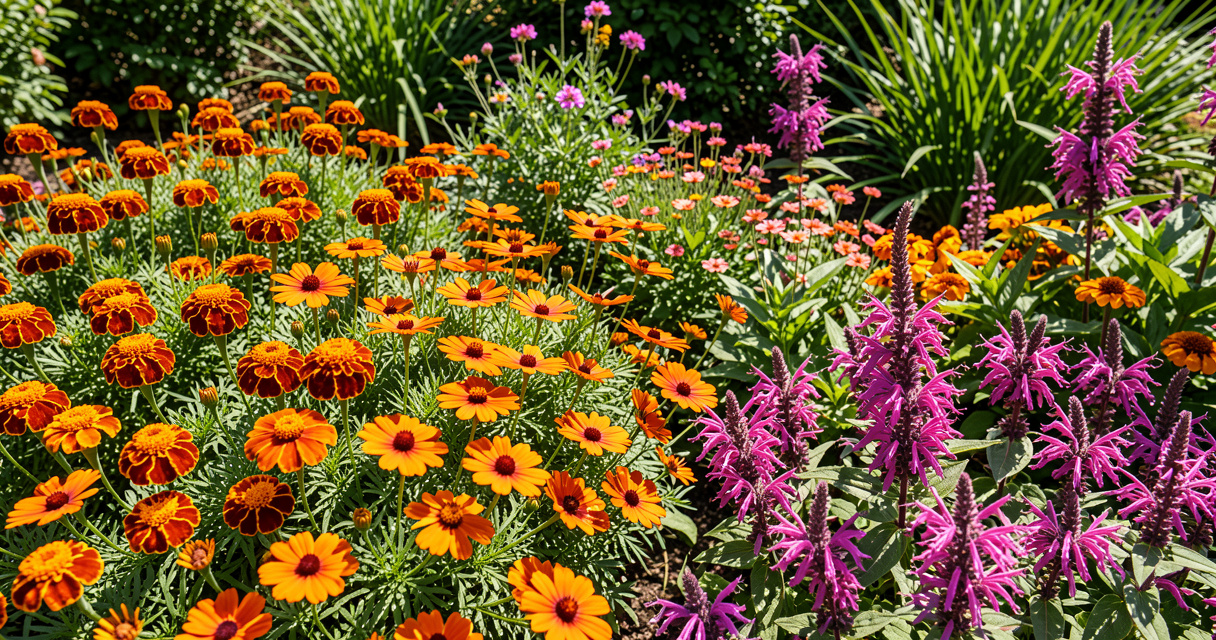
- Sunflower: loves the sun, needs 6+ hours, drought-tolerant.
- Verbena: heat-tolerant, blooms spring to fall.
- Lantana: thrives in heat, low water once established.
- Marigold: blooms summer to frost, pest-repelling.
- Portulaca: drought-tolerant, opens in sunny weather.
- Coreopsis: hardy perennial, long bloom time.
- Bee balm: pollinator favorite, loves full sun.
- Stonecrop: easy-care perennial, attractive foliage.
That is the short answer. The long answer is more useful because it groups plants by the way you actually garden. According to Southern Living, sunflowers need at least six hours of direct light and are adaptable and drought-tolerant (n.d.). That tells you everything about their nature. Put this list in your pocket and you will never plant the wrong thing in a hot spot again.
Full-Sun Annuals That Earn Their Keep
- Marigold
- Calibrachoa
- Verbena
- Lantana
- Portulaca
- Sunflower
- Zinnia
- Celosia
- Cosmos
- Petunia
- Angelonia
- Gomphrena
- Bidens
- Ageratum
- Melampodium
Full-Sun Perennials for Years of Color
- Coreopsis
- Bee balm
- Sneezeweed
- Perennial sunflower
- Phlox
- Stonecrop
- Coneflower
- Russian sage
- Lavender
- Yarrow
- Catmint
- Daylily
- Shasta daisy
- Blanket flower
- Perennial salvia
- Veronica
- Black-eyed Susan
- Sea holly
Full-Sun Shrubs With Flowers
- Butterfly bush
- Panicle hydrangea
- Rose of Sharon
- Spirea
- Potentilla
- Crape myrtle
- Weigela
- Lilac
- Ninebark
- Abelia
- Smokebush
- Elderberry
| Common name | Type | Bloom time | Height | Water needs | USDA hardiness zones | Best use |
|---|---|---|---|---|---|---|
| Sunflower | Annual | Summer to frost | 2–10 ft | Low | 2–11 as annual | Back border, cutting garden |
| Marigold | Annual | Summer to frost | 0.5–3 ft | Low to moderate | All zones as annual | Containers, borders |
| Calibrachoa | Annual | Spring to frost | 4–8 in | Moderate | All zones as annual | Containers, hanging baskets |
| Lantana | Annual / tender perennial | Summer to frost | 1–3 ft | Low | 7–11 | Containers, low borders |
| Coreopsis | Perennial | Early summer to fall | 1–3 ft | Low to moderate | 3–9 | Borders, pollinator gardens |
| Bee balm | Perennial | Summer | 2–4 ft | Moderate | 3–9 | Pollinator, cottage border |
| Stonecrop | Perennial | Late summer to fall | 6–24 in | Low | 3–9 | Front border, rock garden |
| Coneflower | Perennial | Summer to fall | 2–4 ft | Low | 3–9 | Pollinator, cutting garden |
| Russian sage | Perennial | Summer to fall | 3–5 ft | Low | 4–9 | Back border, drought-prone beds |
| Butterfly bush | Shrub | Summer to fall | 4–8 ft | Low | 5–9 | Pollinator hedge, specimen |
| Panicle hydrangea | Shrub | Summer to fall | 4–8 ft | Moderate | 3–8 | Mixed border |
| Rose of Sharon | Shrub | Summer to fall | 6–10 ft | Low to moderate | 5–9 | Privacy, specimen |
The table gives you a fast way to compare bloom time, height, water needs, and zones. If you are new to this, start with marigolds, calibrachoa, or coreopsis. They are forgiving, generous, and hard to kill.
Full-Sun Annuals That Bloom From Summer to Frost
When you need annual flowers for full sun, the goal is nonstop color without constant fuss. Annuals put everything into one season, and the best ones bloom from late spring all the way to frost.
Calibrachoa and Verbena: Nonstop Bloomers
Calibrachoa, often called million bells, is one of the most reliable full-sun flowers I know. It is self-cleaning, which means you do not have to deadhead it. Verbena is nearly as generous. Give it full sun and well-drained soil, and it will keep producing clusters of tiny flowers all season. In my experience, verbena tolerates heat better than most petunias.
Portulaca and Lantana: Heat-and-Drought Champions
Portulaca, or moss rose, is a succulent-leaved annual that opens its flowers in sunny weather. It loves poor soil, strong sun, and dry conditions. Lantana thrives in heat and needs very little water once established. In frost-free zones, lantana becomes a sprawling shrub; in colder climates, grow it as a tough container annual.
How to keep annuals blooming:
- Deadhead spent flowers, or choose self-cleaning types like calibrachoa.
- Feed every 2–3 weeks with a balanced flower fertilizer.
- Water at the base early in the day, not over the leaves.
- Mulch to retain moisture and keep the root zone cool.
Once you have filled pots with annual color, think about the plants that come back every year.
Full-Sun Perennials That Come Back Stronger Every Year
Full sun perennials are the backbone of a garden. They cost more than annuals at first, but they reward you for years. In my experience, a well-chosen perennial border gets easier every season: roots establish, plants fill gaps, and you stop replanting.
Native Full-Sun Perennials for Pollinators
If you want bees, butterflies, and beneficial insects, choose native full-sun perennials. Bee balm, coreopsis, black-eyed Susan, and coneflower are magnets for pollinators. They also tolerate heat and dry spells better than many imported garden plants.
Long-Blooming Perennials for Cutting Gardens
For a cutting garden, look for perennials with a long bloom time. Coreopsis, yarrow, phlox, and perennial sunflowers all make excellent cut flowers. Stonecrop blooms later in the season, which makes it a valuable bridge between summer and fall.
| Perennial | USDA hardiness zones | Bloom period | Height | Light requirement |
|---|---|---|---|---|
| Coreopsis | 3–9 | Early summer to fall | 1–3 ft | Full sun |
| Bee balm | 3–9 | Summer | 2–4 ft | Full sun |
| Sneezeweed | 3–8 | Late summer to fall | 3–5 ft | Full sun |
| Perennial sunflower | 4–9 | Late summer to fall | 4–8 ft | Full sun |
| Phlox | 4–8 | Summer | 2–4 ft | Full sun |
| Stonecrop | 3–9 | Late summer to fall | 6–24 in | Full sun |
If you lean toward xeriscaping, dry-soil perennials such as stonecrop, Russian sage, and yarrow are your allies. They ask for little and give a lot.
Full-Sun Flowers for Containers, Borders & Pollinator Gardens
Sun exposure is only one piece of the puzzle. You also need to match the plant to the job. Containers, borders, and pollinator gardens each call for different full-sun flowers.
Container Combos for Sunny Patios
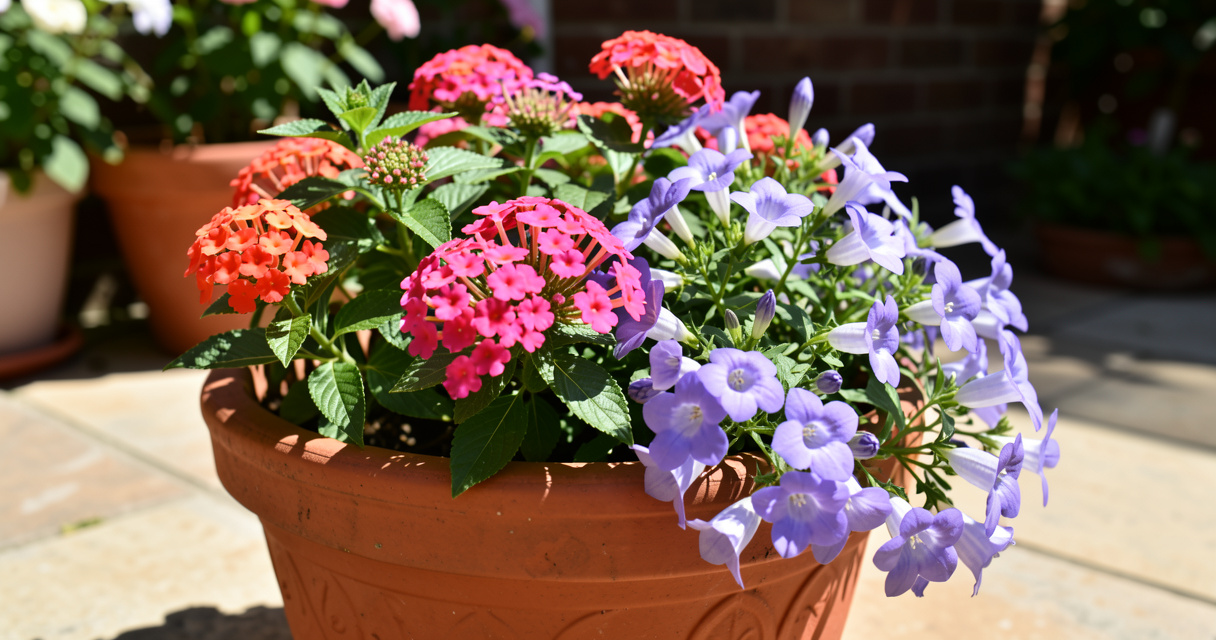
For full sun container plants, use the classic recipe: one thriller, two fillers, one spiller. The thriller gives height, the fillers add mass, and the spiller softens the rim of the pot.
- Thriller: sunflower, upright verbena, or tall celosia.
- Fillers: salvia, calibrachoa, or compact marigold.
- Spiller: portulaca, trailing lantana, or bidens.
If you have been searching for full sun flowers for pots that bloom all summer, calibrachoa and verbena are the first names to write down.
Pollinator-Friendly Borders
For a pollinator-friendly border, plant in drifts of three or five, not single dots. Bee balm, coreopsis, salvia, coneflower, and lantana will keep the border buzzing. In a border against a west-facing brick wall, I once planted Helianthus, bee balm, and coneflower. Through a July heat wave, the Helianthus kept opening, the bees never left, and the gardener sent me a photo in August.
Printable shopping list:
- For containers: calibrachoa, verbena, lantana, portulaca, compact salvia.
- For borders: marigold, zinnia, coreopsis, bee balm, euphorbia.
- For pollinators: bee balm, coreopsis, coneflower, black-eyed Susan, salvia.
How to Care for Full-Sun Flowers: Watering, Mulch & Deadheading
Do full-sun flowers need a lot of water? Not necessarily. Many are drought-tolerant once established, but all flowers need regular water while young. The trick is to stop treating every plant the same.
Soil and Drainage
Full-sun flowers need well-drained soil. In heavy clay or soggy spots, roots suffocate and stems rot. Before planting, loosen the soil and mix in compost. In containers, use a quality potting mix with coarse material such as perlite.
Smart Watering for Hot Spots
Water deeply and less often once plants are established. Deep watering encourages roots to grow downward, where the soil stays cooler. Early morning is the best time because the leaves dry quickly. Soaker hoses and drip irrigation work beautifully in full-sun beds.
Heat stress signs are easy to spot once you know them: leaf edges cup upward, blooms fade faster than normal, and foliage loses its shine. If you see this, water deeply, add mulch, and make sure the plant is genuinely a heat-tolerant plant in full sun.
Deadheading and Fertilizing
Deadheading keeps flowers coming. Cut spent stems back to a healthy leaf or bud. For self-cleaning types like calibrachoa, you can skip it. Most people overdo nitrogen, which creates beautiful leaves and few flowers. Look for a fertilizer with the middle number higher than the first, or use a slow-release flower food.
Mulching tip: apply 2–3 inches of organic mulch around roots to keep soil cool, retain moisture, and reduce weeds — but keep mulch a few centimetres away from stems.
Full-Sun Garden Plan: 3 Heat-Proof Planting Combos
If you want low maintenance full sun plants, start with ready-to-copy combinations. These three recipes rely on Proven Winners cultivars because they have been bred for heat, bloom power, and disease resistance.
Combo 1: Sunny Patio Planter
In a large container, plant Suncredible® Yellow Helianthus as the vertical centerpiece. Around it, place SO BLUE™ Salvia for deep blue contrast and Diamond Snow® Euphorbia as a soft, airy filler. Suncredible® reaches about 3–4 feet tall and is self-cleaning, so you do not need to deadhead it. The salvia stays around 18–24 inches, and the euphorbia forms a rounded 12–18 inch mound that links everything together.
Combo 2: Drought-Tolerant Border. Use Suncredible® Yellow Helianthus at the back, SO BLUE™ Salvia in the middle, and a low carpet of stonecrop at the front. Add Russian sage if you have extra space. This border can handle hot, dry spots with minimal irrigation once established.
Combo 3: Pollinator’s Edge. Pair Diamond Snow® Euphorbia with coreopsis, bee balm, and black-eyed Susan. The white euphorbia brightens the border while the yellow and red perennials feed every pollinator in the neighborhood.
Frequently Asked Questions
What does full sun mean for flowers?
Full sun means at least six hours of direct sunlight per day, usually including midday or afternoon sun. Some plants need even more to produce their best blooms.
What flowers like full sun and heat?
Sunflowers, verbena, lantana, marigolds, portulaca, and calibrachoa are heat-tolerant choices that keep blooming through the summer.
Do full-sun flowers need a lot of water?
Not necessarily. Many are drought-tolerant once established, but all flowers need regular water while young. Adding mulch helps retain moisture and regulate soil temperature.
Can hydrangeas tolerate full sun?
Some hydrangeas can handle full sun only in cooler climates. In hot southern gardens, they usually perform better with afternoon shade.
What perennials bloom all summer in full sun?
Coreopsis, bee balm, phlox, and coneflower can provide months of color. Stonecrop is another easy perennial, though it often blooms later in the season.
Which full-sun flowers come back every year?
Perennials like coreopsis, sneezeweed, bee balm, and perennial sunflowers come back year after year when planted in the right USDA hardiness zone.
What full-sun flowers are good for containers?
Calibrachoa, verbena, lantana, portulaca, and compact salvias are excellent container picks. Use a well-draining potting mix and a slow-release fertilizer.
Build Your Sunny Plant List
Here is what I would do. Before buying anything, check your USDA hardiness zone and measure your sunniest spot. Then build your plant list from the right column: full-sun annuals for containers, full-sun perennials for structure, and a few flowering shrubs for year-round interest.
- Full sun means at least six hours of direct sunlight — choose plants that genuinely love it, not just tolerate it.
- Mix annuals for nonstop color and perennials for long-term structure.
- Match each flower to your soil, water, and container conditions using the quick-reference table.
Pair this guide with our related content on soil preparation, container gardening, deadheading, and USDA zone lookup to complete your plan. My grandmother taught me that a garden is never finished. It evolves. Don’t overthink the perfect list — start with the sun-loving flowers that thrive in full sun, and let the plant tell you what it needs.

I’ve spent over fifteen years in botanical gardens and nurseries across the Netherlands and Belgium. Now I garden in Haarlem and write what I wish someone had told me sooner. No fluff — just what actually works.