
Reading time: 16 min
Updated on 24 October 2026
Key takeaways
- Foliage plants are grown mainly for the shape, colour or texture of their leaves; many can flower too.
- This guide groups 15 indoor choices and 15 garden choices. The list is a set of options, not a universal ranking.
- Light, water, temperature and hardiness vary by species and cultivar. Check the label and the conditions in your own space.
- Some popular houseplants are toxic to pets. Check the exact botanical name before bringing a plant home.
- A few houseplants should not be presented as an air-cleaning system or a replacement for ventilation.
What is a foliage plant?
A foliage plant is grown chiefly for its leaves: their outline, colour, markings or texture. That does not mean it never flowers. A hosta, for example, has attractive summer flowers, while gardeners often choose it for its broad leaves and the way they fill a shady bed. Ferns, patterned prayer plants, trailing vines and grasses all bring different kinds of foliage to a room or garden.
Leaves can give a planting structure through more of the year than a short flowering display, but that does not make foliage plants automatically easier to care for. A fern may need consistently moist air and soil; a drought-tolerant houseplant can suffer if it is watered on the same schedule. The useful question is not “Which plant is easiest for everyone?” but “Which plant suits this light, temperature, soil and routine?”
Indoor and outdoor foliage are different choices
Houseplants are usually selected for container life and a relatively stable indoor temperature. Many come from warm climates, so they may be damaged by cold or draughts. Outdoor perennials have to cope with the local seasons, winter wet, summer sun, soil and pests. A plant that looks good in a living room is not automatically suitable for an exposed garden, and a shade-loving garden fern may struggle in a heated room.
Use the list below to shortlist plants, then check the exact species and cultivar against your conditions. Garden hardiness maps are regional: USDA zones are useful in the United States, while gardeners elsewhere should use a source calibrated to their own climate. Even within one country, an exposed coastal garden, a sheltered courtyard and a cold inland plot can behave differently.
The Royal Horticultural Society’s houseplant growing guide recommends choosing a position according to the plant’s individual light, temperature, water and humidity needs. Its guides to aspidistras, epipremnums, hostas, athyrium ferns and heucheras give more specific starting points. Treat any short profile as a starting point; cultivars and local conditions still matter.
15 foliage plants for indoor spaces
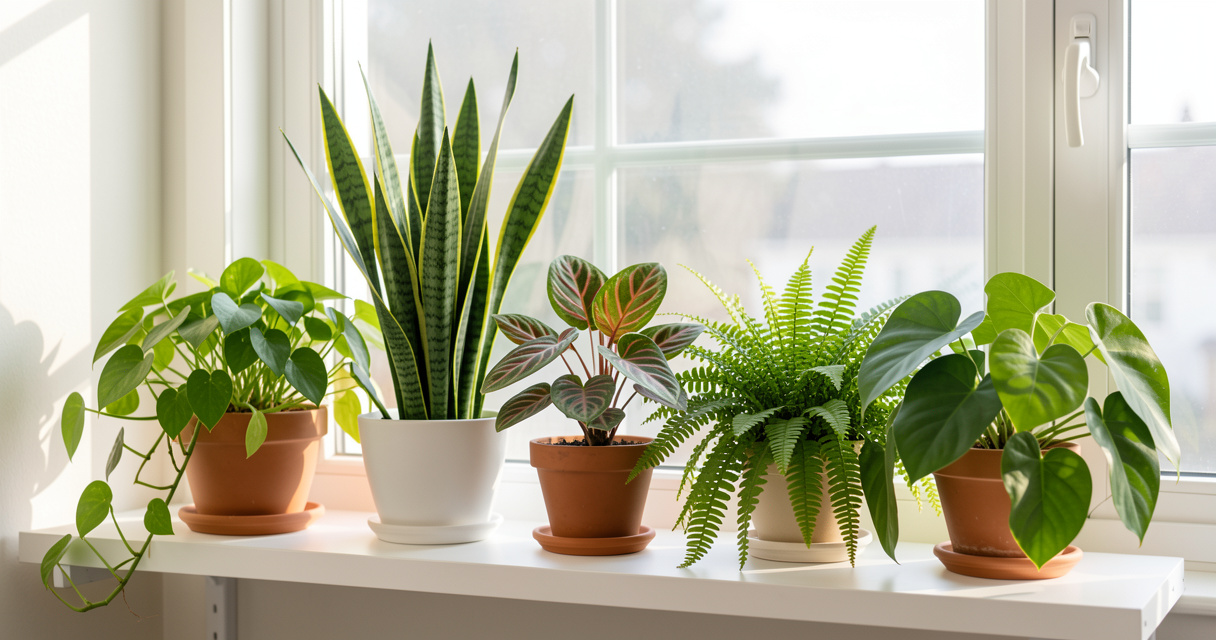
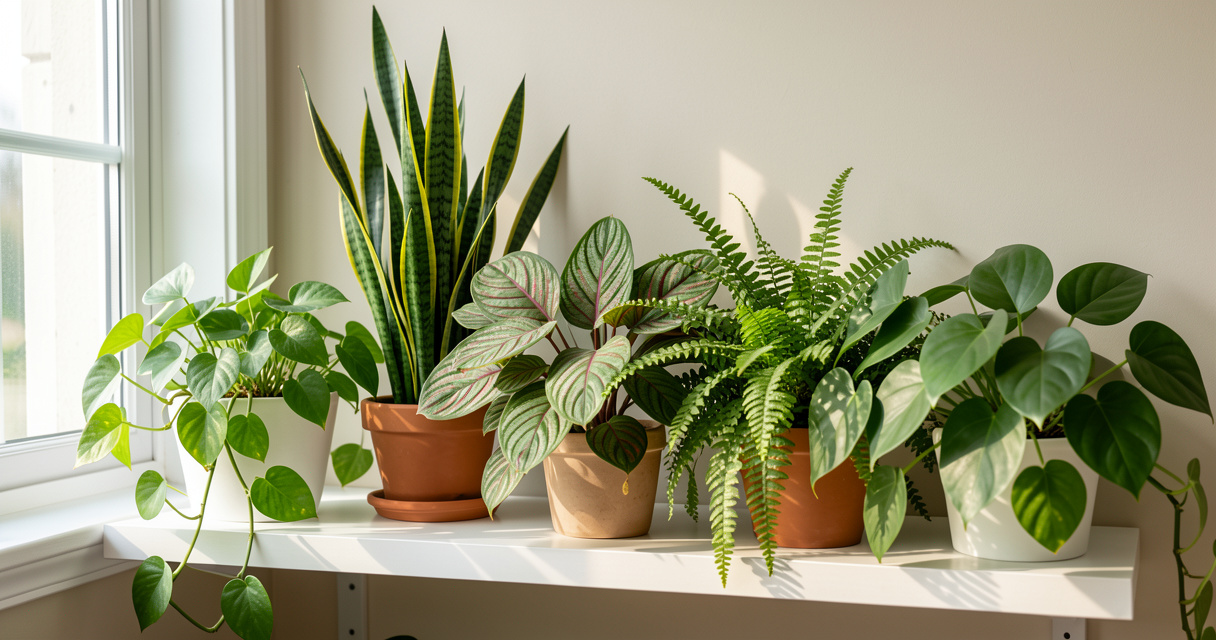
These indoor choices range from tolerant green plants to patterned or trailing varieties. “Low light” means less light than a bright window, not a place with no daylight. In a dim room, plants generally grow more slowly, and a plant that tolerates shade may still decline if it gets too little light for too long.
| # and plant | What it brings | Starting point for care |
|---|---|---|
| 1. Cast-iron plant (Aspidistra elatior) | Long, dark green leaves make a steady background plant for a hallway, office or shaded corner. | One of the more shade-tolerant houseplants. Use low or filtered light, keep it out of harsh direct sun and water according to how quickly its compost dries. |
| 2. Golden pothos or devil’s ivy (Epipremnum aureum) | A climbing or trailing vine with heart-shaped leaves, useful on a shelf or trained up a support. | Bright, indirect light keeps it growing well; it can tolerate some shade. Avoid deep darkness and waterlogged compost. The ASPCA lists this plant among those toxic to cats. |
| 3. Snake plant (Dracaena trifasciata, also listed as Sansevieria trifasciata) | Upright, sword-shaped leaves add a strong vertical line and take up little floor space. | Give it light, but avoid assuming that a dark corner is suitable. Let the potting mix dry between waterings and use a pot with drainage. The ASPCA lists it as toxic to cats. |
| 4. ZZ plant (Zamioculcas zamiifolia) | Glossy leaflets on upright stems give a polished look in a home or office. | Its thick underground rhizomes store water, so frequent watering is a poor fit. Try bright, indirect light or a lower-light position, and let the mix dry before watering again. |
| 5. Heartleaf philodendron (Philodendron hederaceum) | A soft, heart-leaved climber or trailer that can be guided along a support. | Choose a warm spot with bright, indirect light and a potting mix that drains while holding some moisture. Keep it away from pets: the ASPCA lists heartleaf philodendron as toxic to cats. |
| 6. Swiss cheese plant (Monstera deliciosa) | Large leaves develop characteristic splits as the plant matures, giving it a bold focal point. | Allow room for the leaves and provide bright, filtered light and a support as needed. Do not place it where the pot stays waterlogged. The ASPCA lists Monstera deliciosa as toxic to cats. |
| 7. Rattlesnake plant (Goeppertia insignis, often sold under a Calathea name) | Long leaves with dark markings and wavy edges add pattern without needing flowers. | Use indirect light and avoid letting the potting mix dry completely for long periods. Check the label for the exact plant: care needs differ across the many plants sold as calatheas. |
| 8. Prayer plant (Maranta leuconeura) | Veined, patterned leaves fold and shift through the day, making the plant especially engaging at close range. | Give it indirect light and an evenly managed watering routine. It usually appreciates humidity, but a humidifier or bathroom is not a substitute for checking the actual plant’s needs. |
| 9. Spider plant (Chlorophytum comosum) | Arching striped leaves and small plantlets suit a shelf or hanging pot. | Bright, indirect light is a reliable starting point; protect pale or variegated leaves from strong summer sun through glass. The ASPCA identifies the spider plant as non-toxic to cats and dogs. |
| 10. Parlour palm (Chamaedorea elegans) | Fine leaflets form a compact palm that adds height without the broad footprint of a large tree. | Use a bright spot without hot direct sun and water when the compost needs it. Check the pot and the plant label rather than applying a fixed weekly schedule. |
| 11. Boston fern (Nephrolepis exaltata) | Feathery fronds create a soft, full shape in a room with suitable light and moisture. | It prefers humidity and more consistent moisture than drought-tolerant succulents. Keep it from drying out completely, but do not leave the pot standing in water. ASPCA lists Boston fern as non-toxic to cats and dogs. |
| 12. Bird’s-nest fern (Asplenium nidus) | Broad, undivided fronds rise in a rosette, offering a different texture from finely divided ferns. | Choose filtered light and a humid position. Water the growing medium as needed and follow the nursery’s care instructions; do not assume every fern wants the same conditions. |
| 13. Baby rubber plant (Peperomia obtusifolia) | Compact, rounded leaves make it a practical option for a desk or small shelf. | Bright, indirect light helps it stay compact. Its fleshy leaves do not need a constantly wet mix, so let the surface dry somewhat between waterings. |
| 14. Wax plant (Hoya carnosa) | Waxy leaves grow on flexible stems that can trail or climb; mature plants may also flower. | Give it a bright position without excessive direct sun and allow the potting mix to dry somewhat before watering. It is a slower-growing choice, so avoid repeatedly repotting it just to make it fill space. |
| 15. Chinese money plant (Pilea peperomioides) | Round leaves on upright stems create a light, graphic silhouette for a bright room. | Use bright, indirect light and rotate the pot occasionally if growth leans toward a window. Let excess water drain away and remove it from a spot where the pot remains wet. |
15 foliage plants for gardens and containers
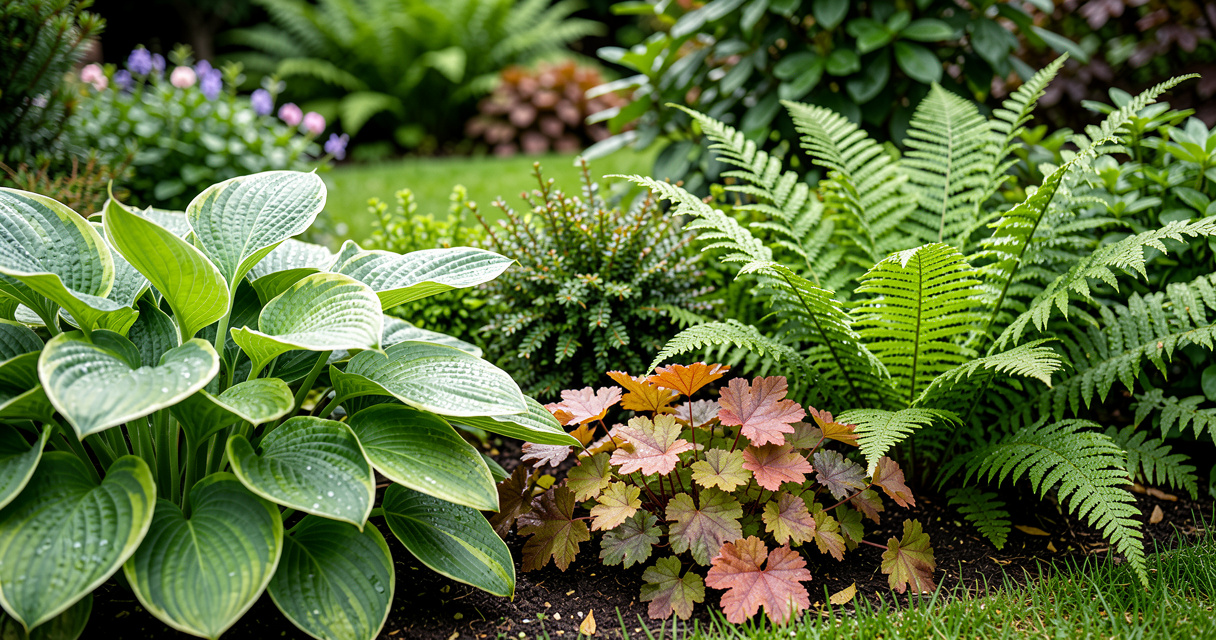
Outdoor plants need to match the garden’s light, moisture, soil and winter conditions. The shade plants below suit many woodland-style or sheltered beds; several can also grow in containers. The last few offer silver, variegated or warm-season colour. Confirm the selected species and cultivar with a local nursery or regional gardening reference before planting.
| # and plant | What it brings | Starting point for care |
|---|---|---|
| 16. Hosta (hosta hybrids) | Broad leaves come in many sizes, greens, blues, golds and variegated patterns; useful as a focal point or in a container. | Most hostas do well in moist soil and partial shade, though some cultivars tolerate more sun. Slugs and snails can damage leaves; choose a resistant variety and manage the site rather than expecting flawless foliage. |
| 17. Japanese painted fern (Athyrium niponicum) | Silvery and green fronds bring a finer, more detailed texture to a shady border. | Grow in partial or full shade with soil that holds moisture but does not remain waterlogged. The colour and height vary by cultivar; allow the fronds space to unfurl. |
| 18. Male fern (Dryopteris filix-mas) | Upright green fronds provide a strong, natural shape beneath trees or beside a path. | A sheltered, shaded position with humus-rich soil is a useful starting point. Let the plant’s seasonal growth cycle play out and remove damaged fronds when appropriate. |
| 19. Hart’s-tongue fern (Asplenium scolopendrium) | Glossy, strap-shaped fronds contrast with the feathery look of other ferns. | Try a cool, shaded or partly shaded site with moisture-retentive soil. Check drainage and local conditions before placing it in a wall, rock garden or container. |
| 20. Coral bells (Heuchera hybrids) | Compact mounds range from green and silver to copper, amber and deep purple. | Many varieties prefer partial or dappled shade. Some darker-leaved cultivars tolerate more sun, while pale leaves can scorch; choose the position after checking the cultivar. |
| 21. Siberian bugloss (Brunnera macrophylla) | Heart-shaped leaves, sometimes marked with silver, brighten a shaded bed after spring flowering ends. | Choose partial shade and soil that does not dry out for long periods. Variegated cultivars may have different light preferences from plain green forms. |
| 22. Lungwort (Pulmonaria species) | Spotted leaves make a noticeable ground-level pattern in a woodland-style planting. | It is commonly used in shade or partial shade with moisture-retentive soil. Confirm the species and mature spread, and leave room for the clump rather than planting it tightly against neighbours. |
| 23. Spotted deadnettle (Lamium maculatum) | A low, spreading groundcover with silver-marked or variegated leaves can brighten a shaded edge. | Use it where a spreading habit is welcome and keep it in bounds if it begins to crowd other plants. Check the cultivar’s vigour and avoid treating it as a tiny, stationary accent. |
| 24. Bergenia (Bergenia cordifolia) | Large, leathery leaves provide broad structure in a border or near a path. | Consider it for a position with some shelter and soil suited to the local cultivar. Allow room for the clump and remove tired foliage when it no longer looks good. |
| 25. Japanese sedge (Carex oshimensis) | Narrow, arching leaves, often striped, work well as a container edge or small-scale contrast. | Check the cultivar’s mature size and colour. Many selections suit partial shade and soil that retains some moisture, but a container dries faster than a garden bed. |
| 26. Japanese forest grass (Hakonechloa macra) | Soft, cascading blades add movement along a shaded path or over a low wall. | Give it a protected position with moist, free-draining soil. It grows gradually, so space plants according to their eventual size rather than expecting an instant carpet. |
| 27. Lamb’s ear (Stachys byzantina) | Soft, silvery leaves make a tactile contrast with smooth or glossy foliage. | Choose a sunny place with free-draining soil. It is a poor match for ground that stays wet in winter; check the local climate and cultivar before using it as a permanent border plant. |
| 28. Lavender cotton (Santolina chamaecyparissus) | Fine grey-green leaves form a compact, aromatic mound that contrasts with broad-leaved perennials. | Use a sunny, well-drained position. Avoid placing it in a persistently wet bed and check how large the cultivar grows before deciding how close to plant it to a path. |
| 29. Western mugwort (Artemisia ludoviciana, including ‘Silver Queen’) | Silver foliage stands out beside darker green plants and can carry through a dry-looking border. | Give it sun and well-drained soil, and check the chosen cultivar’s mature spread. If the plant spreads too freely for a small garden, contain it or choose a more compact selection. |
| 30. Coleus (Plectranthus scutellarioides) | Its patterned leaves come in striking combinations of red, pink, green, yellow and purple. | Use it as a seasonal container or bedding plant in a temperate climate. Light needs differ among cultivars, and it is frost-sensitive; move or protect it before cold weather if you want to keep it. |
How to choose the right foliage plant
Start with the conditions you actually have, not the corner you hope a plant will transform. Notice how bright the spot is through the day, whether direct sun reaches it, how cold it gets in winter and how quickly the soil or pot dries. For a garden, also consider drainage, wind, local hardiness, neighbouring plants and the plant’s mature spread.
Then decide what you want the foliage to do. A large hosta or monstera can anchor a composition; a fern, peperomia or heuchera gives a finer texture; a trailing pothos or hoya can use vertical space. Pair leaves with contrasting shapes and tones, but avoid packing plants too closely. Their mature size matters more than the size of the pot when you buy them.
If the room or garden has limited light, select a plant known to tolerate lower light and expect slower growth. If you have strong sun, check that the selected leaves can handle it; some variegated or thin leaves scorch through glass or in afternoon heat. Match moisture needs when planting together. A dry-loving plant and a fern that prefers steady moisture are not a convenient pair just because their leaves look good side by side.
Foliage plant care: light, water, soil and pruning
Light: low light still means daylight
“Bright indirect light” and “shade” are useful descriptions, but they are not exact measurements. A window’s direction, nearby buildings, curtains and season all change the light a plant receives. A spot several metres from a window may be far dimmer than it looks to a person. If new growth becomes stretched or the plant loses some of its pattern, it may need a brighter position; scorched patches can indicate too much direct sun for that species.
Move a plant gradually when you change its light. A plant brought straight from a shop into hot direct sun can be damaged. Likewise, a plant moved into a darker room may need less water because the compost dries more slowly. Check the species-specific care guide rather than assuming every foliage plant follows the same rule.
Water: use the plant and the pot as your guide
There is no reliable watering interval for all foliage plants. A small pot in a warm bright room may dry much faster than a larger pot in a cool, shaded one. Soil mix, pot material and the plant’s growth also matter. Check the medium before watering and use the plant’s own needs: some plants prefer to dry somewhat between drinks, while moisture-loving ferns can lose quality if allowed to dry out completely.
When a plant needs water, wet the root area evenly and allow excess water to drain. Empty a cachepot or saucer rather than leaving a pot standing in water. Persistent yellow leaves can have several causes, including watering, light, temperature or root problems; one symptom does not prove one diagnosis. Adjust one condition at a time and observe new growth.
Soil, humidity and temperature
For container plants, use a growing medium suited to the plant and a pot with drainage. Garden plants need soil that fits their preferences; “well-drained” does not mean the same thing as bone-dry, and moisture-retentive soil should not remain waterlogged. Check whether a plant is tender before leaving it outdoors in cold weather. Many tropical houseplants need warmer, steadier conditions than a temperate garden offers.
Humidity needs vary too. A humidifier or grouping plants can help in a dry room, but regular misting is short-lived and is not a universal solution. First confirm that humidity is actually the problem. Avoid putting a plant in a dark bathroom just because it is humid; both light and moisture conditions matter.
Pruning, cleaning and pests
Remove dead or badly damaged leaves with clean tools when doing so suits the plant. Trailing plants can be trimmed for shape, while outdoor plants have their own seasonal pruning and cutback needs. Do not apply a rule such as removing a fixed percentage to every species. Check the plant’s growth habit and the right time of year before making a larger cut.
Inspect both sides of leaves and the stems from time to time. Sticky residue, fine webbing or small moving insects may point to a pest, but confirm what you are seeing before choosing a treatment. Isolate a new or affected indoor plant if practical, and follow the product label if treatment is needed. A damp cloth can remove dust from many broad leaves, but delicate or hairy foliage may need a gentler approach.
Pet safety: check the exact plant
“Foliage plant” is a gardening category, not a safety label. Some popular houseplants can harm cats or dogs if chewed, and common names can refer to more than one species. The ASPCA lists golden pothos, snake plant, heartleaf philodendron, Swiss cheese plant and hosta among plants toxic to cats. It lists the spider plant and Boston fern as non-toxic to cats and dogs. These examples do not classify all 30 plants in this guide.
Before buying, search the ASPCA’s separate cat plant list or dog plant list using the botanical name on the nursery label. You can also check the specific entry for the spider plant. If you are unsure about an identification or an animal has eaten part of a plant, contact a veterinarian or a local animal poison service. A “non-toxic” listing is not permission to encourage chewing or eating a plant.
Do foliage plants clean indoor air?
The question comes up often because of a 1989 NASA report on plants and indoor air pollutants. The report examined plants, roots and associated microorganisms as possible ways to reduce certain compounds. It is useful background on how plant systems may interact with pollutants, but it does not show that a few pots can clean the air of an ordinary, ventilated home.
A later review by Cummings and Waring translated results from sealed-chamber studies into a clean-air-delivery measure. The authors estimated that 10 to 1,000 plants per square metre of building floor area would be needed to match the removal rate supplied by typical outdoor-to-indoor air exchange. The wide range reflects differences across experiments; it is not a planting recommendation. Their conclusion is a useful correction to the idea that ordinary houseplants act like air purifiers.
Plants can still be a pleasure to grow and can make a room feel more personal. Choose them for their appearance, the growing conditions you can provide and the care you enjoy. For indoor air, follow the building’s ventilation guidance and address sources of pollutants; do not rely on a few plants as a substitute.
Sources: the original NASA technical report and the peer-reviewed 2020 review and analysis by Cummings and Waring.
Frequently asked questions
What counts as a foliage plant?
It is a plant chosen mainly for its leaves, such as their shape, markings or colour. It may flower as well. Hosta, fern, peperomia, pothos and heuchera are all examples grown for distinctive foliage.
Which foliage plants suit a low-light room?
Aspidistra is known for tolerating low or filtered light, and some other houseplants cope with less light than flowering varieties. No plant grows well in complete darkness. Check the individual plant and expect growth to slow in a dim position.
How often should I water foliage plants?
There is no single weekly schedule. Check the growing medium, the plant’s requirements, pot size, light and season. Let the mix dry more for plants that prefer it, and keep moisture more consistent for plants that need it; always let excess water drain.
Are foliage plants safe for cats and dogs?
Some are toxic and some are listed as non-toxic. Check the exact botanical name in a reliable list for the animal you have. Do not rely on a common name, a social-media list or the fact that a plant is sold as a houseplant.
Can houseplants purify a room’s air?
Plants have removed pollutants in controlled chamber studies, but research does not support presenting a few household pots as an effective air-cleaning system. Keep ventilation working as intended and choose houseplants for their ornamental and gardening value.
Can I put indoor foliage plants outside in summer?
Some can benefit from a sheltered outdoor stay, but do not move a plant abruptly into strong sun or cold nights. Acclimatise it gradually, check its minimum temperature and bring tender plants back before conditions become too cold. The correct timing depends on the species and local weather.
What is a good foliage plant for a beginner?
Start with a plant suited to the light and care routine you can provide. Aspidistra can suit a lower-light spot; spider plant or pothos may suit a brighter shelf. If pets share the home, check the plant’s safety first and choose a verified non-toxic option where needed.
Choose foliage for the place it will grow, then let the plant’s actual requirements guide your care. A well-matched fern, a compact peperomia or a large hosta can each be the right choice in the right setting. Start with one plant, observe how it responds and adjust the conditions before adding more.

I’ve spent over fifteen years in botanical gardens and nurseries across the Netherlands and Belgium. Now I garden in Haarlem and write what I wish someone had told me sooner. No fluff — just what actually works.