
Reading time: 16 min
Key Takeaways
- Shade types matter — Know the difference between deep shade, partial shade, and dappled light before choosing plants.
- Dry shade is a unique challenge — Select drought-tolerant varieties like autumn fern and certain hostas, and amend soil with organic matter.
- Mix perennials, annuals and foliage plants — Combine hostas, ferns, impatiens, and caladium for season-long texture and color.
- Deer can be deterred — Use deer-resistant perennials like bleeding heart and astilbe as a natural barrier around tempting hostas.
Struggling to find plants that thrive in the dark corners of your garden? You’re not alone — shade loving plants can turn dim spots into lush, vibrant retreats. Gardening in shade is often seen as a limitation, but with the right selection of low light perennials, annuals, and foliage plants, you can create a beautiful, low-maintenance garden in shade even under deep tree canopies. In my twelve years working with botanical gardens across the Netherlands, I’ve learned that the secret lies not in fighting the shade, but in embracing it. Let me show you what actually works.
Understanding Shade Levels: What Does Full Shade, Partial Shade, and Dappled Light Mean?
Before you plant a single hosta, you need to understand your light. What most people get wrong is that “shade” is not one condition. There are at least three distinct levels, and each demands different plants. Here’s how I define them after years of measuring light in over a hundred gardens.
| Shade Type | Sun Hours (direct) | Example Plants | Best Use |
|---|---|---|---|
| Deep / Full Shade | Less than 1 hour | Maidenhair fern, hosta, caladium | North side of house, under dense trees |
| Partial Shade | 3–6 hours (morning sun) | Astilbe, heuchera, bleeding heart | East-facing beds, under open canopy |
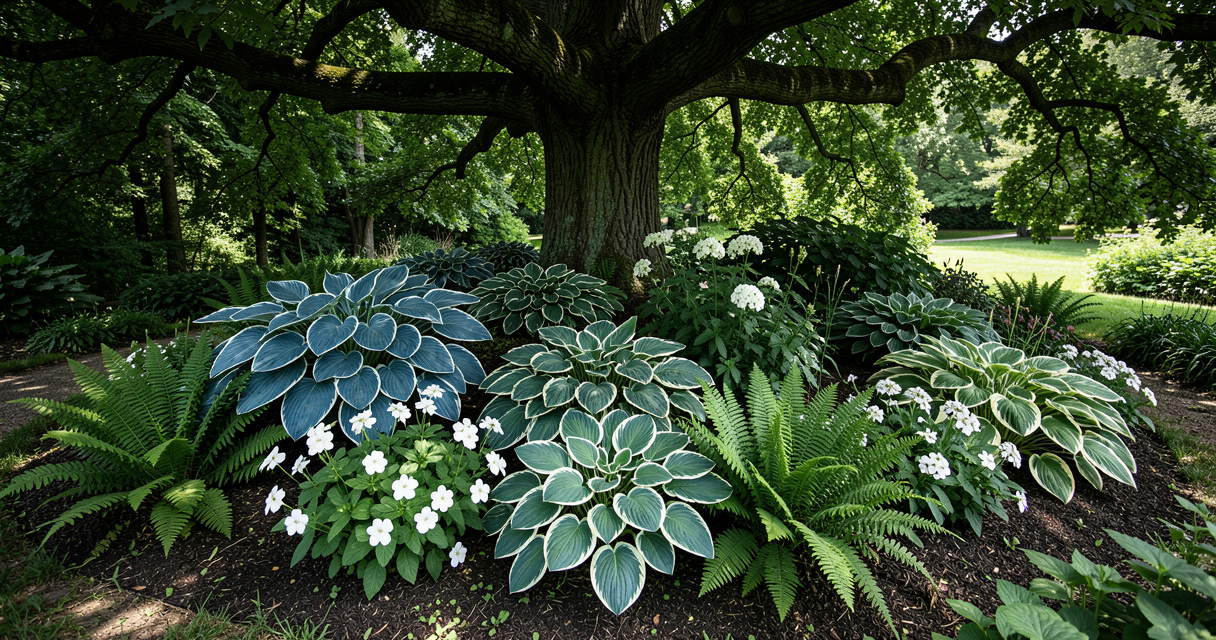
| Dappled / Filtered Light | 1–3 hours (through trees) | Ferns, tiarella, pulmonaria | Under deciduous trees, woodland gardens |
Quick Tip – The hand test for light levels: Hold your hand about 30 cm above the ground at noon. If the shadow is sharp, that’s full sun. If it’s fuzzy and barely visible, you have dappled or deep shade. It’s that simple — don’t overthink it.
How Many Hours of Sun Is Partial Shade?
Partial shade generally means 3 to 6 hours of direct sunlight, ideally in the morning when the rays are less intense. If your garden gets harsh afternoon sun filtered through leaves, that still counts as partial shade for plants that prefer cooler conditions.
Deep Shade vs. Dry Shade: Know the Difference
Deep shade is about light; dry shade adds the problem of water competition. Under large trees or along building foundations, soil dries out quickly even in rainy climates. That’s a whole different beast. We’ll cover dry shade plants later in this article, but first let’s explore the reliable perennials that return year after year.
Now that you know your shade type, let’s move to the plants that will thrive there.
Top 10 Shade Loving Perennials That Return Year After Year
Here are the shade loving perennials I recommend most often. They’re proven performers in gardens from Friesland to Florida. I’ve listed them with zone range, height, bloom time, and standout feature.
- Hosta (zones 3–9) – bold foliage, many sizes, 4 inches to 6 feet across.
- Bleeding Heart (zones 3–9) – spring heart-shaped flowers.
- Astilbe (zones 4–9) – feathery summer plumes.
- Heuchera (zones 4–9) – colorful evergreen leaves.
- Fern (various) (zones 2–9) – delicate texture for deep shade.
- Ligularia (zones 4–8) – large leaves, yellow flowers.
- Pulmonaria (zones 3–9) – spotted leaves, spring blooms.
- Tiarella (zones 3–9) – foamflower, groundcover.
- Lenten Rose (zones 4–9) – evergreen, winter blooms.
- Japanese Forest Grass (zones 5–9) – golden arching leaves.
According to House Beautiful (2025), hostas range from 4 inches to 6 feet across depending on variety — that’s incredible versatility. Bleeding heart (Dicentra spectabilis) thrives in zones 3–9, as noted by Garden Design (2025). In my experience, the key to long bloom is choosing early, mid, and late-season varieties of astilbe and heuchera.
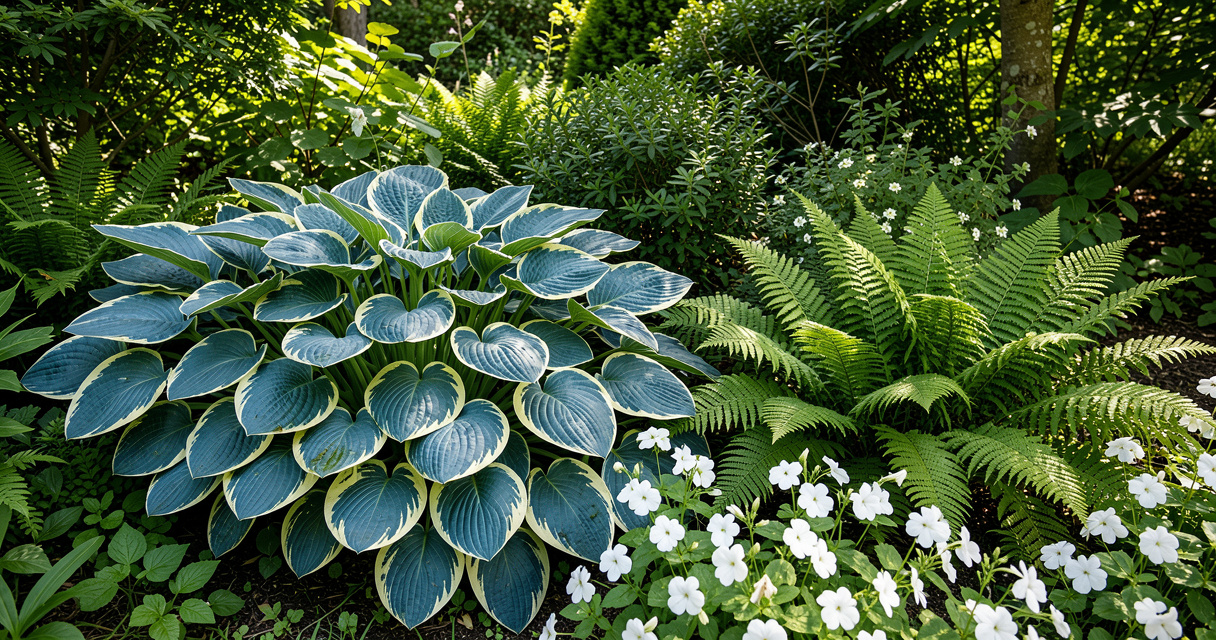
Hosta – The Queen of the Shade Garden
Hostas are the backbone of any shade border. Their leaves come in blue, gold, variegated, and even fragrant varieties. Full shade perennials like hostas need consistent moisture their first year, but once established, they tolerate drought surprisingly well.
Bleeding Heart – Romantic Spring Blooms
The arching stems of Dicentra spectabilis produce heart-shaped pink or white flowers in late spring. After blooming, the foliage fades — that’s normal. Pair it with ferns to cover the gap.
Astilbe – Feathery Plumes for Summer
Astilbe loves moist shade and produces plumes in pink, red, white, and lavender. Bloom time ranges from early to late summer depending on cultivar. The plant will tell you when it’s thirsty — leaves droop dramatically, but they recover fast with water.
Heuchera (Coral Bells) – Evergreen Foliage
Heuchera offers year-round color with leaves in shades of purple, lime, and bronze. It’s also deer resistant and attracts hummingbirds. My grandmother taught me that heuchera grows best in well-drained soil — never let it sit wet.
What to look for when buying shade perennials
- Hardiness zone – Match to your region (check USDA map).
- Moisture needs – Some like wet feet (astilbe); others need drainage (heuchera).
- Deer resistance – If deer visit, choose ferns, bleeding heart, astilbe.
Next, let’s tackle the trickiest spot: dry shade.
Best Shade Plants for Dry Shade: Thriving Where Water Is Scarce
Dry shade plants are a special category. Under mature trees or along a building’s rain shadow, the soil stays bone-dry even in wet seasons. Here are the top five survivors from my own garden trials.
- Autumn Fern (Dryopteris erythrosora) – copper new growth, tolerates drought once established.
- Hosta ‘June’ – a compact gold-blue variety that handles dry shade.
- Heuchera ‘Palace Purple’ – deep burgundy leaves, very resilient.
- Liriope muscari – grass-like clumps, purple flowers.
- Japanese Pachysandra – aggressive groundcover, good for large areas.
Top 5 Plants for Dry Shade
Each of these can survive weeks without rain once their roots are deep. But here’s what most people get wrong: you still need to water them heavily during the first growing season. Let me show you what actually works for soil preparation.
Soil Improvement Tips for Dry Shade Beds
Add 5–8 cm of well-rotted leaf compost or aged bark mulch annually. This builds humus that holds moisture like a sponge. Avoid overwatering in dry shade — Why you should avoid overwatering in dry shade – root rot risk: Dry shade soils are often compacted; adding water without organic matter just leads to runoff and root suffocation.
Now let’s bring some color into those shaded beds with flowering plants.
Flowering Shade Plants That Add Color to Dark Spots
Many gardeners assume shade loving flowers are scarce. In truth, a whole palette of bloomers thrives in low light. Here’s a table of my top picks for spring, summer, and fall interest.
| Plant Name | Flower Color | Bloom Season | Light Requirement | Zone |
|---|---|---|---|---|
| Bleeding Heart | Pink, white | Spring | Partial shade | 3–9 |
| Astilbe | Pink, red, white | Summer | Partial shade | 4–9 |
| Impatiens (annual) | Various | Summer to frost | Deep to partial | Annual |
| Begonia (annual) | Red, pink, white | Summer to frost | Deep to partial | Annual |
| Torenia | Blue, purple | Summer | Partial shade | Annual |
| Toad Lily | Spotted white/purple | Fall | Dappled shade | 4–9 |
| Cyclamen (hardy) | Pink, white | Fall | Deep shade | 5–9 |
Spring Bloomers for Shade
Bleeding heart and pulmonaria are perfect partners. Pulmonaria’s spotted leaves echo the heart shapes, creating a charming early season display.
Summer-Long Color with Annuals (Impatiens, Begonias)
For non-stop blooms, use annual impatiens and begonias in hanging baskets or borders. They flower from June until frost, even in full shade. In my garden in Haarlem, I fill a north-facing window box with white begonias and coleus — the contrast is stunning.
Fall Interest with Toad Lily and Cyclamen
Toad lily (Tricyrtis) has orchid-like blooms in autumn, while hardy cyclamen pushes through leaf litter with delicate pink flowers. Both love the cool, moist conditions of a mature woodland bed.
Foliage plants can be just as dramatic — let’s explore textures next.
Foliage Plants for Texture: Hostas, Ferns, and Caladium
Hostas for shade are legendary, but let’s not forget ferns and caladium. These are the architectural heroes of a woodland garden.
The Unmatched Variety of Hosta Leaves
From tiny ‘Blue Mouse Ears’ to giant ‘Sum and Substance’, hostas offer leaf shapes from heart to spear, and colors from chartreuse to dusty blue. In my experience, pairing a gold-leaf hosta with a dark purple heuchera creates instant visual depth.
Ferns: The Shade Garden’s Backbone
Ferns thrive where little else grows. Maidenhair fern adds delicate texture; autumn fern offers copper young fronds. A gardener I know turned a bare north-facing bed into a lush fern grove by planting ten Osmunda regalis and letting them spread. After three years, the space became a cool, green sanctuary.
Caladium: Tropical Foliage for Warm Zones
Caladiums need warmth (zones 9–11 as perennials, elsewhere as annuals). Their translucent leaves in pink, red, and white light up dark corners. The plant will tell you when it’s happy — new leaves unfurl every few days in humid, warm shade.
Now let’s move from the ground to containers — perfect for patios and balconies.
Shade Plants for Containers: Bringing Life to Patios and Balconies
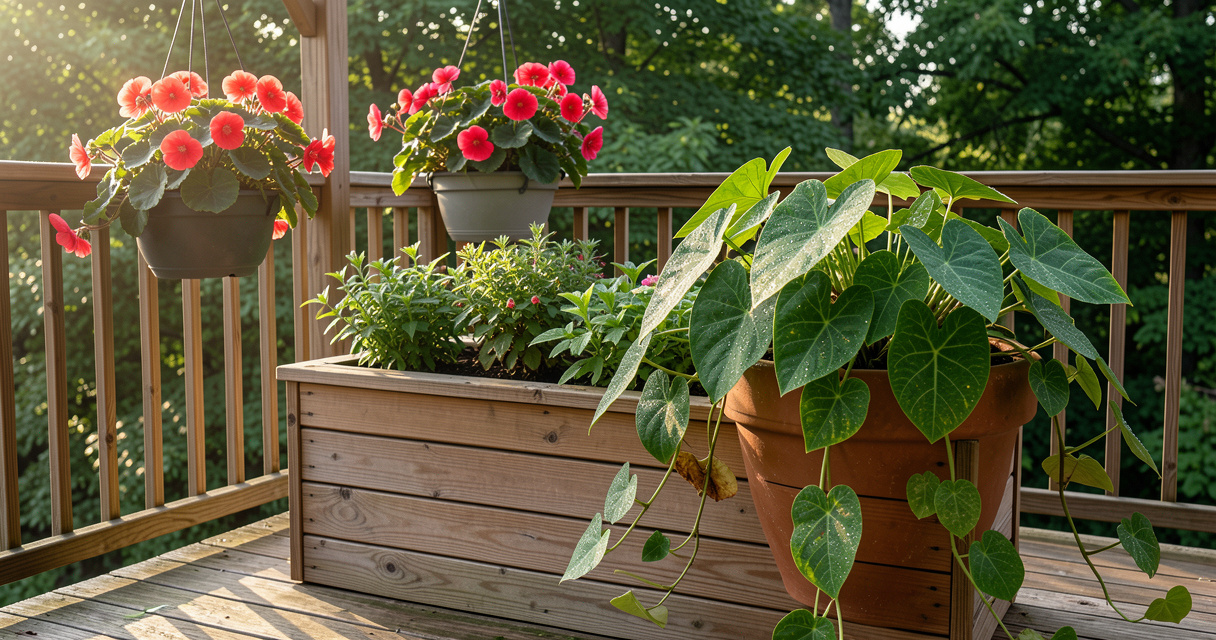
Begonias shade gardens love containers. Annuals like wax begonias and trailing sweet potato vine spill over edges, while coleus and caladium provide upright drama. Here’s my five-step checklist for success.
5 Steps to a Successful Shade Container Garden
- Choose large pots (at least 30 cm diameter) to prevent rapid drying.
- Use high-quality potting mix with perlite for drainage.
- Add slow-release fertilizer at planting time.
- Water when the top 2 cm of soil feels dry — even shade containers can dry out under eaves.
- Use the thriller-spiller-filler formula: a tall caladium (thriller), trailing begonia (spiller), and coleus (filler).
Best Annuals for Shady Containers
Impatiens, begonias, torenia, and lobelia are top performers. For containers with no drainage holes (I know you have them), use a layer of gravel and water sparingly — but honestly, drill a hole if you can.
Designing a Thriller, Spiller, Filler Shade Container
Try this combination: center a ‘Florida Sweetheart’ caladium (thriller), surround with lime-green coleus (filler), and edge with cascading white begonias (spiller). The contrast of pink, lime, and white is electric even in deepest shade.
Wildlife can be a challenge — here’s how to protect your shade garden.
Deer Resistant Shade Plants: Protecting Your Garden from Wildlife
Deer resistant shade plants are essential if you live near wooded areas. While no plant is 100% deer-proof, these are consistently avoided: ferns, bleeding heart, astilbe, ligularia, and hellebore. Companion planting deer-resistant plants around tempting hostas: plant a ring of astilbe and ferns around your hosta bed. Deer dislike brushing against these textures, and the scent of astilbe may deter them.
What about hostas? Are hostas deer resistant? Unfortunately, no. Deer love fresh hosta shoots. In my garden, I rely on a combination of fencing and strategic deer-repellent sprays during spring emergence.
Now let’s put it all together with design principles.
Design Tips for a Stunning Shade Garden
Shade garden design requires a different eye than full-sun borders. You rely on texture, foliage color, and subtle contrasts rather than bold flowers. Here are my go-to principles.
| Design Principle | Example with Plants | Effect |
|---|---|---|
| Layering height | Back: tall ferns (Osmunda), Mid: hostas, Front: tiarella | Depth and perspective |
| Foliage contrast | Gold hosta + purple heuchera | Brightens dark areas |
| Repetition of texture | Repeating clumps of astilbe every 2 m | Rhythm and cohesion |
| Incorporate hardscape | Stepping stones, moss-covered boulders | Invites exploration |
Layering Plants for Height and Interest
Start with a backdrop of tall shrubs or ferns. Then add medium-height perennials like astilbe and heuchera. Finish with low groundcovers such as sweet woodruff or vinca. This creates a layered feel reminiscent of natural woodland edges.
Using Foliage Color to Brighten Dark Corners
Variegated hostas, golden creeping Jenny, and lime-green coleus act like natural reflectors. White flowers (impatiens, begonias) also stand out. My grandmother taught me that a single clump of bright yellow hakone grass in a dim corner feels like a beam of sunlight.
Incorporating Paths, Mulch, and Garden Art
A winding path of bark mulch or stepping stones draws the eye through the garden. Add a mossy boulder or a weathered birdbath as a focal point. In the shade, subtle textures become major design elements.
Still have questions? Here are answers to the most common ones.
Frequently Asked Questions
What plants are best for full shade where no direct sun reaches?
Ferns (maidenhair, autumn fern), hostas (especially blue-leaf varieties), caladium, and Lenten rose are top choices. They tolerate deep shade without much light.
Can hydrangeas grow in full shade?
Hydrangeas prefer partial shade (morning sun, afternoon shade). In full deep shade they may bloom less. Annabelle hydrangea is more shade-tolerant than others but still needs some light.
Do any vegetables grow well in shade?
Leafy greens like lettuce, spinach, and kale can grow in partial shade (3-4 hours of direct sun). Root vegetables and fruiting plants need more light. Try salad greens under dappled tree cover.
Are there shade plants that bloom all summer long?
Impatiens (annual), begonias (annual), and torenia are continuous bloomers. Among perennials, astilbe and some hosta varieties offer extended bloom but not all summer.
How can I make my shade garden look less dark and more inviting?
Use light-colored foliage like variegated hostas or golden creeping Jenny. Add white or pastel flowers (impatiens, bleeding heart). Mirrors or reflective garden ornaments also help bounce light.
Embrace the Beauty of Shade Gardening
Let’s recap what we’ve covered: understanding shade levels is critical to plant success; a mix of perennials, foliage plants, and annuals provides year-round interest; dry shade requires special plant choices and soil amendments; and starting with reliable classics like hostas and ferns guarantees results.
So grab a trowel, pick your first shade-loving plant, and watch your shadowy corners transform into the most enchanting part of your garden. In my experience, the quiet beauty of a well-planned shade garden often becomes the favorite spot in the yard — for both the gardener and the wildlife.

I’ve spent over fifteen years in botanical gardens and nurseries across the Netherlands and Belgium. Now I garden in Haarlem and write what I wish someone had told me sooner. No fluff — just what actually works.