
Reading time: 20 min
Key Takeaways
- Match plants to light levels – Full, partial, dappled, and deep shade require different species.
- Dry shade is possible – Epimedium, lamium, and certain ferns thrive where moisture is scarce.
- Design for year‑round interest – Layer textures and foliage colors; spring blooms are just the start.
- Soil preparation wins – Enrich with organic matter without disturbing tree roots.
Introduction: Why Shade Perennials Are a Hidden Treasure
I remember the shady corner of my grandmother’s garden in Leeuwarden – a tangle of ferns, hostas, and wild grasses that had no plan and no straight lines. Most visitors walked past it to admire the sunny borders, but she would pull me aside and whisper, “Here is where the real magic lives.” She was right. That patch of partial shade was cooler, calmer, and far more interesting than any sun‑blasted bed. It taught me that shade perennials are not a consolation prize; they are a hidden treasure waiting to be unlocked.
Today I live in Haarlem, tending an 80‑square‑metre city garden that is mostly dappled light from a neighbour’s linden tree. Friends often ask, “Can you really grow anything there?” My answer is always the same: you can grow an entire low‑light garden that bursts with texture, colour, and life – if you choose the right plants. Shade‑loving plants are not boring. They offer subtle flowers, richly veined leaves, and a serenity that sunny gardens rarely achieve.
In this guide, I will show you exactly which perennials thrive in every shade condition, how to design a layered bed that looks good from April to November, and how to solve the most common challenges – dry soil, deer, and tree‑root competition. Let me show you what actually works. Don’t overthink it: start with the plant that speaks to you, and the rest will follow.
Understanding Shade Levels: Full, Partial, Dappled, and Deep Shade
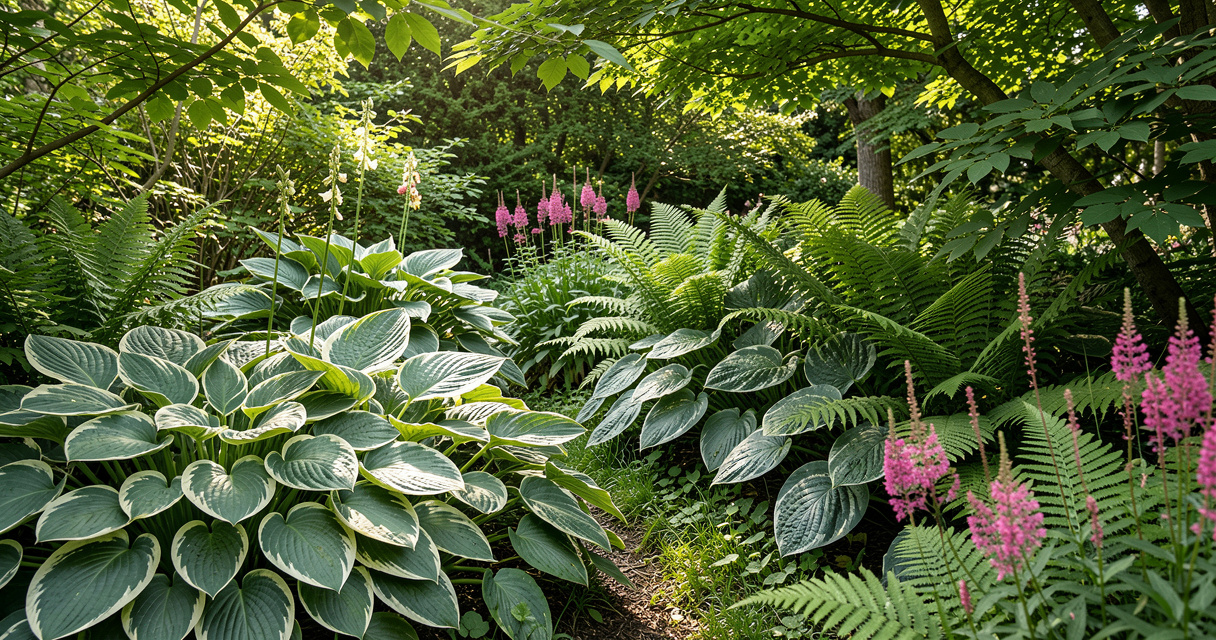
What most people get wrong is assuming “shade” is a single condition. In my experience, the first step to a successful shade garden is learning to read the light. I classify shade into four categories, each with its own set of suitable perennials.
| Shade Type | Direct Sun per Day | Example Location | Best Suited Plants |
|---|---|---|---|
| Full shade | Less than 3 hours | North side of a building | Hosta, fern, hellebore |
| Partial shade | 3–6 hours | Under a sparse‑canopy tree | Astilbe, brunnera, heuchera |
| Dappled light | Filtered all day | Beneath a linden or birch | Epimedium, lamium, pulmonaria |
| Deep shade | No direct sun | Under dense evergreens | Hellebore, tiarella, certain ferns |
How to Measure Light Levels in Your Garden
Grab your phone and download a light‑meter app, or simply observe your garden on a clear day in June. Mark a spot every hour from sunrise to sunset. That will tell you exactly how many hours of direct sun each corner receives. The plant will tell you if it’s happy – but measuring avoids guesswork.
Quick Tip – For a rough check, hold your hand 30 cm above the ground. If you see a crisp shadow, that’s direct sun. A blurry shadow? Dappled. No shadow at all? Deep shade.
Common Mistakes: What Gardeners Get Wrong About Shade
Believing “shade” equals “no sun” is a classic error. A north‑facing wall that receives three hours of late‑afternoon sun qualifies as full shade – that’s enough for many perennials. Another mistake: planting a sun‑loving hosta (yes, some hostas prefer more light) in deep shade and wondering why it fails. Match the plant to the light level, and you’re halfway there.
Once you understand your shade level, you can move on to choosing the right full shade perennials – and that’s where the real fun begins.
Top 15 Shade Perennials for Every Garden Condition
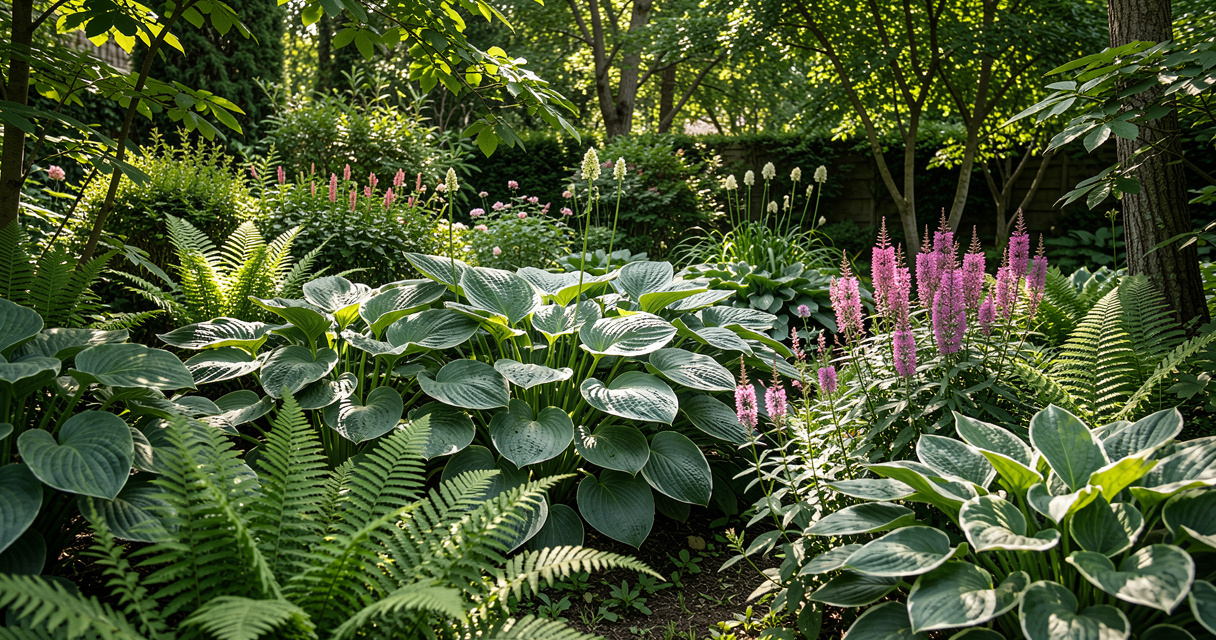
Best shade perennials include hostas for striking foliage, hellebores for early spring blooms, astilbes for feathery flower plumes, and ferns for delicate texture. For dry shade, try epimedium and lamium. For moist shade, choose astilbe and brunnera. This mix ensures color and interest from spring to fall.
Dry Shade Heroes: Epimedium, Lamium, and Ferns
Dry shade is the most challenging condition – often found under mature trees where roots steal every drop. In my experience, epimedium (barrenwort) is the champion. Its heart‑shaped leaves and delicate spring flowers thrive where little else survives. Lamium maculatum (spotted deadnettle) forms a dense carpet with silver‑marked foliage. For ferns, the autumn fern (Dryopteris erythrosora) tolerates drought once established. These are the best shade perennials for dry soil I’ve seen.
Moisture‑Lovers: Astilbe, Brunnera, and Ligularia
If your shade garden retains moisture – say, near a downspout or in a low corner – you can grow some of the most spectacular shade loving perennials. Astilbe offers feathery plumes in pink, white, and red. Brunnera macrophylla (Siberian bugloss) has sky‑blue forget‑me‑not flowers and large heart‑shaped leaves. Ligularia (leopard plant) loves wet soil and produces bold yellow flowers. My grandmother used to say, “Give astilbe a damp spot and it will thank you for years.”
Deep Shade Survivors: Hosta and Hellebore
Even under dense evergreens, you can count on hostas (especially blue‑leafed varieties like ‘Halcyon’) and hellebores (Lenten roses). Hellebores bloom in late winter, bringing colour when little else is stirring. Hostas offer a range of leaf sizes and colours – from chartreuse to deep blue. They are true low light perennials that never disappoint.
Blooming All Season: Heuchera, Pulmonaria, and Toad Lily
Many shade gardeners ask me for shade perennials that bloom all summer. While no plant flowers non‑stop for months, heuchera (coral bells) produces wispy flower stalks from late spring into summer – and its colourful foliage is the main event. Pulmonaria (lungwort) flowers in early spring, then its spotted leaves remain attractive. For late‑season drama, toad lily (Tricyrtis hirta) produces orchid‑like blooms in September and October. Plant these together for a continuous show.
| Plant Name | Light Need | Soil Moisture | Height | Bloom Time | Hardiness Zones |
|---|---|---|---|---|---|
| Hosta | Full to partial shade | Moderate | 30–90 cm | Summer | 3–9 |
| Hellebore | Partial to deep shade | Moderate, well‑drained | 30–45 cm | Late winter‑spring | 4–9 |
| Astilbe | Partial shade | Moist | 30–90 cm | Summer | 4–8 |
| Fern (Dryopteris) | Full to partial shade | Moderate to dry | 30–90 cm | Non‑flowering | 4–8 |
| Epimedium | Partial to deep shade | Dry to moderate | 20–40 cm | Spring | 4–8 |
| Lamium | Partial to full shade | Dry to moderate | 15–20 cm | Late spring | 3–8 |
| Brunnera | Partial shade | Moist | 30–45 cm | Spring | 3–8 |
| Heuchera | Partial shade | Moderate, well‑drained | 30–45 cm | Late spring‑summer | 4–9 |
| Pulmonaria | Partial to full shade | Moist | 20–30 cm | Early spring | 3–8 |
| Toad Lily | Partial to full shade | Moist, organic | 60–90 cm | Late summer‑fall | 4–8 |
Checklist: Signs a Shade Plant Is Happy – new growth within two weeks of planting, vibrant leaf colour, steady size increase, and (for flowering types) regular blooms. If you see these, you’ve chosen well.
Now let’s talk about arranging these beauties into a design that stops visitors in their tracks.
Designing a Stunning Shade Garden: Layout, Texture, and Color
A list of shade tolerant plants is only the beginning. The magic happens when you layer them like a Dutch landscape painting – tall in the back, medium in the middle, low in front. I learned this at Wageningen University: the eye moves through a garden when heights and textures contrast.
Layering Techniques for Depth and Interest
Place tall ferns (like ostrich fern, 90 cm) or Solomon’s seal (Polygonatum) at the back. Mid‑height perennials such as astilbe and brunnera form the middle layer. In the front, low‑growing lamium, tiarella, and creeping phlox soften the edge. This arrangement mimics a woodland edge, where the biggest plants are farthest from the path.
Foliage First: Using Color and Texture as the Main Event
In deep shade, flowers are scarce – but foliage can be spectacular. Pair gold‑leaved heuchera (like ‘Lime Marmalade’) with dark‑green ferns. Use blue‑foliaged hostas against chartreuse creeping Jenny. My grandmother taught me that “in shade, leaf colour is the flower.” She was right. The contrast creates a glow that brightens even the darkest corner.
Let me share a real‑world example: a narrow, north‑facing strip I redesigned in Haarlem. It gets only two hours of evening sun. I planted golden creeping Jenny at the front, dark‑leaved heuchera in the middle, and a backdrop of Japanese painted fern. The result? A luminous ribbon that draws the eye from the house. The plant will tell you if the colour combo works – if it feels flat, add a white‑variegated hosta or silver lamium.
Incorporating Hardscape: Paths, Stones, and Statues
Shade gardens benefit from structural elements because low light can make a bed look muddy. A curving gravel path or a weathered stone statue gives the eye a place to rest. I often use a large granite ball among hostas – the contrast of glossy leaf against rough stone feels organic and deliberate.
Now that you have a design vision, let’s talk about the care that keeps your shade perennials thriving.
Care and Maintenance: Soil, Watering, and Feeding for Shade Perennials
Here’s what most people get wrong: they treat shade perennials like sun‑lovers that are “just in the dark.” Shade plant care is a different game. The soil under trees is often compacted, acidic, and low in organic matter. Let me show you what actually works.
Soil Preparation: Enriching Without Disturbing Tree Roots
At Wageningen, we studied root competition in urban gardens. The key is to top‑dress with a 5 cm layer of well‑rotted compost or leaf mould every spring. Do not dig deeply – tree roots are shallow and suffer damage. The organic matter slowly enriches the soil, and the shade perennials will send roots through it. This is especially important for best shade perennials for dry soil situations under old oaks.
Warning – Overwatering is the #1 killer of shade perennials. Test soil moisture 5 cm deep before watering. If it feels damp, skip the hose. Shade gardens stay wet longer.
Watering Deeply vs. Frequently: What Shade Roots Prefer
In my experience, a deep soak once a week during a dry spell is far better than light sprinkling every day. Deep watering encourages roots to go deeper, making the plant more resilient. If you have low maintenance shade perennials, they still need this routine for their first two years. After that, many will survive on natural rainfall alone.
Dividing and Propagating for Free Plants
Most shade perennials respond well to division every 3–4 years. Lift the clump in early spring or fall, split it into pieces with a sharp spade, and replant. This keeps the mother plant vigorous and gives you new plants for other shady corners. It’s the most low‑cost way to fill a shade ground cover perennials zone 5 area.
Seasonal Care Checklist
- Spring – Clear dead leaves, apply compost, divide overgrown clumps.
- Summer – Deadhead spent flowers, water during dry spells, watch for slugs.
- Fall – Cut back frost‑damaged foliage, add a 5 cm mulch layer for winter.
- Winter – Leave seed heads for birds, refrain from walking on frozen soil.
Next, let’s tackle the problems that make some gardeners give up on shade.
Solving Common Shade Garden Problems: Deer, Pests, and Soil Issues
I hear the same frustrations every year: “Deer ate my hostas!” “Slugs destroyed my astilbe!” And “Nothing grows under my maple tree!” These challenges are real, but they have proven solutions – many of which I’ve tested in my own Haarlem garden.
Deer and Rabbit Resistance: What Really Works
If you need deer resistant shade perennials, focus on plants with fuzzy, toxic, or strongly aromatic foliage. Hellebores, ferns, lamium, pulmonaria, and brunnera are typically left alone. Bleeding hearts and columbine are also relatively safe. I once had a client in the Dutch forested region who replaced all hostas with ferns and epimedium – the deer never touched them.
Slug and Snail Control: Natural and Chemical Options
Slugs love the moist, cool environment of shade gardens. The plant will tell you it’s under attack – leaves have irregular holes and slime trails. Here’s what I’d do: encourage natural predators (frogs, birds), use copper rings around vulnerable hostas, and apply iron‑phosphate pellets (safe for pets and soil). Avoid chemical slug bait that can harm earthworms.
Competing with Tree Roots: Raised Beds and Mulch
Under trees, tree roots steal water and nutrients. The solution: build raised beds (30 cm high) using topsoil and compost, or plant in large containers sunk into the ground. This gives your perennials their own root zone. For shade plants for zone 7 where competition is fierce, I recommend epimedium again – it coexists surprisingly well with shallow tree roots.
| Pest/Problem | Vulnerable Plants | Solution |
|---|---|---|
| Deer | Hosta, tulip, daylily | Plant hellebore, fern, lamium |
| Slugs | Hosta, astilbe, delphinium | Iron phosphate, copper rings, attract frogs |
| Tree root competition | Most shallow‑rooted perennials | Raised beds, deep watering, mulch |
Now let’s zone in on the best picks for your specific climate.
Best Shade Perennials by USDA Zone: Focus on Zones 4-8
A plant that thrives in New York (zone 7) may struggle in Minnesota (zone 4). Here’s my regional advice from years of consulting with nurseries across the Netherlands and Belgium – adapted for American hardiness zones.
Zone 7 Woodland Stars: Hellebores, Solomon’s Seal, and Ferns
Zone 7 enjoys mild winters and warm summers – perfect for a woodland aesthetic. I often recommend hellebores for winter‑spring colour, Solomon’s seal for graceful arching stems, and a mix of ferns (autumn fern, maidenhair) for texture. If you want shade perennials that bloom all summer in zone 7, try heuchera and toad lily – they extend the season beautifully.
Cold Climate Picks (Zones 3-5): Brunnera, Ligularia, and Tiarella
For northern gardeners, hardiness is everything. Brunnera macrophylla survives -35°C (-30°F) and produces blue flowers in spring. Ligularia handles cold and wet soils. Tiarella cordifolia (foamflower) forms a low carpet of fuzzy leaves and white flower spikes. These are the most reliable full shade perennials for cold zones.
Heat Tolerant Shade Plants (Zones 8-9): Caladium, Oxalis, and Alocasia
Southern shade gardens face hot, humid summers. In zones 8–9, I steer clients toward caladium (grown as annual or lifted in winter) for stunning leaf colour, oxalis for delicate purple foliage, and alocasia for tropical drama. These plants love partial shade and consistent moisture.
Tip – Check your hardiness zone using the USDA map before ordering. A plant that’s “shade tolerant” in zone 7 may not survive zone 4 winters.
Now that you know which perennials suit your climate, let’s find trustworthy sources.
Where to Buy Shade Perennials: Online Retailers and Local Nurseries
You’ve picked your plants – now where do you get them? I’ve tested many sources over the years, from big‑box stores to specialist nurseries. Here’s what I’ve found.
Top Online Retailers for Shade Perennials
For selection and quality, I recommend Breck’s (known for Dutch bulbs and perennials), Rare Roots (specialising in unique woodland plants), and American Meadows (good for larger quantities). Always read customer reviews of plant size. A “2‑inch pot” may need an extra year to establish. Don’t overthink it – order from a source that guarantees healthy arrival.
How to Evaluate Plant Quality Before Buying
Checklist for Buying Perennials
- Leaves – Look for vibrant, undamaged foliage. Avoid yellowing or spots.
- Roots – Gently lift the pot. Roots should be white or light brown, not circling or black.
- Pests – Check under leaves for aphids, mites, or slime trails.
- Size – A larger plant isn’t always better; a well‑rooted 10 cm pot often transplants better than a root‑bound 20 cm pot.
Once you have your plants, you’re ready to turn that dark corner into your favourite garden retreat.
Frequently Asked Questions
What perennials like shade?
Hostas, ferns, hellebores, astilbes, and lamiums are classic shade lovers. Many woodland plants naturally thrive in low‑light conditions.
Can shade perennials grow in dry soil?
Yes, some are adapted to dry shade. Examples: epimedium, lamium, and certain ferns like autumn fern. Improve soil with organic matter to help retain moisture.
What is the best ground cover for shade?
Low‑growing perennials like lamium, pachysandra, ajuga, and creeping phlox work well as ground covers in shade. For deeper shade, try sweet woodruff or barrenwort.
Are there deer resistant shade perennials?
Yes: hellebores, ferns, lamium, pulmonaria, and brunnera are typically avoided by deer. Bleeding hearts and columbine are also relatively resistant.
Do shade perennials need fertilizer?
A light spring application of balanced, slow‑release fertilizer (10‑10‑10) is beneficial. Avoid over‑fertilizing as it can lead to weak growth and more disease.
How often should I water shade perennials?
Check soil moisture 5‑7 cm deep. Generally, water once a week during dry spells. Shade gardens retain moisture longer, so reduce frequency compared to sun beds.
Can I grow perennials in full shade under trees?
Yes, but choose deep‑shade tolerant species like hostas, ferns, hellebores, and epimedium. You’ll need to amend the soil and provide regular water since tree roots compete.
Conclusion: Turn Your Shade Into a Sanctuary
Let me recap what really matters: shade perennials offer diverse textures, colours, and seasonal interest – they are not boring. Matching plants to the right shade level and soil moisture is the key to success. Proper soil preparation, watering habits, and pest management ensure a low‑maintenance, thriving garden.
Now it’s time to turn that dark corner into your favourite garden retreat. Start with one or two of these shade‑tolerant perennials and watch your shady space come alive. My grandmother’s patch taught me that the best gardens don’t need full sun – they need the right plants, placed with thought, and given a little patience. Don’t overthink it. Just begin.
Happy planting from Haarlem.

I’ve spent over fifteen years in botanical gardens and nurseries across the Netherlands and Belgium. Now I garden in Haarlem and write what I wish someone had told me sooner. No fluff — just what actually works.