
Estimated reading time: 10 minutes
Key Takeaways
- Aphrodisiac plants combine ethnobotanical tradition with modest but real scientific evidence — red ginseng, maca, and saffron lead the pack.
- 10 aphrodisiac plants are genuinely growable at home, from effortless ginger to patient, long-term ginseng.
- The garden has always been humanity’s favourite metaphor for desire — and the “secret garden” now extends into digital intimacy.
Table of Contents
Aphrodisiac Plants: 10 Plants of Desire to Grow in Your Own Secret Garden
Aphrodisiac plants have been part of my life longer than I’d like to admit — not in the way you might think, but as botanical curiosities that kept appearing in every historic garden I worked in.
My grandmother taught me that every plant has two stories: the one in the botany books, and the one people whispered. The whispered ones were always more interesting. Mandrake roots hidden in kitchen drawers. Saffron threads worth more than gold, traded for love potions. Ginger carried across oceans as a gift for lovers.
Here’s what I’d do if I were you: forget the marketing hype for a moment. In this article, I’ll walk you through what aphrodisiac plants actually are, what science honestly says about them, which ten are genuinely worth growing at home — and why the garden itself has always been humanity’s favourite metaphor for desire.
What Are Aphrodisiac Plants?
The word comes from Aphrodite, the Greek goddess of love, born from sea foam. An aphrodisiac is any substance — food, herb, or drug — believed to arouse sexual desire or enhance pleasure. Natural aphrodisiacs from the plant world have been documented on every continent, for thousands of years.
But how would a plant actually work on desire? In my experience studying plant biology at Wageningen, the honest answer is: through several possible pathways, some proven, some poetic.
- Blood flow — compounds that stimulate nitric oxide production, relaxing blood vessels (this is the same mechanism Viagra uses, by the way)
- Hormones — plants that may influence testosterone or balance stress hormones like cortisol
- Adaptogens — roots like ginseng and maca that help the body handle stress, and stress is desire’s worst enemy
- The mind — scent, ritual, and expectation. Never underestimate what belief does to the human body.
That last point matters more than most articles admit. A plant doesn’t need to be a pharmaceutical to be powerful. Sometimes the ritual of growing, harvesting, and preparing something together is the real aphrodisiac.
A Brief History of Love Potions and Plants of Desire
Let me show you what actually fascinates me about this subject: the history. Because for most of human existence, love potion plants were serious business — part medicine, part magic, part social currency.
The mandrake root (Mandragora officinarum) appears in the Book of Genesis as a fertility charm. Its forked root, vaguely human-shaped, made it the most feared and desired plant of medieval Europe. Harvesting it supposedly required pulling it at night while plugging your ears — its scream could kill you. Wonderful theatre, terrible botany.
Spain gave the world its most infamous aphrodisiac: Spanish fly, made from blister beetles. Dangerous, sometimes lethal — and yet for centuries it symbolized the fiery, untamable passion that European culture associated with Spain itself. The españolas of court gossip and literature became shorthand for a kind of desire that polite society both condemned and craved.
Meanwhile, Ayurveda in India built an entire category of vajikarana herbs — ashwagandha chief among them — and traditional Chinese medicine has prescribed ginseng for vitality for over two thousand years. Even French royalty played along: Madame du Barry reportedly served ginger to her lovers at the court of Louis XV.
What most people get wrong is thinking this is all superstition. It’s not. It’s ethnobotany — generations of observation, written in folklore instead of journals.
Do Aphrodisiac Plants Really Work? What Science Says
Here’s where I have to be honest with you, because garden advice that ignores reality is my personal pet peeve.
The scientific evidence is real but modest. A systematic review published in Pharmacognosy Reviews examined herbal aphrodisiacs and found genuine promise in a handful of species. A few highlights:
- Red ginseng — several clinical trials show measurable improvement in erectile function and self-reported desire
- Maca — studies suggest improved libido in both men and women, interestingly without changing hormone levels
- Saffron — small but well-designed trials show positive effects, particularly for people on antidepressants
- Tribulus terrestris — mixed results; better evidence for desire than for performance
And then there’s the placebo effect — which in this domain is not a dismissal but a genuine force. Desire lives in the brain first. If a ritual, a scent, or a shared cup of damiana tea puts you in the mood, the effect is real, whatever the mechanism.
A word of caution: “Natural” does not mean harmless. Yohimbe can raise blood pressure dangerously, and Spanish fly is genuinely toxic. If you take medication or have a heart condition, talk to a doctor before experimenting with concentrated herbal supplements.
10 Aphrodisiac Plants Worth Growing
Now for the part I love: the plants themselves. These ten combine genuine tradition, at least some scientific backing, and — crucially for us — they’re actually growable. I’ve noted the difficulty honestly, because nothing kills romance like a dead plant.
1. Damiana (Turnera diffusa)
A small Mexican shrub with yellow flowers and the most romantic résumé in botany — the Maya used it as an aphrodisiac, and Mexican liqueur makers still do. Loves sun, hates wet feet. Easy in a pot.
2. Maca (Lepidium meyenii)
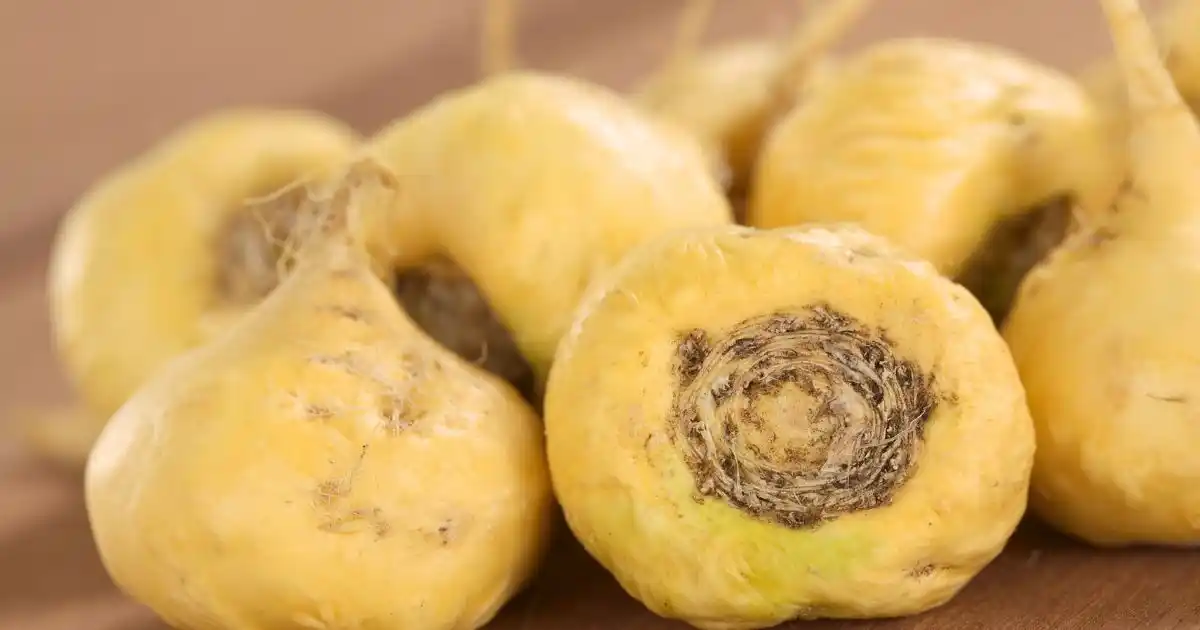
The Peruvian “ginseng of the Andes,” grown for its radish-like root. In my experience it’s surprisingly tolerant of poor soil — it evolved at 4,000 metres altitude, after all. Cool climates suit it fine.
3. Ginseng (Panax ginseng)
The emperor of aphrodisiac herbs — and the most demanding. It needs shade, patience, and four to six years before the root is worth harvesting. This one is a relationship, not a fling.
4. Saffron (Crocus sativus)
Three crimson stigmas per flower, harvested by hand at dawn — that’s why it’s the world’s most expensive spice. Plant the bulbs in late summer in well-drained soil. Don’t overthink it; saffron crocus is easier than its price suggests.
5. Horny Goat Weed (Epimedium)
Yes, that really is its name — legend says a Chinese goatherd noticed his flock’s enthusiasm after grazing on it. Here’s the gardener’s secret: Epimedium is a superb, elegant shade groundcover. I grow it for the delicate spring flowers; the reputation is a bonus.
6. Tribulus terrestris
A tough Mediterranean creeping plant with yellow flowers — and vicious spiny seeds. Grow it in a container unless you enjoy punctured bicycle tyres.
7. Ashwagandha (Withania somnifera)
Ayurveda’s great calming root. An easy annual in most climates, related to tomatoes, with papery orange lanterns in autumn. Stress reduction is its real gift — and relaxed people make better lovers.
8. Ginkgo biloba
A living fossil, 270 million years old, that may improve blood flow. It’s a tree, so it’s a long-term commitment — but a potted ginkgo on a balcony is perfectly happy for years.
9. Ginger (Zingiber officinale)
The most practical plant on this list. Warming, circulatory, and absurdly easy: bury a piece of supermarket rhizome in a pot and watch it go. Madame du Barry would approve.
10. Jasmine (Jasminum officinale)
The only plant here that works purely through scent — and what a scent. Its perfume is a classic base note in aphrodisiac fragrances. Grow it on a warm wall or balcony and let the evening air do the rest.
| Plant | Origin | Part Used | Scientific Evidence | Growing Difficulty |
|---|---|---|---|---|
| Damiana | Mexico | Leaves | Moderate | Easy (pot, full sun) |
| Maca | Peru | Root | Good (libido) | Easy, cool climate |
| Ginseng | East Asia | Root | Good (function) | Hard — shade, 4-6 years |
| Saffron | SW Asia | Stigmas | Good (small trials) | Easy bulbs, drainage |
| Horny Goat Weed | China | Leaves | Moderate (icariin) | Easy shade perennial |
| Tribulus | Mediterranean | Fruit/leaves | Mixed | Easy — container only |
| Ashwagandha | India | Root | Good (stress) | Easy annual |
| Ginkgo | China | Leaves | Mixed (circulation) | Easy, slow tree |
| Ginger | SE Asia | Rhizome | Moderate | Very easy in pots |
| Jasmine | Asia | Flowers (scent) | Aromatherapy only | Easy climber |
How to Grow Aphrodisiac Plants at Home
So, can you actually grow aphrodisiac plants at home? Absolutely — and you don’t need a garden. Most of my own collection lives in pots on a Haarlem balcony.
Start with the easy three: ginger, saffron, and damiana. Here’s what I’d do:
- Ginger — buy an organic rhizome, cut a piece with two buds, plant it just under the surface in rich potting soil. Warm windowsill, keep moist. Harvest in autumn.
- Saffron — order crocus bulbs in August, plant 10 cm deep in gritty, well-drained soil. Full sun. Flowers in October; harvest the red threads in the morning.
- Damiana — sow or buy a young plant, give it your sunniest spot, and let the soil dry between waterings. It forgives neglect beautifully.
For the ambitious: ginseng needs deep shade and forest-like soil — under a deciduous tree or on a north balcony. Horny goat weed slots into any shady border and asks for nothing. The plant will tell you if it’s unhappy: yellowing leaves mean too much water or too much sun, almost every time.
Nynke’s tip: Group your aphrodisiac plants together in one corner — a raised bed, a cluster of terracotta pots, a balcony box. Give it a name. A garden you visit with intention becomes more than a collection of plants; it becomes a place.
The Secret Garden: When Botany Meets Desire
And this is where it gets interesting — because the garden has never been just a garden.
Think of the medieval hortus conclusus, the enclosed garden, painted as a symbol of hidden, sacred femininity. Think of The Secret Garden — a locked gate, an overgrown paradise, and everything that awakens once someone dares to enter. For centuries, writers and poets have used “the garden” as a discreet, elegant way of speaking about intimacy, the body, and desire. The language of flowers let Victorian lovers say what their lips couldn’t.
It’s no accident. A garden is private. It’s cultivated. It rewards patience, attention, and a gentle hand — and it hides its best treasures from the casual passerby. Every culture understood this. The garden was the one respectable place where desire could be discussed openly, disguised as botany.
Exploring Your Secret Garden in the Digital Age
Today, the secret garden has simply changed shape. The walled garden has become the private space of a screen — a place where adults explore intimacy, fantasy, and connection on their own terms. From erotic literature to live sex cams, the digital world has become its own kind of secret garden: enclosed, personal, and blooming behind a login screen.
And that old association between Spain and untamed passion? It’s alive and well online too — the allure of the españolas remains one of the most searched expressions of desire on the internet. Some metaphors never fade; they just find new soil.
Frequently Asked Questions
What is the most powerful aphrodisiac plant?
Red ginseng has the strongest clinical evidence for improving sexual function, with maca close behind for libido specifically. But “powerful” depends on the person — for stress-related low desire, ashwagandha may outperform both.
Do aphrodisiac plants actually work?
Yes, modestly — and the ritual matters as much as the chemistry. A few plants (ginseng, maca, saffron) show real effects in human trials. Others work through tradition, scent, and expectation, which are genuine forces in desire.
Which plant is known as natural Viagra?
Horny goat weed (Epimedium) carries that nickname, because its compound icariin acts on the same blood-flow pathway as Viagra — though far more weakly. Red ginseng is the other usual suspect.
Are aphrodisiac herbs safe?
Most culinary amounts are safe; concentrated supplements need caution. Avoid yohimbe and Spanish fly entirely, and check with a doctor if you take medication, especially for blood pressure or heart conditions.
Can I grow aphrodisiac plants indoors?
Yes — ginger, saffron, and jasmine do beautifully indoors. Give them a bright windowsill and well-drained pots. Damiana and ashwagandha also adapt well to container life on a sunny balcony.
Which aphrodisiac plant is easiest to grow?
Ginger, without contest. A supermarket rhizome, a pot, warmth, and water — that’s it. Saffron crocus is a close second: plant the bulbs and let autumn do the work.
Grow Your Own Garden of Desire
Here’s what stays with me after years of working with these plants: the science is promising but modest, the history is glorious, and the growing is genuinely easy. Start with ginger and saffron, add a jasmine by the door, and let the collection grow from there.
My grandmother taught me that a garden is never just about plants — it’s about attention, patience, and the small rituals that make a life richer. Whether you tend yours in terracotta pots or explore it behind a screen, the principle is the same: desire, like any garden, rewards those who cultivate it.
So plant something this season — because aphrodisiac plants, in the end, are simply an invitation to tend your own secret garden.

I’ve spent over fifteen years in botanical gardens and nurseries across the Netherlands and Belgium. Now I garden in Haarlem and write what I wish someone had told me sooner. No fluff — just what actually works.