

Temps de lecture : 4 min
Points clés à retenir
- Choose the right variety — not all ceanothus are equal. For creeping groundcover, select low-growing, procumbent species like Ceanothus thyrsiflorus ‘Repens’ or Ceanothus gloriosus.
- Plant with drainage as priority — these plants hate wet feet. A south-facing slope or well-drained gravel mix is what actually works.
- Prune after flowering — never in autumn. Let me show you why timing matters and how a simple cut keeps the blue bloom coming year after year.
Why Creeping Ceanothus Deserves a Spot in Your Garden
In my experience, most gardeners think of ceanothus as a tall, upright shrub — the kind that suddenly dies after a harsh winter. But what most people get wrong is ignoring the creeping forms. These low-growing, sprawling varieties are tougher, more forgiving, and absolutely stunning when they cover a slope or cascade over a wall. I’ve seen them transform an awkward, dry bank into a river of deep blue, and honestly, nothing else creates that effect quite so effortlessly.
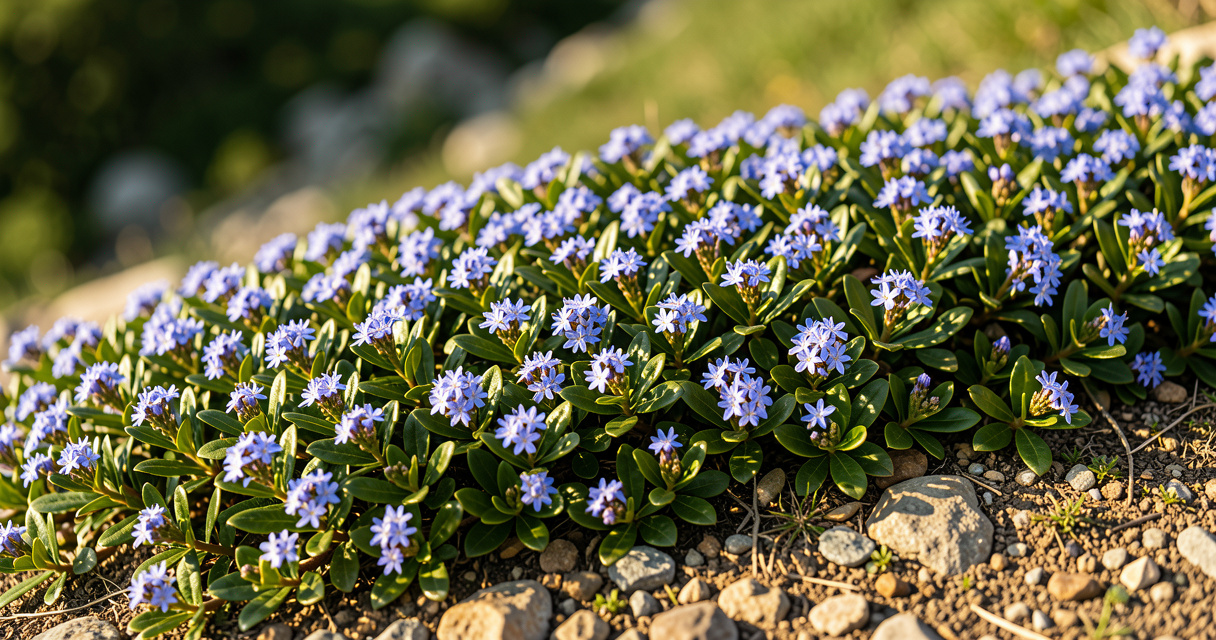
Creeping ceanothus (also called groundcover ceanothus or prostrate California lilac) is not a single species but a group of selections that stay under 60 cm tall and spread 2 to 3 metres wide. They are evergreen, drought-tolerant once established, and produce those iconic clusters of blue flowers from late spring into early summer. For Dutch conditions — mild, wet winters and moderate summers — they can be a game-changer if you give them what they need.
Choosing the Right Variety
Here’s what I’d do first: walk through a specialist nursery in spring when the plants are in bloom. You’ll see the difference immediately. The three varieties I recommend most often are:
- Ceanothus thyrsiflorus ‘Repens’ — This is the classic. It forms a dense, low mound about 40 cm tall and spreads generously. The flowers are a soft sky blue. My grandmother had one covering a south-facing bank in Leeuwarden, and it survived every cold snap.
- Ceanothus gloriosus — A truly creeping type, often called ‘Point Reyes ceanothus’. The leaves are darker, glossier, and the flowers are a deeper, almost violet blue. It’s more compact and works beautifully between stepping stones or on a wall.
- Ceanothus griseus horizontalis ‘Yankee Point’ — Excellent for covering large slopes quickly. It grows faster than ‘Repens’, with bright blue flowers and lighter green leaves. I’ve used this in several projects near Haarlem, and it never disappoints.
What most people get wrong is picking an upright species like Ceanothus ‘Concha’ and expecting it to behave like a groundcover. Don’t. The plant will tell you — it will send shoots straight up, you’ll fight it with pruning shears, and both of you will be unhappy. Stick with the prostrate selections.
Planting Without Mistakes
Let me show you what actually works for planting creeping ceanothus, especially in a Dutch garden or any climate with winter rainfall. The first rule: drainage is everything. These plants evolved in California’s dry summers and porous soils. They can’t stand having wet roots for more than a day or two. If your soil is heavy clay, you have two options: build a raised bed or mix in generous amounts of grit and coarse sand before planting.
I usually dig a hole twice as wide as the root ball but no deeper. Then I mix the excavated soil with 30% horticultural grit. Place the plant so the top of the root ball sits slightly above ground level — about 5 cm higher — and then backfill. That slight mound is what saves them in a wet winter. Don’t overthink it: just give them a slope, literally or figuratively.
Plant in spring (April to early May) or early autumn (September). Avoid midsummer heat and wet December days. Spacing should be 1 to 1.5 metres between plants if you want them to fill in as a solid carpet within two years. Water deeply after planting, then let the soil dry before watering again. The plant will tell you when it’s thirsty — look for slight droop in new growth.
Caring for Your Creeping Ceanothus
Care is minimal once established, but there are a few critical moments. Pruning is the one that trips people up. In my experience, the best time to prune is immediately after flowering, which in the Netherlands is usually late June or early July. Cut back the flowered shoots by about a third, shaping the plant to keep it compact and tidy. Never prune in autumn — that encourages soft growth that won’t harden off before frost.
Fertilising is almost unnecessary. A light mulch of well-rotted leaf mould or compost in spring is enough. Avoid high-nitrogen feeds — they produce lush leaves at the expense of flowers. I see more damage from overfeeding than from starvation.
Watering during the first year is essential. In a typical Dutch summer, a deep soak once a week is enough. After that, the roots go deep and the plant can handle weeks of dryness. In fact, the hardest thing for a ceanothus is too much love — ease up on the watering can.
What Doesn’t Work (And I’m Honest About It)
I’ve killed my share of ceanothus, and I want to save you the trouble. Here are the mistakes I’ve made and seen others make:
- Planting in north-facing or shaded spots — the plant becomes leggy, flowers poorly, and rots in winter. Full sun is non-negotiable.
- Watering in the evening — this encourages fungal diseases, especially in humid summers. Water early in the morning so foliage dries before night.
- Using peat-based compost — ceanothus prefer neutral to slightly alkaline soil. Peat is too acidic and holds too much moisture. Use a gritty, loam-based mix.
- Assuming it will survive severe frost — most creeping forms are hardy to about -10°C, but a hard, wet freeze can be fatal. In the Netherlands, a good snow cover is actually protection. If you live in a colder zone, wrap the base with fleece in December.
One last thing: don’t expect a perennial flower border performance. Ceanothus bloom for about 4 to 6 weeks, then they are a quiet, dark green backdrop for the rest of the year. That’s fine — the plant will tell you its rhythm. Let it. Combine them with silver-leaved plants like Artemisia or Lavandula, or with early bulbs that appear before the ceanothus leafs out fully. That’s the subtle Dutch approach — planning for interest across seasons, not just one moment of glory.
So stop overthinking. Choose a south slope, pick ‘Repens‘ or ‘Point Reyes‘, plant it with grit, and step back. In a few years, you’ll have a cascade of blue that makes the garden look like it has always belonged there.

I’ve spent over fifteen years in botanical gardens and nurseries across the Netherlands and Belgium. Now I garden in Haarlem and write what I wish someone had told me sooner. No fluff — just what actually works.