
Reading time: 5 min
Key Takeaways
- Light needs: Bright, indirect light is best – a north- or east-facing window works well.
- Watering rhythm: Keep the rhizomes moist but not soggy; let the top inch dry between waterings.
- Potting mix: Use a very airy, well-draining mix – I recommend adding perlite and orchid bark to standard potting soil.
Why the Rabbit Foot Fern Steals My Heart
In my experience, Davallia fejeensis – commonly called the Rabbit Foot Fern – is one of the most rewarding ferns to grow indoors. What most people get wrong is treating it like a typical fern that needs constant moisture. Let me show you what actually works.
Light: The Goldilocks Zone
These ferns thrive in bright, indirect light. A north-facing window is perfect. East-facing works too, but watch for direct morning sun – it can scorch the fronds. My grandmother taught me that ferns tell you what they need: if the fronds start looking pale or leggy, move them closer to the light. If they turn yellow or brown on the edges, pull them back.
Watering: Less Is More
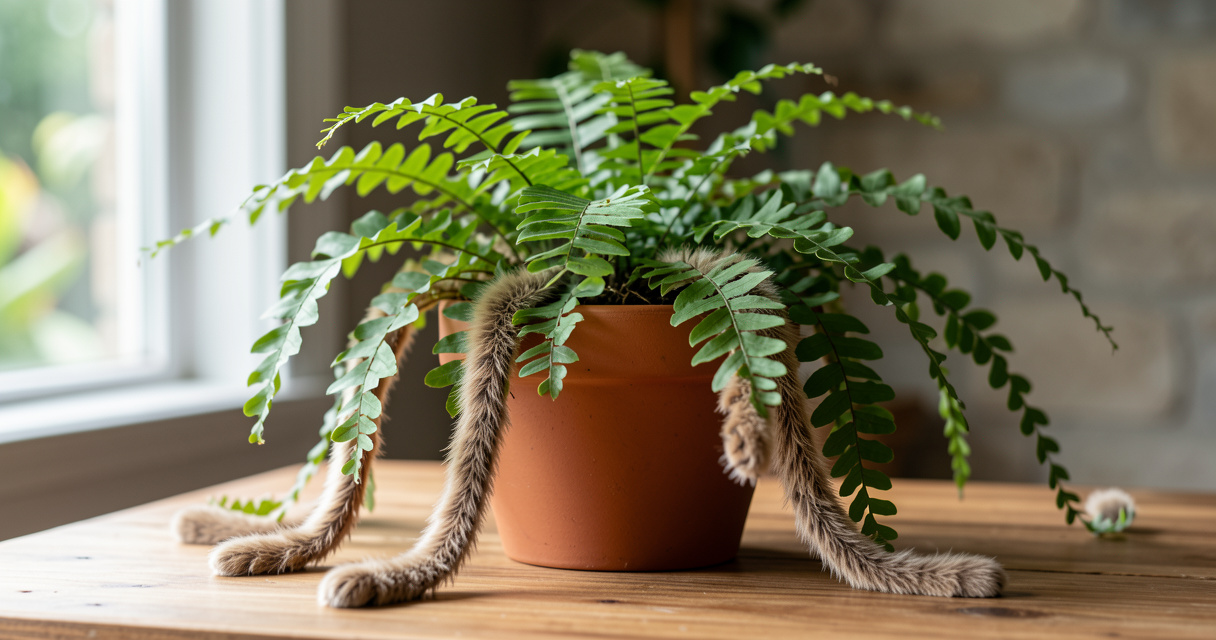
Don’t overthink it. The fuzzy rhizomes – those furry feet creeping over the pot – are a good indicator. When they look slightly wrinkled, it’s time to water. I typically water mine every 7 to 10 days in summer and every 2 to 3 weeks in winter. Use room-temperature water and let the excess drain away completely. The plant will tell you when you’ve nailed the rhythm.
Potting Mix: The Secret to Success
In Wageningen, we studied root aeration extensively. For Rabbit Foot Ferns, the rhizomes need air just as much as moisture. My go-to mix is: 2 parts standard potting soil, 1 part perlite, 1 part orchid bark. This creates a chunky, fast-draining medium that holds enough water without becoming waterlogged. If you use a standard mix alone, you’ll likely see root rot within months.
Humidity: Not as Critical as You Think
Many guides insist on high humidity. In practice, my city garden in Haarlem sees average indoor humidity around 40 to 50% – and my Rabbit Foot Ferns are doing great. Yes, they appreciate a light misting now and then, but they are far more tolerant of dry air than most people believe. What really matters is consistent watering and good airflow. A small fan on a timer works wonders.
Fertilizing: Light Feed During Growth
In spring and summer, I feed every 4 to 6 weeks with a balanced, water-soluble fertilizer diluted to half strength. Stop feeding in autumn and winter. The plant will naturally slow down, and extra nutrients will only cause salt buildup in the pot. Dutch horticultural standards recommend a low-nitrogen formula for ferns, like 5-10-10, to keep the rhizomes strong without forcing soft leaf growth.
Repotting: Patient Waiting Pays Off
Here’s what I’d do: wait until the rhizomes are completely covering the pot’s surface before repotting. This can take 2 to 3 years. When you do repot, choose a pot that’s only one size larger – ferns dislike being overpotted. Gently lift the fern, untangle any circling roots, and place it in fresh mix. Don’t bury the rhizomes; let them sit on top of the soil. Water lightly for the first week to let the roots settle.
Pests and Problems: What to Watch For
The most common issue I see is brown tips. This is almost always from inconsistent watering – letting the soil dry out completely then drowning it. Stick to a regular schedule. Spider mites can appear if the air is too dry; a quick shower with lukewarm water every month keeps them at bay. If you see scale on the stems, dab them with a cotton swab dipped in rubbing alcohol. The plant will recover quickly if you catch it early.
Final Thoughts: Enjoy the Furry Feet
For me, the Rabbit Foot Fern’s charm lies in its rhizomes – those soft, creeping paws that wander over the pot edge. It’s a plant that rewards observation and patience. If you follow these care tips, you’ll have a fern that grows steadily for years, filling your space with delicate, lacy fronds. Don’t overthink it. The plant will tell you everything it needs.

I’ve spent over fifteen years in botanical gardens and nurseries across the Netherlands and Belgium. Now I garden in Haarlem and write what I wish someone had told me sooner. No fluff — just what actually works.