

Reading time: 17 min
Key Takeaways
- Best time to prune: late winter or early spring, when forsythia starts blooming in your area.
- Cut height by type: Knock Out roses to 12 inches; shrub roses light and balanced; hybrid teas lower for larger blooms.
- Never remove more than one-third to one-half of an overgrown bush in a single season.
- Summer is for deadheading, not hard pruning — save major cuts for the dormant season.
Are your pruning cuts actually removing every flower bud you were hoping to see? It’s one of the most frustrating surprises in gardening, and it happens more often than you think. I’ve watched it happen in botanical gardens, in my clients’ borders, and once in my own tiny Haarlem yard. A gardener takes out the shears with good intentions, and by midsummer the rose bush looks leggy, produces a handful of weak blooms, and sends up thin canes that flop under their own weight.
Most people trim rose bushes at the wrong time, with the wrong tools, or far too aggressively. The result is fewer flowers, open wounds that invite disease, and a plant that spends the entire season recovering instead of blooming. This guide ends the guesswork. You’ll learn the best time to prune roses, exactly where to cut, and how to prune roses for every major type — from Knock Out to hybrid tea to a century-old climber.
Why Prune Rose Bushes at All? The Hidden Cost of Skipping It
Let me start with what most people get wrong: pruning is not for looks. It’s preventive health care. The University of Illinois Extension lists five goals for pruning roses, and every one of them affects how well the plant survives, not just how it looks. You prune to remove dead, damaged, or diseased wood; to increase air circulation through the center; to prevent tangled messes that rub canes raw; to shape the plant; and to encourage the growth of flowering wood.
| Pruning Goal | What It Does | Sign It’s Working |
|---|---|---|
| Remove dead, damaged, or diseased wood | Stops decay from spreading into healthy canes | Brown, brittle canes are gone; remaining canes are firm and green under the bark |
| Increase air circulation | Leaves dry faster after rain | Less black spot; no more mildew in the center |
| Prevent tangled messes | Stops crossing canes from rubbing wounds into each other | Canes grow outward instead of weaving together |
| Shape the plant | Keeps the bush open and balanced | A vase-like form with room for light |
| Encourage flowering wood | Redirects energy to young, productive canes | More basal breaks and bigger bloom clusters |
What happens if you don’t prune rose bushes? Nothing dies overnight — but the decline is real. Blooms get smaller and fewer each year, because the plant pours energy into old, woody canes that no longer produce flower buds. The center becomes a thicket of thin, crossing stems that trap humidity. Black spot moves in. By year three or four, you have a plant that survives but barely performs. I see this all the time when I’m called to consult on neglected gardens.
Why do rose bushes need pruning in the first place? Because a cultivated rose is a managed plant. Unlike wild species that grow into natural shapes, most garden roses were bred for bloom quality, not structural stability. Without annual intervention, they revert to a tangled, unproductive habit. Think of pruning as resetting the plant’s priorities: fewer, stronger canes that put all their energy into flowers.
Hard pruning vs light pruning: Hard pruning cuts canes back by half or more, and it’s reserved for the dormant season — mostly for hybrid teas and vigorous shrub roses. Light pruning removes less than one-third of the plant and is safe for most maintenance, including summer shaping.
Once you understand why pruning matters, the next question is when to open the shears. Get this wrong and nothing else matters.
When Is the Best Time to Trim Rose Bushes? A Seasonal Pruning Calendar
Most rose bushes should be trimmed in late winter or early spring, just as new growth begins. Many growers watch for forsythia blooms as their signal to start. Remove dead, damaged, or crossing canes first, then shape the bush. Avoid hard pruning in the growing season.
Late Winter: The Main Event
The main cutback happens when the plant is still dormant but ready to wake up — usually late winter or very early spring. Prune too early, and a hard frost can kill the exposed cuts and the buds you’re trying to protect. Prune too late, and you waste the plant’s energy on canes you’re about to remove. The sweet spot is the moment when buds begin to swell but before the leaves actually open.
Forsythia Blooms: The Gardener’s Signal
How do you know when that moment has arrived in your garden? Watch the forsythia. When those yellow flowers cover the shrub, the University of Illinois Extension says it’s time to prune roses. It’s a biological calendar that works across every climate zone. In my region of the Netherlands, that usually lands in early April; in Zone 7, it can be late February. Learn when to prune roses in your area by watching the forsythia, not the forecast.
| Season | When Exactly | What Pruning Is Safe | Max Cuts |
|---|---|---|---|
| Late winter / early spring | Forsythia blooming, buds swelling | Full structural pruning, renewal cuts, shaping | Up to 1/2 for renovation; 1/3 for maintenance |
| Late spring / early summer | After the first bloom flush | Deadheading, light shaping, removing thin growth | Remove only spent flowers and weak tips |
| Summer | July – August | Deadheading only; trim stray canes that block paths | Less than 1/10 of the plant |
| Fall | After the first killing frost | No hard pruning; shorten only very tall canes to prevent wind rock | Only the top third of exceptionally tall canes |
Hardiness zones shift the whole calendar. In Zone 5, forsythia often blooms in April; in Zone 8, it can bloom in February. So don’t follow a fixed date — follow your own forsythia. If you’re wondering when to prune Knock Out roses in zone 7, the signal usually arrives in late February or early March. In colder zones, simply add four to six weeks.
Summer and Fall: Light Touches Only
Can you trim rose bushes in summer? Yes, but with a completely different approach. Deadheading — removing spent flowers — is safe all season and actually encourages repeat blooming. Light trimming after a bloom flush keeps the bush tidy. Hard pruning in summer is a different story: it stimulates tender new growth that won’t harden before frost, and it removes the wood that would have produced fall flowers. Fall is the strictest season: once the first killing frost passes, put the pruners away except for shortening dangerously tall canes that could rock the roots in winter wind.
Pro tip: Note the date your forsythia blooms each year. After two or three seasons, you’ll have a localized pruning calendar more reliable than any article or app.
Once the timing is right, the actual technique matters just as much. Here’s the exact step-by-step method I use on every rose I prune.
How to Trim Rose Bushes Step by Step: The Essential 8-Step Method
Tools You’ll Need
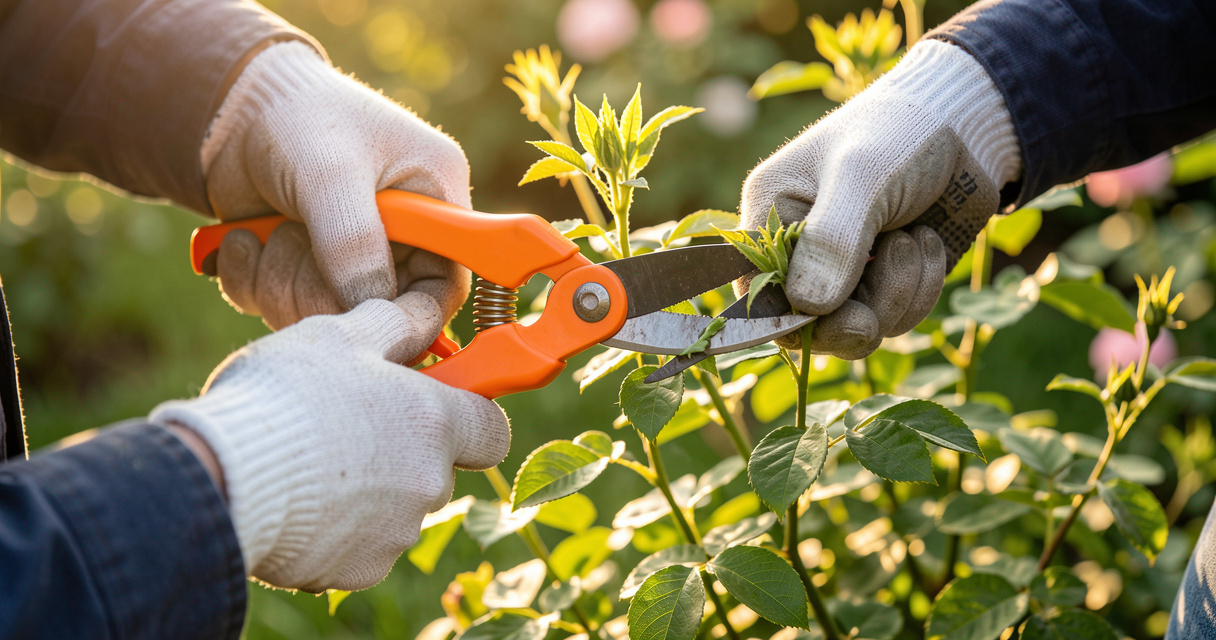
The right tools make every cut cleaner and safer. For most bushes, you’ll want bypass pruners — they slice cleanly like scissors instead of crushing the cane like anvil pruners do. For canes thicker than your thumb, use loppers. For very old, woody stumps, a small pruning saw works best. Add thick leather gloves — rose thorns will find every inch of unprotected skin — and safety glasses if the bush is tall. In my experience, the best rose pruning shears for thick canes are bypass models with a rotating handle; they save your wrist when you’re making dozens of cuts.
Step 1: Clear Out Leaves and Dead Wood
Start by clearing out any leftover leaves from the lower canes. Leaves hide the structure and make it harder to see what you’re doing. Then remove everything that’s clearly dead. Brown, brittle, papery canes get cut back to the base or to the first healthy bud. Green canes — even if they look thin — are alive and stay. This is the brown vs green test: brown is dead, green is living.
Step 2: Open the Center and Shape the Canes
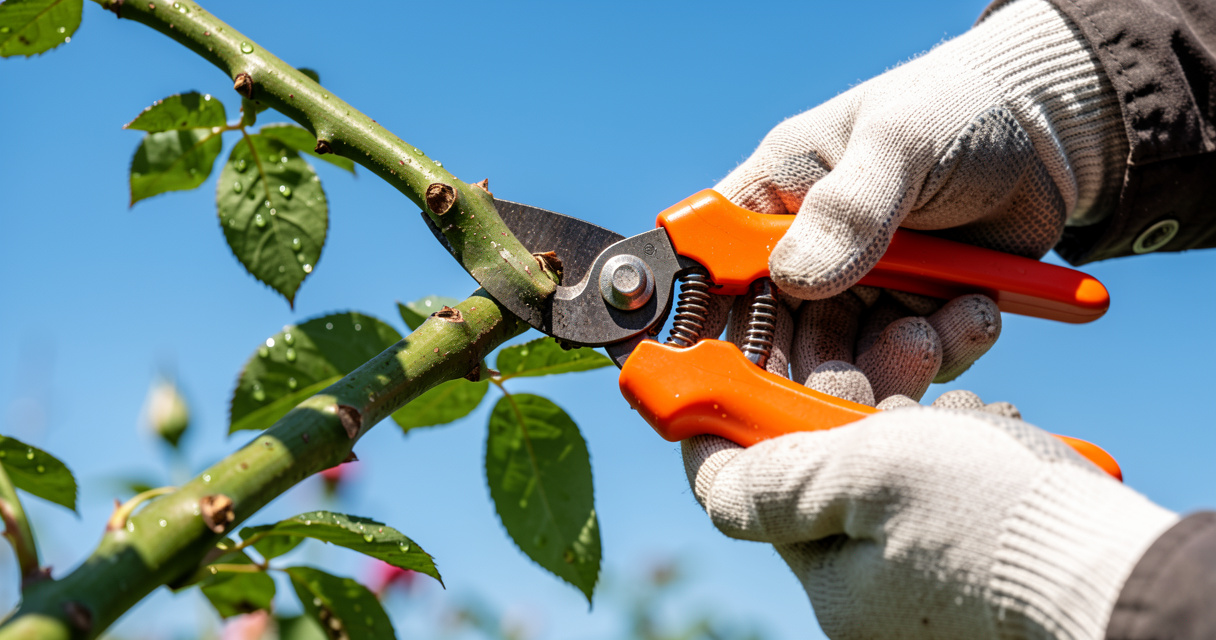
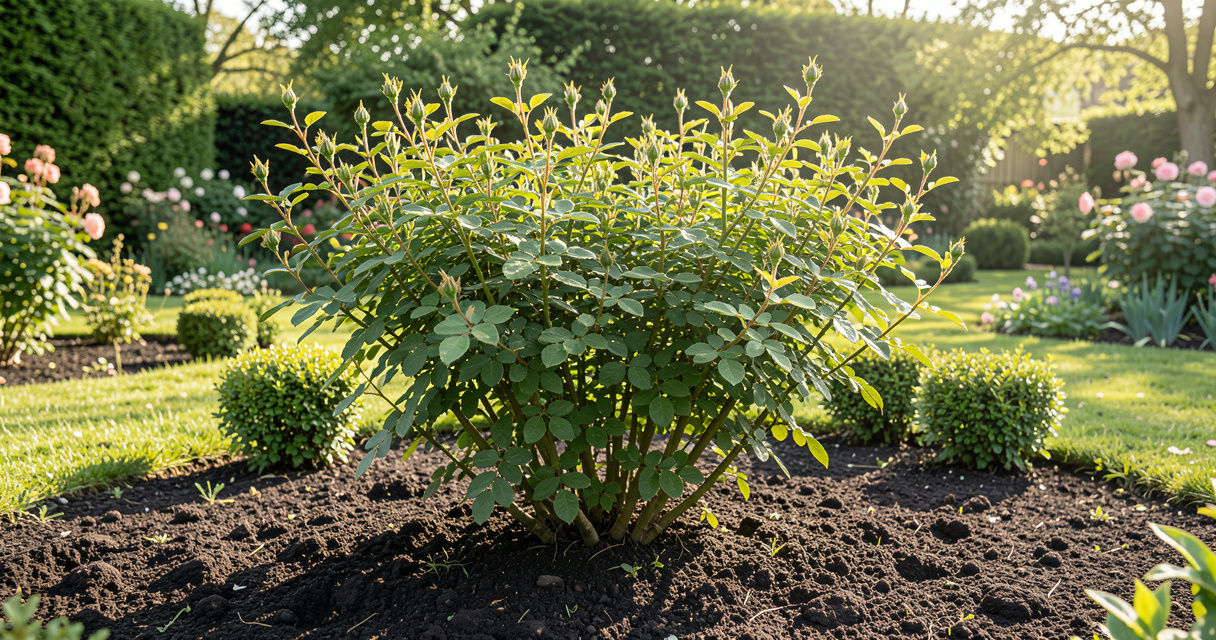
Now look at the structure. Identify canes that cross each other, rub together, or grow inward toward the center. Remove them. Your goal is an open, vase-shaped plant where light reaches every cane and air moves freely through the middle. Then cut at a 45-degree angle, about a quarter inch above an outward-facing bud eye — the small reddish bump where new growth will emerge. Cutting at an angle lets water run off the wound instead of pooling there.
The complete 8-step pruning checklist
- Remove leaves — reveal the true structure of the bush.
- Remove dead wood — brown canes go, green canes stay.
- Open the center — remove crossing and inward-growing canes.
- Cut at a 45-degree angle — just above an outward-facing bud eye.
- Remove thin growth — anything thinner than a pencil rarely blooms well.
- Shape to the desired height — use the rose-type guidelines below.
- Clean your tools — wipe blades with rubbing alcohol between bushes.
- Remove debris — collect all clippings; don’t leave them under the bush.
What is the proper way to trim a rose bush? Sharp tools, clean cuts, and respect for the bud eye. How far back should you cut? That depends on the rose type, and I’ll give exact numbers in the next section. For most bushes, remove between one-third and one-half of the total height in a single spring pruning.
Warning: Always cut at a 45-degree angle just above an outward-facing bud. Cut too close and the bud dries out; cut too far above it and the stub dies back and invites rot.
In the nurseries where I trained, we sharpened our pruners every single morning. A dull blade crushes the cane, leaving a ragged wound that takes twice as long to heal. If your shears won’t slice through a sheet of paper cleanly, sharpen them before you start. Don’t overthink it — a clean cut is a clean cut, and the plant will do the rest.
Technique gives you the confidence to cut. But every rose type has its own preference, and cutting a Knock Out like a hybrid tea is a guaranteed way to disappoint yourself.
How to Prune Different Types of Roses: Knock Out, Shrub, Hybrid Tea & More
Knock Out Roses: The 12-Inch Rule
How to prune Knock Out roses is the question I get most from American readers, and the answer is refreshingly simple. Cut the whole bush back to about 12 inches tall once a year, in late winter or early spring. According to the Knock Out Family of Roses, this cutback maintains a mature size of 3-4 feet wide and 3-4 feet tall. Yes, it feels aggressive. And no, you won’t hurt it. A Petite Knock Out rose will usually triple in size by the end of the season after being cut back.
Shrub Roses: Light and Balanced
Shrub roses — including many David Austin varieties — flower on older wood and prefer a lighter hand. The Royal Horticultural Society’s advice is to let them develop naturally; heavy annual pruning works against their open, arching habit. In practice, I prune shrub roses by removing about a third of the oldest canes at the base each year, keeping a balance of older wood and healthy young growth. This is the “less is more” philosophy, and it works beautifully on modern shrub roses that bloom on both old and new wood.
Hybrid Tea and Floribunda Roses
Hybrid teas behave differently. According to Garden Design, the lower you prune a hybrid tea, the bigger the flower and the longer the stem; leaving the bush taller produces more blooms that are smaller and on shorter stems. So your goal matters. For exhibition-grade cut flowers, prune hard to about 12-18 inches. For a garden display with more blooms, leave the bush at 24-30 inches. Floribundas sit in between: keep them at 18-24 inches and remove about a third of the oldest canes to keep the cluster-flowering habit strong.
Climbing Roses: Train, Don’t Butcher
Climbing roses are the most misunderstood group. A climber’s main canes are the framework of the plant — cut them back hard and you lose years of growth. Let me show you what actually works: train the main canes horizontally along a support, which forces side shoots to bloom along the full length. Then, each spring, shorten only the side shoots to about 2-3 buds. Remove dead wood and weak growth at the base. That’s it. Don’t butcher a climber the way you’d prune a shrub rose.
| Rose Type | Pruning Window | Recommended Cut Height | Style |
|---|---|---|---|
| Knock Out | Late winter / early spring | 12 inches | Cut everything back annually |
| Shrub / David Austin | Early spring | Remove 1/3 of oldest canes | Light and balanced, preserve older wood |
| Hybrid tea | Early spring | 12-18 in for big blooms; 24-30 in for quantity | Lower cut = bigger flower |
| Floribunda | Early spring | 18-24 inches | Moderate; open the center |
| Climber | Early spring | Shorten side shoots to 2-3 buds | Train main canes horizontally |
Case study: rehabilitating a neglected shrub rose
Two seasons ago, a friend in Leiden asked me to save her grandmother’s rugosa shrub rose. It was a tangled mess of thick, grey canes with new growth only at the tips. Most people would have cut the whole thing to the ground. Instead, I removed only the oldest third of the canes at the base, left the young green canes at full height, and trimmed the top by a third. The plant responded with vigorous new basal breaks within a month, and by summer it was covered with roses for the first time in years. Here’s what I’d do for any neglected rose: when in doubt, remove less, not more.
Now that you know how each type wants to be cut, let’s talk about the mistakes that undo all that careful work.
7 Rose Pruning Mistakes That Cost You Blooms (and How to Avoid Them)
After years of working in botanical gardens and nurseries, I can tell you that the biggest damage rarely comes from what you skip. It comes from well-intentioned errors. Here are the seven mistakes I see most often, and how to avoid them.
- Pruning too early. A warm February day tempts you to prune, then a frost kills the exposed buds. Wait for the forsythia.
- Cutting too much. Removing more than half the plant shocks it. Stick to one-third to one-half for overgrown bushes.
- Ignoring dead canes. Leaving brown, brittle wood wastes the plant’s energy. Always remove dead canes first.
- Using dull or dirty tools. Dull blades crush canes; dirty blades spread disease. Sharpen and disinfect every time.
- Sealing cuts. Pruning paint and sealants trap moisture and actually slow healing. Let the wound callus naturally.
- Leaving stubs. Cutting more than a quarter inch above an outward bud leaves a dead stub that rots back. Cut clean and close.
- Pruning in late fall. Cuts made before winter stimulate tender new growth that frost will kill. Save heavy pruning for spring.
Signs you pruned too early: exposed cuts turn black or grey, buds swell and then freeze, and the plant produces weak, spindly shoots from lower down. If this happens, resist the urge to prune again — protect the plant with a layer of mulch and wait for spring.
Can you prune rose bushes too much? Yes — over-pruning removes the wood that would have flowered and pushes the plant into shock. What happens if you prune roses in the fall? The plant responds by producing tender new growth, which the first frost kills, leaving the rose weak heading into winter. And what happens if you prune roses too early? The same thing on a smaller scale: frost nips the new buds and you lose the first flush.
In my experience, most of these mistakes come from a single source: anxiety. Gardeners either cut too much because they’re afraid of a leggy plant, or too little because they’re afraid of killing it. The fix is the same — follow the cut heights for your rose type and trust the process.
Mistakes happen when you’re unsure whether it’s safe to cut. So let’s settle the summer and fall question once and for all.
Can You Trim Rose Bushes in Summer or Fall? Light Maintenance vs Hard Pruning
The short answer is yes — but only lightly. According to Fine Gardening, it’s acceptable to trim out-of-control growth after bloom flushes and to tidy the plant during the growing season. What you should never do is hard structural pruning outside the dormant season.
Deadheading in Summer
Deadheading is the one job you can do all summer without guilt. Removing spent flowers before they form hips pushes the plant to produce another round of blooms. Cut back to a leaf node with a five-leaflet leaf — that’s where the next flowering shoot will emerge. On floribundas, remove the entire spent cluster to keep the plant tidy. This is also the difference between deadheading and pruning: deadheading removes only spent flowers, while pruning removes actual canes and wood.
The One-Third Rule for Overgrown Bushes
What about a rose that has completely outgrown its spot? If the entire plant is out of control, bring it back by no more than one-third to one-half, according to Fine Gardening. Any more than that in a single season risks losing the plant entirely. Spread a major renovation over two or three springs instead. This applies whether you’re working in early spring or just taming a wild bush in summer.
| Task | Timing | How Much to Remove |
|---|---|---|
| Deadheading | All season, after each bloom flush | Spent flowers only, down to a five-leaflet node |
| Light shaping | After the first bloom flush | Less than 1/3 of the plant |
| Taming overgrowth | Summer, in an emergency | No more than 1/3 to 1/2 |
| Hard renovation | Late winter / early spring | Up to 1/2; spread over 2-3 seasons |
When Not to Prune
Is it too late to prune roses in August? For major cuts, yes. Can I prune roses in August if it’s just a stray cane blocking a path? Sure — a single light trim won’t hurt. The distinction is simple: if the cut is thicker than a pencil, it’s a structural cut and it waits for late winter. Deadheading and pinching are always welcome. My grandmother taught me that a rose bush can forgive almost anything except a hard cut in the wrong season.
Expert tip: Deadhead after each bloom flush to push more cycles. On repeat-flowering roses, consistent deadheading can buy you one or two extra flushes before fall.
Once the cuts are made, the job isn’t quite over. The 48 hours after pruning are the most valuable time for helping a rose recover.
After Pruning: The 5-Minute Rose Care Routine That Keeps Roses Thriving
Clean Up Debris
Pruning is not the finish line. Every clipping you leave on the ground is a potential source of fungal infection, especially black spot. Rake up all leaves and canes and get them out of the garden — don’t compost them unless your pile gets hot enough to kill fungal spores. A clean bed is the cheapest disease prevention you’ll ever find.
Mulch and Feed for Recovery
After pruning, I spread a 1-2 inch layer of well-rotted compost or mulch around the base, keeping it a few centimeters away from the stems. Then I feed with a balanced rose fertilizer, following the package rates. Should you fertilize roses right after pruning? Yes, but only once new growth has started — feeding a fully dormant plant wastes the fertilizer and can push growth before the plant can use it. A balanced formula gives the plant the building blocks it needs to push new canes; skip high-nitrogen lawn food, which produces leaves at the expense of flowers.
Monitor for Pests and Disease
In the weeks after pruning, keep an eye on the new foliage. Aphids arrive fast, usually on the softest new growth. Black spot shows up as dark spots with yellow edges on the lower leaves. A steady stream of water knocks aphids off; removing affected leaves early keeps black spot from spreading. The plant will tell you what it needs — you just have to look.
Aftercare checklist (within 24-48 hours of pruning)
- Rake up and remove all clippings and fallen leaves.
- Apply 1-2 inches of mulch around the base, away from the stems.
- Water deeply if the soil is dry.
- Wait for new growth, then apply a balanced rose fertilizer.
- Check weekly for aphids and black spot on new foliage.
You now have the complete system — timing, technique, and aftercare. Let me answer the questions that still keep gardeners up at night.
Rose Pruning FAQs: Answers to the Questions Every Gardener Asks
When should I trim rose bushes?
Most roses should be trimmed in late winter or early spring, just as new growth begins. Many gardeners use forsythia blooming as their natural signal to start. Save heavy cuts for the dormant season.
Should I cut my rose bush to the ground?
Usually not. Most roses prefer staying at 18-24 inches, and Knock Out roses do well at 12 inches. Only an overgrown or very old bush can take a more drastic renovation cut, and not every rose type tolerates it.
Can you trim rose bushes in August?
Avoid major pruning in August. Light deadheading is fine, but hard cuts will stimulate tender new growth that could be damaged by early frost. The main cutback should wait for late winter or early spring.
How far back can you cut a rose bush?
For an out-of-control bush, remove no more than one-third to one-half of the plant. For Knock Out roses, cutting to about 12 inches is proven to produce a full 3-foot bush by the end of the season.
What is the difference between deadheading and pruning?
Deadheading removes only spent flowers to encourage repeat blooming. Pruning removes actual canes and wood to shape the plant, improve air circulation, and rejuvenate growth.
Do rose bushes need to be pruned every year?
Modern roses like Knock Out benefit from a yearly 12-inch cutback to control size and maximize blooms. Shrub roses need lighter but regular attention, keeping a balance of older wood and young growth.
Why did my roses stop blooming after pruning?
Usually because too much flowering wood was removed, or the pruning happened at the wrong time. Check that you left at least one-third of the healthy canes and wait for the next bloom cycle.
The Cut That Changes Everything
Here’s where we land. Prune in late winter or early spring, using forsythia bloom as your natural signal. Always start with dead, damaged, or crossing canes, then shape for an open center. Adjust cut height to rose type: a 12-inch cutback for Knock Out, lighter and balanced for shrub roses. Never hard-prune during the growing season; stick to deadheading and light shaping after bloom flushes.
If you remember one thing, let it be this: a rose bush is more resilient than you think, but it still needs a confident, well-timed cut. The best pruning is the one that simply lets the plant do what roses do best — bloom. Trim rose bushes correctly and you will reward yourself with a healthy, flower-filled garden all season long. So when the forsythia lights up this spring, grab your bypass pruners, trust the method, and make the cut.

I’ve spent over fifteen years in botanical gardens and nurseries across the Netherlands and Belgium. Now I garden in Haarlem and write what I wish someone had told me sooner. No fluff — just what actually works.